Showing posts with label CWD. Show all posts

Tuesday, September 13, 2016

MDC needs hunter help in southwest Missouri to detect CWD

Deadly Chronic Wasting Disease in northern Arkansas has prompted MDC to continue increased surveillance efforts near state border. 
SPRINGFIELD, Mo. – More than 100 cases of Chronic Wasting Disease (CWD) found in deer and elk in northwest Arkansas has prompted the Missouri Department of Conservation (MDC) to continue its increased CWD surveillance efforts in seven southwestern and south-central Missouri counties this fall and winter.
The Conservation Department encourages hunters who harvest deer in Barry, Christian, Douglas, McDonald, Ozark, Stone, and Taney counties to have their animals tested for CWD. Testing is free for hunters and MDC will have results available to participating hunters as they become available. 
These seven counties are close to where the Arkansas CWD positives were found—with the closest detected less than 15 miles from the Missouri border. No cases of CWD have been found in southern Missouri.
“Early detection of Chronic Wasting Disease is critical because once the disease is well established in an area, it is impossible to eradicate,” said MDC Wildlife Division Chief Jason Sumners. “We want our kids and grandkids to grow up being able to hunt and watch a healthy and strong deer population in the state. CWD could destroy that. The simplest thing hunters can do to help is to get their harvested deer tested.”
CWD sampling and testing involves collecting tissue samples from the necks of harvested or other dead deer for analysis by an independent laboratory that specializes in animal-disease testing. It takes only a few minutes to collect the tissue samples and consists of cutting an incision across the throat of the harvested deer to remove lymph nodes for CWD testing. Processing test results takes several weeks.

CWD Testing Locations

From Sept. 15 through Jan. 15, hunters can take their harvested deer for CWD testing to either the MDC Ozark Regional Office in West Plains or the MDC Southwest Regional Office in Springfield. Testing will be available during normal business hours, typically 8 a.m. to 5 p.m. Monday – Friday.
MDC staff will also collect tissue samples at select meat processors during the opening weekend of the firearms deer season, Nov. 12 and 13. Cooperating taxidermists in the area will be collecting samples throughout the hunting season. Call the MDC Southwest Regional Office at 417-895-6880 or the MDC Ozark Regional Office at 417-256-7161 for participating businesses.
The Department will continue to test road-killed and sick-looking deer in the region. MDC encourages people to report deer that appear sick to local MDC offices or conservation agents.
Chronic Wasting Disease infects only deer and other members of the deer family by causing degeneration of the brain. This leads to a lack of coordination, paralysis, excessive salivation, unusual behavior, and emaciation. The disease has no vaccine or cure and is 100 percent fatal. A total of 33 free-ranging deer with CWD have been found in northeast, central, and east central Missouri since 2012.

Out of State Harvests

The Department reminds hunters who harvest deer, elk, or moose outside of the state -- such as in Arkansas -- and bring the animal back to Missouri that they must report the animal’s entry into the state within 24 hours by calling 877-853-5665 or reporting it online atmdc.mo.gov/carcass. Reporting is required by law. The carcass must be taken to a licensed meat processor or taxidermist within 72 hours of entry.
Hunters just passing through Missouri on their way to another state are exempt from this requirement as long as they are not in Missouri for longer than 24 hours.
The reporting requirement is only for whole carcasses and carcasses that have the head and spinal column attached. Parts that do not require reporting and that are at lower risk for harboring CWD include: meat that is cut and wrapped, boned-out-meat, quarters or other portions of meat with no pars of the spine or head attached, hides or capes from which excess tissue has been removed, antlers including those attached to skull plates or skulls where all muscle and brain tissue has been removed.
Get more information on Chronic Wasting Disease at mdc.mo.gov/CWD. 

Tuesday, July 14, 2015

CWD, Politics, and Missouri

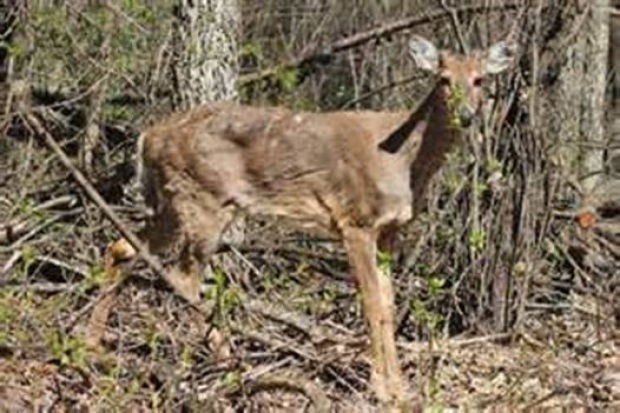
Deer with CWD
Through the efforts of sportsmen and organizations like the Conservation Federation of Missouri, all of the crazy legislation proposed by the Missouri legislature failed to become law.  However, that has not eliminated the effect that these narrow minded, special interest legislators have had on game management in the Show Me state.

Take a look at the new deer regs and see how the CWD containment zones have changed.  The MDC has done as good a job as possible, but they are fighting the fight with one, or maybe even both hands tied behind their back.

Because of the threats by MO legislators the past two years, after MDC tried to take commensense steps to fight CWD, MDC has relented on the regs implementation that would have had the most effect.

The best case scenario for CWD containment and then elimination would be to shut down captive cervid operation, aka fenced deer and elk. The next best scenario would be to have these operations double fence to create a zone of separation between captive (where the disease ALWAYS has been shown to originate in MO) and wild deer and elk.  The first option was a no-go almost from square one. The MDC got bullied off implementing the second by the tools of the cative cervid industry who did not want to spend the money to make their operations safe for the health of the Missouri deer herd.

The result is that for the benefit of a relatively small Missouri industry, a great engine of economic benefit for the state is being threatened by the spread of CWD.

This does not even address the passion sportsmen do or should have for what is being permitted to happen.  The tact MDC will now have to take is to liberalize deer harvest to the extent that essentially the herd is so reduced to make it difficult for CWD to spread.  That will mean a potentially long period of few deer after this policy runs its course.

It is not too late to get the attention of legislators and MDC officials.  Bend their ear on the phone by email, and on social media.  As a Missouri deer hunter, I feel passionate about our game management being controlled by politics and special interests.  So should you.

Friday, June 13, 2014

MDC Leads Efforts to Protect Deer

Proposed regulations are designed to prevent the spread of chronic wasting disease (CWD).  Informed citizen involvement is critical to success.
JEFFERSON CITY–The Conservation Commission voted to approve proposed amendments
to regulations regarding the operation of hunting preserves and wildlife breeding facilities that hold white-tailed deer, mule deer, their hybrids, and other members of the deer family, known as cervids. The changes would become part of the agency’s strategy to minimize fatal disease risks to the state’s deer herd. 
Actions recommended by the Commission include:
  • Banning the importation of live white-tailed deer, mule deer, and their hybrids from other states.
  • Improving fencing requirements for captive-cervid facilities.
  • Requiring all deer 6 months or older that die in a Conservation Department-licensed facility to be tested for CWD.
  • Establishing better record-keeping requirements for Conservation Department-licensed captive-cervid operations.
  • Prohibiting any new captive-cervid facilities within 25 miles of where CWD has been confirmed. 
The proposed amendments are designed to ensure the health of Missouri’s entire deer herd, which includes free-ranging and captive-cervids. These proposed amendments work to reduce the risk of this fatal disease (CWD) from spreading beyond the limited area where it has been found, while minimizing the economic impact on the captive-cervid industry and the communities and businesses that benefit from deer hunting and deer-related activities.
CWD is a fatal disease that affects members of the deer family, collectively called cervids. It is different and unrelated to the recent outbreak of hemorrhagic diseases. Those diseases – blue tongue and epizootic hemorrhagic disease – are caused by viruses and are often not fatal. Their effects are short-term and localized. However, hemorrhagic diseases have been in Missouri for years, and white-tailed deer are adapted to cope with them.
Over 500,000 citizens enjoy deer hunting, sharing their hunting heritage and passing that heritage on to future generations. Missourians consume millions of pounds of venison and share with neighbors in need through the Share the Harvest Program. The spread of CWD could negatively impact deer-dependent businesses that support more than 12,000 Missouri jobs and generate over $1 billion in economic activity annually.
Proposed changes to the Wildlife Code of Missouri would give white-tailed deer an extra measure of protection against this fatal disease. The Missouri Department of Conservation stresses that success depends on an informed, involved public.
Now that the Conservation Commission has approved proposed amendments to the regulations, they will be published in the Missouri Register. There will be a 30-day public comment period beginning July 16, and any comments on the proposed rule changes will be forwarded to the Conservation Commission for its consideration. Those comments will be reviewed prior to deciding whether the rules will be adopted, amended, or withdrawn. To comment go to www.mdc.mo.gov/deerhealth.
Enhanced by Zemanta

Sunday, March 16, 2014

MDC testing results show no new cases of chronic wasting disease

While promising news, the fatal disease for deer remains a significant threat.
JEFFERSON CITY, Mo. – Following the testing of 3,666 free-ranging deer harvested during
and after the 2013 deer-hunting season, the Missouri Department of Conservation (MDC) has detected no additional cases of chronic wasting disease (CWD) in Missouri free-ranging deer.
The total number of confirmed cases in Missouri free-ranging deer remains limited to 10 found in 2012 and early 2013. All were from a small area of northwest Macon County near where CWD was confirmed in 10 captive deer in 2012 at a private hunting preserve. Missouri’s first case of CWD was discovered in 2010 in a captive deer at private hunting facility in southeast Linn County owned by the same private hunting preserve.
“While I am cautiously optimistic that these latest test results suggest our efforts to limit the spread of CWD may be working, the threat of this infectious disease remains significant,” said MDC State Wildlife Veterinarian Kelly Straka. “Therefore, continued surveillance is important.”
Of the 3,666 deer tested, 1,520 were from Department’s CWD Containment Zone of Chariton, Randolph, Macon, Linn, Sullivan, and Adair counties. Of the 1,520, 206 were from the 30-square-mile CWD Core Area around the private hunting preserve in Macon County where cases of the disease were discovered in captive deer.
The remaining 2,146 test samples were gathered from deer harvested outside of the six-county Containment Zone as part of MDC’s ongoing statewide sampling effort.
As done in the past two years, MDC again worked with local landowners during January and February to harvest and test 147 free-ranging deer as part of 206 samples collected in the CWD Core Area. The effort was done to monitor infection rates and help limit the spread of the disease from deer to deer by reducing local deer numbers.
“More than 90 percent of Missouri land is privately owned, so landowners are vital to deer management and to our ongoing efforts to limit the spread of CWD,” Dr. Straka said. “We greatly appreciate the cooperation of local landowners in the CWD Core Area who participated in this effort. Their sacrifice in temporarily reducing local deer numbers is helping to protect the health of deer throughout the state.”
She added that MDC will continue working with hunters and landowners to test harvested free-ranging deer for CWD during future deer seasons.
Missouri offers some of the best deer hunting in the country, and deer hunting is an important part of many Missourians’ lives and family traditions. Infectious diseases such as CWD could reduce hunting and wildlife-watching opportunities for Missouri’s nearly 520,000 deer hunters and almost two million wildlife watchers.
Deer hunting is also an important economic driver in Missouri and gives a $1 billion annual boost to state and local economies. Lower deer numbers from infectious diseases such as CWD could hurt 12,000 Missouri jobs and many businesses that rely on deer hunting as a significant source of revenue, such as meat processors, taxidermists, hotels, restaurants, sporting goods stores, and others. CWD also threatens the investments of thousands of private landowners who manage their land for deer and deer hunting, and who rely on deer and deer hunting to maintain property values.
Chronic wasting disease infects only deer and other members of the deer family by causing degeneration of the brain. The disease has no vaccine or cure and is 100-percent fatal. CWD is spread both directly from deer to deer and indirectly to deer from infected soil and other surfaces. Deer and other cervids can have CWD for several years without showing any symptoms. Once symptoms are visible, infected animals typically die within one or two months. Once well established in an area, CWD has been shown to be impossible to eradicate.
For more information on CWD, including what MDC is doing to limit the spread, and what hunters and others can do to help, go online to mdc.mo.gov/node/16478.

Wednesday, October 30, 2013

MDC needs hunter help with CWD sampling in north-central Missouri

English: White-tailed deer
(Photo credit: Wikipedia)
Effort is for deer harvested in Adair, Chariton, Linn, Macon, Randolph and Sullivan counties.

JEFFERSON CITY, Mo – The Missouri Department of Conservation (MDC) is again working with hunters from around the state, along with taxidermy shops and meat processors in north-central Missouri, to collect tissue samples from adult deer harvested during the fall archery and firearms deer seasons. The cooperative effort is part of MDC’s ongoing work to detect cases of chronic wasting disease (CWD) in Missouri’s free-ranging deer.

The sample collection effort is limited to deer harvested in MDC’s CWD Containment Zone of Adair, Chariton, Linn, Macon, Randolph and Sullivan counties. MDC encourages hunters to take deer harvested in these counties to one of numerous cooperating locations in the region to have a tissue sample taken for testing. Sampling locations include area taxidermists and meat processors, and MDC offices in Columbia, Chillicothe and Kirksville during normal business hours.

Removing a tissue sample is free, takes only a few minutes and will not reduce the food or mount value of harvested deer. The sampling effort is taking place until Jan. 15. Test results typically take 3-4 weeks and are being posted for participating hunters on the MDC website at mdc4.mdc.mo.gov/applications/cwdSurveillance/cwdSurveillance.aspx.
More information on CWD and a list of sample-collection locations can be found in MDC’s “2013 Fall Deer & Turkey Hunting Regulations and Information” booklet available at MDC offices and nature centers, from permit vendors, and online at tinyurl.com/obxjp27.

The Department also encourages hunters throughout the state who encounter or harvest deer in poor condition with no obvious injuries to contact their local conservation agent or MDC office. Local MDC contacts can be found online atmdc.mo.gov.

CWD is always fatal to white-tailed deer and other members of the deer family, called cervids. There is no evidence that the disease can affect humans or domestic animals. CWD was first found Missouri in 2010 and remains confined to 21 confirmed cases in both captive and free-ranging deer in a small area that borders northeastern Linn and northwestern Macon counties. Cooperation from hunters during past sampling efforts helped detect cases found in free-ranging deer from the area.

“Infectious diseases such as CWD are a serious and growing threat to Missouri’s estimated 1.4 million free-ranging and 9,000 captive white-tailed deer, and the many Missourians, businesses, and communities that rely on a healthy and abundant deer population,” said MDC Deer Biologist Jason Sumners. “This includes nearly 520,000 deer hunters, nearly two million wildlife watchers, thousands of landowners, 12,000 Missouri jobs, and hundreds of businesses and communities around the state that depend on the $1 billion annual economic boost related to deer hunting and watching.”

MDC is also working with concerned citizens to identify actions to prevent new occurrences of CWD and to limit its spread in both captive and free-ranging deer. The Department encourages concerned citizens to share their comments online atmdc.mo.gov/deerhealth.

Saturday, October 26, 2013

Help wanted containing chronic wasting disease

The Missouri Department of Conservation asks hunters to help protect the state’s deer herd.

JEFFERSON CITY–Hunters are important partners in the Missouri Department of Conservation’s effort to slow the spread of chronic wasting disease (CWD), and agency officials urge hunters to take simple precautions when processing deer.
Although there is no evidence that CWD can affect humans or domestic animals, it is always fatal to members of the deer family. It is caused by abnormal proteins, called prions, which can remain infective for years after an infected deer dies.
Deer can become infected if they are exposed to soil containing CWD prions. Prions can get into soil when infected deer or deer parts decompose on the soil surface. Since many hunters process their own deer, they are key players in slowing the spread of CWD.
“One way that CWD can spread is by the transportation and improper disposal of carcass parts by hunters,” says Conservation Department Resource Scientist Jason Sumners. “CWD prions are concentrated in the spinal column, brain and other non-edible parts of deer that hunters normally discard. It’s important for hunters to know that moving deer carcasses from one part of the state to another runs the risk of spreading CWD.”
CWD has been found in captive and free-ranging deer in Macon County. The Conservation Department has established a CWD Containment Zone in Adair, Chariton, Linn, Macon, Randolph, and Sullivan counties and has taken measures to confine the disease to this area. Sumners says he is confident that hunters will do everything they can to avoid spreading CWD if they understand how important proper carcass disposal is.
“No one has more at stake in this effort than hunters do,” he says.
Sumners says hunters should avoid cutting through bones, the spine or brain when processing deer carcasses. If they hunt somewhere other than home, they need to bring knives and containers so they can remove meat from bones and leave behind potentially infectious material.
If hunters must transport whole carcasses, then they need to send non-edible carcass parts to state-approved landfills, where they will be properly buried. This can be accomplished by double bagging the carcass remains and sending them through municipal trash collection. If this is impractical, bury the carcass deep enough that scavengers can’t dig it up.
Preparing antlered deer for taxidermy requires different precautions. Taxidermists use artificial head forms to create mounts, so there is no reason to keep skulls, which can carry prions. When removing the cape from the carcass, also skin the head. Use a power saw to remove the antlers, along with a small portion of the skull that joins them. Clean the inside of the skull plate with chlorine bleach before leaving the area where the deer was killed.
Many hunters prefer to make their own “European” mounts, where antlers are left on deer skulls and mounted without hide. Cleaning intact skulls usually includes boiling. This is not hot enough to deactivate prions, so tissues to be discarded should be soaked for approximately one hour in a 50-percent bleach mixture to minimize any potential for those materials to be infectious.
Sumners also encourages hunters who harvest deer within the containment zone to donate tissue samples for the CWD monitoring program the Conservation Department started in 2002.
The Wildlife Code of Missouri requires hunters who harvest deer, elk, or moose out of state and bring the animal with the spinal column or head attached into Missouri to call toll free, 877-853-5665, and report the animal’s entry within 24 hours. They also must take the carcass to a licensed meat processor or taxidermist within 72 hours of entry. This is designed to prevent introducing CWD into new areas of Missouri from other states.
Hunters transporting deer through Missouri en route to other states do not need to call the number.
Details about these measures are listed in the 2013 Fall Deer & Turkey Hunting Regulations and Information booklet, which is available at MDC offices, where hunting permits are sold and online at mdc.mo.gov/node/3656.

Thursday, September 5, 2013

Citizen help critical to avoid spreading wildlife diseases

Proper disposal of deer carcasses is one key element
in efforts to limit the spread of chronic wasting disease.
JEFFERSON CITY–At a time when many events are beyond one person’s control, it is reassuring to learn that personal action can affect something important to you.
That is the message from the Missouri Department of Conservation regarding the
biggest current challenge to wildlife health – chronic wasting disease (CWD). With Missouri’s archery deer season set to open Sept. 15 and firearms season not far behind, the agency reminds hunters of their critical role in slowing the spread of CWD.
CWD is a fatal, neurologic disease of the deer family. Although there is no evidence it can infect domestic livestock or people, CWD could dramatically affect Missourians’ quality of life.
Millions of Missourians hunt white-tailed deer or enjoy watching deer and other wildlife. The Conservation Department is working to minimize the spread of CWD beyond the few square miles where it currently is found. Failure to do so could disrupt the $1 billion in economic activity and 12,000 jobs that revolve around deer hunting and viewing. Besides that, it could deprive hundreds of thousands of Missourians of treasured family hunting traditions and millions of pounds of lean, healthful meat that hunters share with family, friends, and needy Missourians each year.
The Conservation Department is hosting the following public meetings around the state to provide information about its plans and to get comments about limiting the spread of CWD among captive and free-ranging deer. People can also post comments online at mdc.mo.gov/deerhealth.
·         Sept. 3, 6:30 – 8:30 p.m., Macon County Expo Center, U.S. Highway 63
·         Sept. 5, 6:30 – 8:30 p.m., MDC Powder Valley Nature Center, 11715 Cragwold Road, Kirkwood
·         Sept. 16, 6:30 – 8:30 p.m., West Plains Civic Center, 110 St. Louis St., West Plains
·         Sept. 18, 6:30 – 8:30 p.m., MDC Cape Girardeau Nature Center, 2289 County Park Drive
·         Sept. 23, 6:30 – 8:30 p.m., MDC Runge Nature Center, Missouri Highway 179, Jefferson City
·         Sept. 30, 6:30 – 8:30 p.m., Missouri Western University Kemper Recital Hall in Leah Spratt Hall, 4525 Downs Drive, St. Joseph
·         Oct. 1, 6:30 – 8:30 p.m., MDC Burr Oak Woods Nature Center, 1401 N.W. Park Road, Blue Springs
·         Oct. 9, 6:30 – 8:30 p.m., MDC Springfield Nature Center, 4601 S. Nature Center Way
For more information, go online to mdc.mo.gov and search “chronic wasting disease.”
“CWD is here,” says Conservation Department Resource Scientist Jason Sumners, “but that doesn’t mean we have to throw in the towel. There are several things that hunters and others who love wildlife can do to limit CWD’s impact on our deer herd.”
Sumners says the infectious agents that cause CWD are spread several ways. One major cause of spread is direct contact with an infected animal. Another is through contact with soil contaminated with CWD prions from infected animals’ urine or feces. To reduce the potential for these types of transmission, deer attractants, such as bait piles, have been prohibited in the CWD Containment Zone consisting of Adair, Chariton, Linn, Macon, Randolph, and Sullivan counties.
Soil also can be contaminated by decomposition of body parts from infected deer. To reduce this risk, hunters need to get in the habit of disposing of deer carcasses properly.
“Proper disposal is critical,” says Sumners. “We need hunters to dispose of deer carcasses in ways that prevent soil contamination.”
Sumners also noted that CWD might not always be confined to the CWD Containment Zone.
“We can’t be sure it won’t show up somewhere else in the state,” he says. “So it’s important for all deer hunters to get in the habit of properly disposing of carcasses by burying them or sending them to state-approved landfills. We want to do everything we can to make it harder for CWD to spread in Missouri.”
The Conservation Department has disposal information in the 2013 Fall Deer & Turkey Hunting Regulations and Information booklet, which is available wherever hunting permits are sold. It also is online at mdc.mo.gov/node/3656.
“In the past, it was far less of a concern to shoot a deer in one area, put it in your truck, and take it home – maybe clear across the state – to butcher it,” says Sumners. “But today, to ensure the long-term health of our deer herd, we have to change our habits. That means boning out meat where a deer is taken and properly disposing of the carcass there. If we act decisively, we have a chance of slowing the spread of CWD to a crawl. That will buy us time to continue our efforts to find new solutions to this challenge.”
Sumners says CWD is unlike hemorrhagic diseases (EHD and blue-tongue), which only kill some infected animals, and those that survive develop immunity and pass it on to their offspring. The history of CWD in Colorado, West Virginia, Wisconsin, and Wyoming shows that CWD spreads steadily through an increasing percentage of deer and kills every infected animal, ruling out the development of immunity.
The Conservation Department is acting decisively – with the help of landowners – to slow the spread of CWD. For the past three years, landowners and Conservation Department teams have been removing deer from the CWD Core Area. This 30-square-mile area surrounds the locations around the Linn-Macon county line where CWD-positive deer have been found. This reduces deer population density, thereby decreasing the likelihood of CWD spreading from one deer to another. The Conservation Department also has been testing deer taken in this area and statewide to track the distribution and prevalence of CWD.
Hunters in the six-county CWD Containment Zone help with this effort by submitting tissue samples to the Conservation Department for testing.
Because brain tissue can carry CWD prions, it is important to properly handle the heads or skulls of trophy deer. Hunters can use meat saws or reciprocating saws to remove the antlers with a small skull plate for mounting and send the rest to a landfill. Removing excess tissue from skull plates, deer hides, and capes makes them safe to take to other areas.
The importation, transportation, or possession of deer, elk, or moose carcasses or carcass parts from outside of Missouri is regulated to protect Missouri’s deer herd. You can bring in meat that is cut and wrapped, meat that has been boned out, quarters or other portions of meat with no part of the spinal column or head attached, hides or capes from which all excess tissue has been removed, antlers, antlers attached to skull plates or skulls cleaned of all muscle and brain tissue, upper canine teeth, and finished taxidermy products.
People may transport carcasses or parts of carcasses with the spinal column or head attached into Missouri only if they report the action to MDC by calling 877-853-5665 within 24 hours of entering the state. They must then take the carcasses or parts of carcasses to a licensed meat processor or taxidermist within 72 hours of entry. Licensed meat processors and taxidermists must dispose of the discarded tissue in a properly permitted landfill.
-Jim Low-

Saturday, April 6, 2013

CWD remains confined to Linn-Macon-County Core Area

English: Distribution of Chronic Wasting Disea...
Distribution of Chronic Wasting Disease in the North America in April 2007 (Photo credit: Wikipedia)

Four new cases from targeted deer reduction brings total to 10 in Missouri free-ranging deer.

JEFFERSON CITY, Mo. – The Missouri Department of Conservation (MDC) has confirmed four more cases of chronic wasting disease (CWD) in free-ranging deer. The four deer were among 102 harvested in January and February in the CWD Core Area of Linn and Macon counties. The Core Area is comprised of a 29-square-mile block along the northern part of the Linn- and Macon-county border where CWD was first detected in free-ranging deer in early 2012. The intensive sampling effort was conducted by MDC and participating landowners to monitor infection rates, and limit the spread of the disease by reducing local deer numbers.

These four new cases bring the total confirmed cases of the disease to 10 in Missouri free-ranging deer with all from the small section of Linn and Macon counties.

MDC tested 3,225 harvested deer statewide for CWD last year, including 196 from the CWD Core Area, and 1,783 from the Department’s larger six-county CWD Containment Zone consisting of Adair, Chariton, Linn, Macon, Randolph and Sullivan counties. MDC has tested more than 38,000 deer for the disease since 2001.

“Our extensive CWD testing indicates we caught the disease while it is still limited to a small number of deer in a very concentrated area,” says MDC State Deer Biologist Jason Sumners. “We hope that by reducing deer numbers in the Core Area, we can remove those with CWD. This will help reduce the spread of the disease to other deer in the area, and prevent, or at least dramatically slow, the spread to other areas of Missouri.” 

Sumners adds that more than 90 percent of Missouri land is privately owned, so landowners are vital to deer management and to MDC’s efforts to limit the spread of CWD.

“We greatly appreciate the cooperation of these local landowners,” Sumners said. “The effort to reduce deer numbers within the 29-square-mile core area will help protect the health of deer throughout the state.”

He added that MDC will continue testing harvested free-ranging deer for CWD during future deer seasons.

Wednesday, January 23, 2013

Latest CWD testing shows one deer positive for disease

Map of Missouri highlighting Macon County


atest positive brings total to six found in free-ranging deer, all from northwest Macon County.

JEFFERSON CITY Mo – The Missouri Department of Conservation (MDC) reports that one deer recently harvested by hunters in north-central Missouri has tested positive for Chronic Wasting Disease (CWD), which is fatal to deer. The adult buck was harvested in northwest Macon County, where five previous cases of CWD have been found since early 2012.

This latest finding is a result of MDC collecting a total of 1,665 tissue samples for CWD testing from hunter-harvested deer in a six-county “CWD Containment Zone.” The sampling effort took place in Adair, Chariton, Linn, Macon, Randolph and Sullivan counties during the past fall archery and firearms deer seasons. The sampling effort was part of MDC’s targeted CWD testing and containment efforts in the area.

Saturday, May 26, 2012

MDC to hold open house on CWD next steps June 2 in Macon County

English: Distribution of Chronic Wasting Disea...
English: Distribution of Chronic Wasting Disease April, 2007 (Photo credit: Wikipedia)
Open house will be at New Cambria High School June 2 between 1-4 p.m.

JEFFERSON CITY Mo. – The Missouri Department of Conservation (MDC) will hold an informational open house on Chronic Wasting Disease (CWD) in Macon County on June 2 at New Cambria High School, 501 S. Main St. The public is invited to stop by 1-4 p.m.

MDC staff will provide information on five recently found cases of CWD in free-ranging deer in northwest Macon County, explain disease management actions the Department is taking, answer questions and provide information on managing private land for deer.


MDC’s disease-management steps to help contain the spread of CWD include two regulation changes to the Wildlife Code of Missouri, recommendations on transportation and disposal of deer carcasses and continuing CWD sampling of deer harvested in the area where CWD has been found.
Restriction on Feeding

The Conservation Commission approved a regulation change at its May 25 meeting that places a restriction on activities that are likely to unnaturally concentrate white-tailed deer and promote the spread of CWD. The ban on the placement of grain, salt products, minerals and other consumable natural or manufactured products is limited to the area where CWD has been found in Macon County and is comprised of Adair, Chariton, Linn, Macon, Randolph and Sullivan counties.

The regulation includes exceptions for backyard feeding of birds and other wildlife within 100 feet of any residence or occupied building, or if feed is placed in such a manner to reasonably exclude access by deer. The regulation also includes exceptions for normal agricultural, forest management, crop and wildlife food production practices.

According to MDC Deer Biologist Jason Sumners, the reason for the regulation change is that activities such as feeding and placement of minerals/salts that artificially concentrate deer greatly increase the likelihood of disease transmission from animal to animal or from soil to animal.

Removal of Antler-Point Restriction
The Conservation Commission also approved a regulation change at its May 25 meeting for a special harvest provision that rescinds the antler-point restriction (four-point rule) in Adair, Chariton, Linn, Macon, Randolph and Sullivan counties.

According to Sumners, the reason for the regulation change is that management strategies such as antler-point restrictions, which protect yearling males and promote older bucks, have been found to increase prevalence rates and further spread the disease.

Sumners explained that yearling and adult male deer have been found to exhibit CWD at much higher rates than yearling and adult females so a reduction in the number of male deer can help reduce the spread of CWD. He added that the movement of young male deer from their birth range in search of territory and mates is also a way of expanding the distribution of CWD.
Don’t Remove Carcasses from Area

MDC also encourages hunters who harvest deer in Adair, Chariton, Linn, Macon, Randolph, and Sullivan counties not to take whole deer carcasses or carcass parts out of the area where CWD has been found.  Exceptions to this include meat that is cut and wrapped, meat that has been boned out, quarters or other portions of meat with no part of the spinal column or head attached, hides or capes from which all excess tissue has been removed, antlers, antlers attached to skull plates or skulls cleaned of all muscle and brain tissue, upper canine teeth and finished taxidermy products.

According to Sumners, the reason for this regulation change is that CWD can be transmitted from the environment to deer through soil and water that contain infected waste and/or infected carcasses. Deer can be infected with CWD but have no visible signs or symptoms. Moving harvested deer that still have parts known to concentrate CWD (brain, spinal cord, eyes, spleen, and lymph nodes) from the area known to have CWD can introduce the disease to other parts of the state through the improper disposal of carcasses.

He explained that hunters should make every attempt to avoid moving the head and spinal cord from the area and properly dispose of potentially infected deer carcasses, including bones and trimmings, to minimize the risk of exposure to uninfected deer. MDC advises hunters to double-bag carcass parts and take them directly to a landfill, or place them in trash cans for pick-up. Burying carcass waste deep enough to prevent scavengers from digging it up is another acceptable option. As a last resort, and only on their own land, hunters can put carcass waste back on the landscape. Carcasses should be put as close as possible to where the deer was harvested so as to not spread CWD-causing prions to new locations. If possible, put the carcass in a location where it will be inaccessible to scavengers and other deer.

Fall Harvest CWD Sampling

Sumners added that MDC will also continue to work with hunters who harvest deer this fall in Adair, Chariton, Linn, Macon, Randolph and Sullivan counties to collect samples for CWD testing. Details on these efforts are being developed and will be shared before the 2012 fall deer hunting season.

Sunday, March 25, 2012

Three more cases of CWD found in free-ranging deer in Macon County

Cwd map 2006
Cwd map 2006 (Photo credit: Wikipedia)
MDC testing of free-ranging deer results in five total cases of CWD with all found in same area.

JEFFERSON CITY Mo – The Missouri Department of Conservation (MDC) received final test results today from 656 tissue samples taken from free-ranging deer harvested earlier this year. Results included three CWD-positives with two from adult does and one from an adult buck. The testing was conducted by MDC staff and area landowners in a 163-square mile area in northeast Linn and northwest Macon counties specifically for CWD sampling.

Missouri’s first two cases of CWD in free-ranging deer were detected in two adult bucks harvested in northwest Macon County during the 2011 fall firearms deer season. The three most recent CWD positives were harvested within two miles of the two original cases of CWD.

MDC conducted its 2011 fall tissue-sampling effort in response to two cases of CWD found in captive white-tailed deer at two private, captive-hunting preserves in Macon and Linn counties. Since October 2011, three more captive deer at the Macon County preserve have tested positive for CWD. Depopulation, quarantine and other management activities at the private preserve are being coordinated by the Missouri Department of Agriculture. The five cases of CWD in free-ranging deer have been found within two miles of the Macon County preserve.

While MDC identified the first case of CWD in free-ranging deer in Missouri in January, the Department has been testing for it for years. With the help of hunters, MDC has tested more than 34,000 free-ranging deer for CWD from all parts of the state since 2002.

MDC staff are further analyzing recent test results, continuing to evaluate efforts and lessons learned from other states with CWD, and consulting with various other wildlife experts around the country. The Department’s main objectives are to limit the prevalence and restrict the spread of CWD in Missouri.

According to MDC Deer Biologist Jason Sumners, there are several main factors associated with the management of free-ranging deer that will influence the future prevalence and distribution of CWD in Missouri: local deer density, deer concentration, the movement of deer and the movement of deer carcasses.
“Yearling and adult male deer have been found to exhibit CWD at a much higher rate than yearling and adult females,” Sumners said. “Of the 10 cases of CWD identified in both captive and free-ranging deer in Missouri, eight have been in adult bucks. Additionally, dispersal of yearling males from the range where they were born is one of the most likely means of expanding the distribution of CWD. The movement of infectious materials in the form of hunter-harvested deer carcasses that contain heads and spinal columns, where the disease concentrates, may also serve as a means of introducing CWD to other regions of the state.”

Sumners added that CWD has been found in only one small pocket of the state. “Our management efforts will focus on minimizing the prevalence and preventing the further spread of the disease from the area. We will keep the public informed as we develop those efforts.”

CWD is a neurological disease that is limited to deer, elk, moose and other members of the deer family, known as “cervids.” CWD can only be confirmed in deer by laboratory testing of the brain stem or lymph tissue. CWD is transmitted through prions, which are abnormalproteins that attack the nervous systems of these species. These prions accumulate in the brain, spinal cord, eyes, spleen, and lymph nodes of infected animals. CWD is spread by animal-to-animal contact or by animal contact with soil that contains prions from urine, feces or the decomposition of an infected animal.

Deer and other cervids with signs of CWD show changes in natural behavior and can exhibit extreme weight loss, excessive salivation, stumbling and tremors. CWD can be present in and transmitted by infected animals for up to several years before symptoms of the disease appear.

“Most deer that test positive for CWD appear to be healthy,” Sumners said. “Although one of the free-ranging does that tested positive for CWD did exhibit clinical signs of the disease.”

The Missouri Department of Agriculture (MDA) says there is no evidence from existing research that CWD can spread to domestic livestock, such as sheep or cattle. The Missouri Department of Health and Senior Services (MDHSS) says there is no scientific evidence that CWD is transmissible to humans through contact with or the consumption of deer meat.

The disease was first recognized in 1967 in captive mule deer in Colorado. CWD has been documented in both captive and free-ranging deer in Missouri, along with neighboring Kansas and Nebraska. It has been documented in free-ranging deer in neighboring Illinois, and in captive elk in neighboring Oklahoma. CWD has also been documented in both captive and free-ranging members of the deer-family in Colorado, Minnesota, New York, South Dakota, Wisconsin and the Canadian provinces of Alberta and Saskatchewan. Maryland, New Mexico, North Dakota, Utah, Virginia, West Virginia and Wyoming also have documented cases of CWD in free-ranging members of the deer family. Michigan and Montana have documented cases of CWD in captive members of the deer family.

10 Tips to Keep Your Outdoor Gear in Working Order and Well Organized

Camping Gear - It's expensive to buy, make it last. Maintaining and organizing your outdoor gear is crucial for ensuring it remains func...