Showing posts with label Gardens. Show all posts

Saturday, April 26, 2014

Avoid invasive trees such as Bradford Pears

Kansas City, Mo. – Spring is a wonderful time to plant new trees and shrubs, but landscapers should be careful not to plant species that can harm native habitats such as
woodlands. Bradford pear, for one, is an ornamental tree that has become invasive and chokes out native species in natural areas and parks. Gardeners and homeowners are urged to consider native alternatives for spring planting, such as the downy serviceberry.
   Bradford pears have been planted in the past because they produce white flowers in spring, are hardy, and experts formerly considered them safe. Because they are hybrids, it was believed they could not produce viable seed.
   But a varied mix of cultivars allowed some Bradford pears to cross pollinate and produce viable seed. Wildlife such as birds eat the fruits and scatter seeds, spreading the trees. Bradford pears, also called callery pears, compete well against native plants and trees because they leaf out early.
      “It’s also not a good ornamental tree because they’re not strong,” said Wendy Sangster, an urban forester for Missouri Department of Conservation (MDC). “They don’t stand up well in storms and the limbs break easily.”
   An alternative is downy serviceberry, a native tree that produces a small red fruit edible for people and wildlife. The trees also produce showy white blooms in April and make good landscape additions.
   A reliable and always showy native is the redbud tree. They’re quick growing with lovely lavender early-spring flowers and shapely green summer foliage. Wild plum is another good alternative tree that provides showy white blooms in spring. Dogwood trees will grow and bloom in Kansas City if planted in shady areas.
    Butterflies and birds like native wildflowers and trees in landscape settings. They utilize the flowers, fruits and sheltering branches. For information on natives, see http://www.grownative.org.
    For more information about rees, go to http://www.mdc.mo.gov/discover-nature/trees-work. Heartland Tree Alliance offers information specific to the Kansas City area at https://www.bridgingthegap.org/heartland-tree-alliance.
   Trees provide shade, clean air, scenery, wildlife habitat, lumber and boost property values. But extra care in choosing tree species and locations helps keep both the urban forest and wild lands healthy.

Sunday, August 19, 2012

MDC offers bright side for drought-lowered fishing ponds

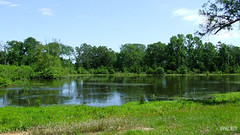
Pond on Stallion Park Place
 (Photo credit: gval.net)

By Bill Graham, MDC

KANSAS CITY, Mo -- There are some upsides to this summer’s withering heat and drought conditions that have lowered pond and lake levels. In ponds with deep enough water for fish to survive, the big fish are eating well. For pond owners, low water offers a good time to make improvements in ponds that can help in future drought.

Some ponds receive too little fishing pressure, said Scott Ryan, MDC Fisheries regional supervisor for Northwest Missouri. That can lead to stunted growth in bass and bluegill. Plus, vegetative growth can get heavy near pond banks and keep prey fish hidden.

But when water levels drop below vegetative lines, prey fish are forced into deeper water with the predators like largemouth bass.

“This allows the stunted largemouth bass the opportunity to grow significantly with the newly available food source,” Ryan said, “and by thinning the number of bluegill, the surviving bluegill have more food so they too will tend to grow to a larger size.”

The setback for vegetation can also provide a few years with less growth and improved fishing conditions for anglers.

“One of the biggest problems landowners report with their ponds is excessive vegetation,” he said. “If water levels stay low over the winter, a significant portion of emergent vegetation will be exposed to winter freezes and will not survive into next year. Droughts can improve the overall conditions in many ponds.”

Shallow depths and hot temperatures can cause low oxygen levels in pond water, which can cause fish kills. A partial fish kill in a pond with an overabundance of fish can thin out the weaker fish and allow survivors to grow larger in coming years, Ryan said.

Major fish kills are not good. Some have been reported in shallow ponds this summer. The best prevention for summer fish kills is to construct ponds properly or deepen them if siltation occurs, said Jake Allman, MDC Fisheries biologist in the Kansas City region. Ponds that have water depths eight feet or greater over at least 25 percent of the pond’s acreage are much more likely to keep fish alive during these hot and dry conditions.

If your pond does have a fish kill, it may be time to deepen it and make it more hospitable for fish in extreme weather, Allman said.
Good rains, full ponds and healthy aquatic ecosystems make for happy fishing outings. But even in this summer of extreme drought, the fish in many ponds will survive and thrive in seasons ahead.

For more information, visit MDC online at mdc.mo.gov/landwater-care/lake-and-pond-management.

Friday, March 23, 2012

Pond Management Workshop

Map of Missouri highlighting Cape Girardeau CountyMap of Missouri highlighting Cape Girardeau County (Photo credit: Wikipedia)
  • Why aren’t there big bass in my pond? 

  • Do I need to treat aquatic vegetation? 

  • What types of fish are best to stock in a pond? 

  • How many fish can you harvest from your pond each year? 

Fisheries Management Biologists Salvador Mondragon and Jason Crites will provide the answers to these and other commonly asked questions at the Cape Girardeau Nature Center on Thursday, March 29 from 6:30-9 pm.

Ages 12 and up, registration is required. Call 573-290-5218 to register or for more information.

10 Tips to Keep Your Outdoor Gear in Working Order and Well Organized

Camping Gear - It's expensive to buy, make it last. Maintaining and organizing your outdoor gear is crucial for ensuring it remains func...