Showing posts with label Smallmouth Bass. Show all posts

Wednesday, May 22, 2024

Tips for Fishermen and Hunters as Black Bass and Squirrel Seasons Open in Missouri


Here in a few days the Missouri Squirrel and Black Bass seasons open as we transition from Spring to Summer. Below, I have written an article that targets tips for smallmouth bass on the small rivers and streams of Missouri - primarily the Ozarks Region.  Right below this paragraph I am providing some links for more in-depth information and some links for squirrel hunting as well. Immediately following you will find the post on bronzeback tactics.

Missouri Smallmouth Central

Hunting Squirrels

Squirrel Recipes

Bass Recipes


Mastering the Art of Catching Smallmouth Bass on Small Streams and Rivers

Smallmouth bass fishing in small streams and rivers offers a unique and rewarding experience for anglers. These feisty fighters are known for their aggressive strikes and acrobatic battles, making them a favorite among freshwater fishing enthusiasts. To help you increase your catch rate, we've compiled the best tactics for catching smallmouth bass on small streams and rivers.

1. Understanding Smallmouth Bass Behavior

Before diving into tactics, it's essential to understand the behavior of smallmouth bass. These fish prefer clear, cool, and oxygen-rich waters. They often inhabit areas with a rocky or gravelly bottom, where they can find plenty of prey like crayfish, minnows, and insects. Smallmouth bass are also structure-oriented, seeking out places like submerged logs, boulders, and undercut banks for cover.

2. Choosing the Right Gear

For small stream and river fishing, you’ll need gear that matches the environment:

  • Rod and Reel: A medium-light to medium spinning rod, around 6 to 7 feet long, paired with a spinning reel is ideal. This setup provides the sensitivity and control needed for smallmouth bass.
  • Line: Use a 6-10 lb fluorocarbon or monofilament line. Fluorocarbon is preferred for its low visibility and abrasion resistance.
  • Lures: Opt for a variety of lures, including crankbaits, jigs, soft plastics, and spinnerbaits. These mimic the natural prey of smallmouth bass.

3. Top Lures for Smallmouth Bass

Smallmouth bass are opportunistic feeders. Here are some lures that have proven effective:

  • Crankbaits: Shallow-running crankbaits that mimic minnows are excellent for covering water quickly and triggering reaction strikes.
  • Jigs: Tube jigs and hair jigs are versatile and can be fished slowly along the bottom, mimicking crawfish.
  • Soft Plastics: Soft plastic worms, grubs, and creature baits can be rigged on a jig head or Texas-rigged for weedless presentation.
  • Spinnerbaits: These lures are great for fishing around structure and cover, their flash and vibration attracting bass from a distance.

4. Effective Fishing Techniques

Using the right techniques can make all the difference:

  • Casting and Retrieval: Cast upstream and retrieve your lure with the current. This natural presentation mimics prey being washed downstream, enticing predatory strikes.
  • Drifting: Allow your bait to drift naturally with the current, especially in deeper pools and runs where smallmouth bass may be holding.
  • Targeting Structure: Focus on areas with structure such as rocks, submerged logs, and overhanging vegetation. These spots provide cover and ambush points for smallmouth bass.
  • Bottom Bouncing: Use weighted lures or jigs to bounce along the bottom, mimicking crayfish and other bottom-dwelling prey.

5. Seasonal Adjustments

Smallmouth bass behavior changes with the seasons:

  • Spring: As waters warm, smallmouth bass move into shallower areas to spawn. Target shallow flats and rocky areas with soft plastics and jigs.
  • Summer: During hot months, fish early in the morning and late in the evening. Focus on deeper pools and shaded areas using crankbaits and spinnerbaits.
  • Fall: Smallmouth bass become more active, feeding heavily before winter. Use crankbaits and jigs around structure and in current breaks.
  • Winter: Fishing slows down, but you can still catch smallmouth bass by fishing deep, slow-moving pools with jigs and soft plastics.

6. Reading the Water

Understanding how to read the water is crucial:

  • Eddies and Current Breaks: Smallmouth bass often hold in eddies and behind current breaks where they can conserve energy and ambush prey.
  • Riffles and Runs: These areas provide oxygen-rich water and are often teeming with prey. Smallmouth bass will position themselves in these spots, especially during warmer months.
  • Deep Pools: In small streams and rivers, deep pools offer refuge and a consistent food supply. These are prime spots to target, particularly in summer and winter.

7. Catch and Release Practices

To ensure the sustainability of smallmouth bass populations, practice catch and release:

  • Handle with Care: Use wet hands or a rubberized net to handle the fish, minimizing damage to their protective slime coat.
  • Quick Release: Minimize the time the fish is out of the water and release it promptly to reduce stress.

By understanding smallmouth bass behavior, choosing the right gear, and employing effective fishing techniques, you can increase your chances of success on small streams and rivers. Remember to respect the environment and practice ethical fishing to ensure these waters remain bountiful for future generations.

Happy fishing, and may your next trip be filled with thrilling smallmouth bass action!

Saturday, September 17, 2016

Missouri Outdoors and Conservation News for September 17th, 2016

Have a big nice Christmas tree for the governor?  If you do, the Missouri Department of Conservation would like to hear from you. Get your entry in by September 30th.  Here's where to get more info or enter a tree: https://goo.gl/qOmnp9

Missouri deer hunters who harvest deer and use Telecheck will get some new questions you probably should be prepared for.  Telecheck will ask deer hunters who harvest does if the distance from the edge of the eyeball to the edge of the nostril is greater than 4.5 inches. For deer hunters who harvest antlered bucks, Telecheck will ask if the circumference of an antler one inch above the base is greater than 2.5 inches (the approximate circumference of a nickel). The measurement request will not apply to hunters who harvest button bucks. The info will be used to determine age classes of harvested deer so they can manage the herd better,  

The MDC is seeking comments on management at Busiek State Forest and Wildlife Area in Christian County.  You need to get your two cents worth in this month (September) and you can get the details at https://goo.gl/QwiP1z.


There has been initial approval made by the Conservation Commission on Smallmouth Bass and Rock Bass (known as Goggle Eye in Missouri).  There will be a comment period beginning in October.  The new regs will change length and possession limits in certain waters and the Commission hopes these changes will ensure a sustainable fishery for future generations.  MDC makes reg proposals based on sound science, and often local interests find them objectionable because they might change the way things have been.  We encourage readers to educate themselves on the reg changes and give their input.  More info is at https://goo.gl/lzrS6a.

One of the largest public land areas in Missouri is Current River Conservation Area, and MDC is also seeking
input on its management.  The comment period ends September 30th.

This area is rich in outdoor opportunities including paddling, fishing, hunting, hiking, and camping.  Let MDC know what you'd like to see happening in the area. Info is at https://goo.gl/QwiP1z.

The MDC has designated a new State Champion Tree - a chinkapin oak tree in Columbia, as the largest of its kind anywhere in the state.  

MDC Community Forester Ann Koenig took an official measurement using a uniform formula to assess a point value to big trees. The formula, which accounts for the tree’s height, crown spread, and trunk size, scored 310 points for the tree Russell nominated – dethroning the previous state champion chinkapin oak in St. Charles County by only 17 points.  See this beautiful tree below.

If you are interested on improving habitat on your property, particularly for quail, get a copy of the Covey Newsletter from MDC at https://goo.gl/Kb1AeW

If you are looking for some family outdoor fun on September 24th, check out Family Outdoors Day in Lee's Summit.  Exhibits and teaching stations will be set up throughout the Reed Wildlife Area at 12405 S.E. Ranson Road. Also serving as co-sponsors this year are Nathan’s Catch, a non-profit effort providing fishing rods and reels for youths, and the J.E. Fehsenfeld Family Foundation in memory of Jan M. Dillow.

Fishing gear and instructors will be available at a Reed Area lake. MDC staffers and volunteers can provide hands-on instructions on how to cast bait or a lure with a rod and reel. Loaner gear and bait will be provided for fishing. MDC experts can also answer questions about fish populations in the region’s lakes and streams.

It will run from 10 until 3 and more info is available by calling 816-622-0900.

With the Missouri deer season now underway with the archery season going, hunters are encouraged to help the less fortunate by utilizing the Share the Harvest program.  

The program works by deer hunters donating their extra venison -- from several pounds to whole deer -- to participating meat processors throughout the state who grind and package the deer meat. The packaged venison is then given to food banks and food pantries for distribution to Missourians in need of food assistance.

Processing fees are covered entirely or in part by numerous local sponsors, along with statewide sponsors that include: MDC, CFM, Shelter Insurance, Bass Pro Shops, Gateway Area Chapter of Safari Club International, Missouri Chapter of the National Wild Turkey Federation, Midway USA Inc., and the Missouri Food Banks Association.


Funds are available to help with processing costs when a whole deer is donated during all portions of the archery and firearms deer seasons. The Conservation Federation of Missouri reimburses processors a pre-determined amount for each whole deer donated. This allows processors to reduce processing fees to hunters. In addition, many processors have local funds available that allow deer to be processed for free or at a reduced cost. Hunters should contact individual processors to determine what funds are available. The cost of processing is the hunter’s responsibility when funds to help cover the full cost are not available.

Get more info on Share the Harvest at https://goo.gl/hf7OVM


Sunday, June 19, 2016

Camping on Missouri Conservation Areas

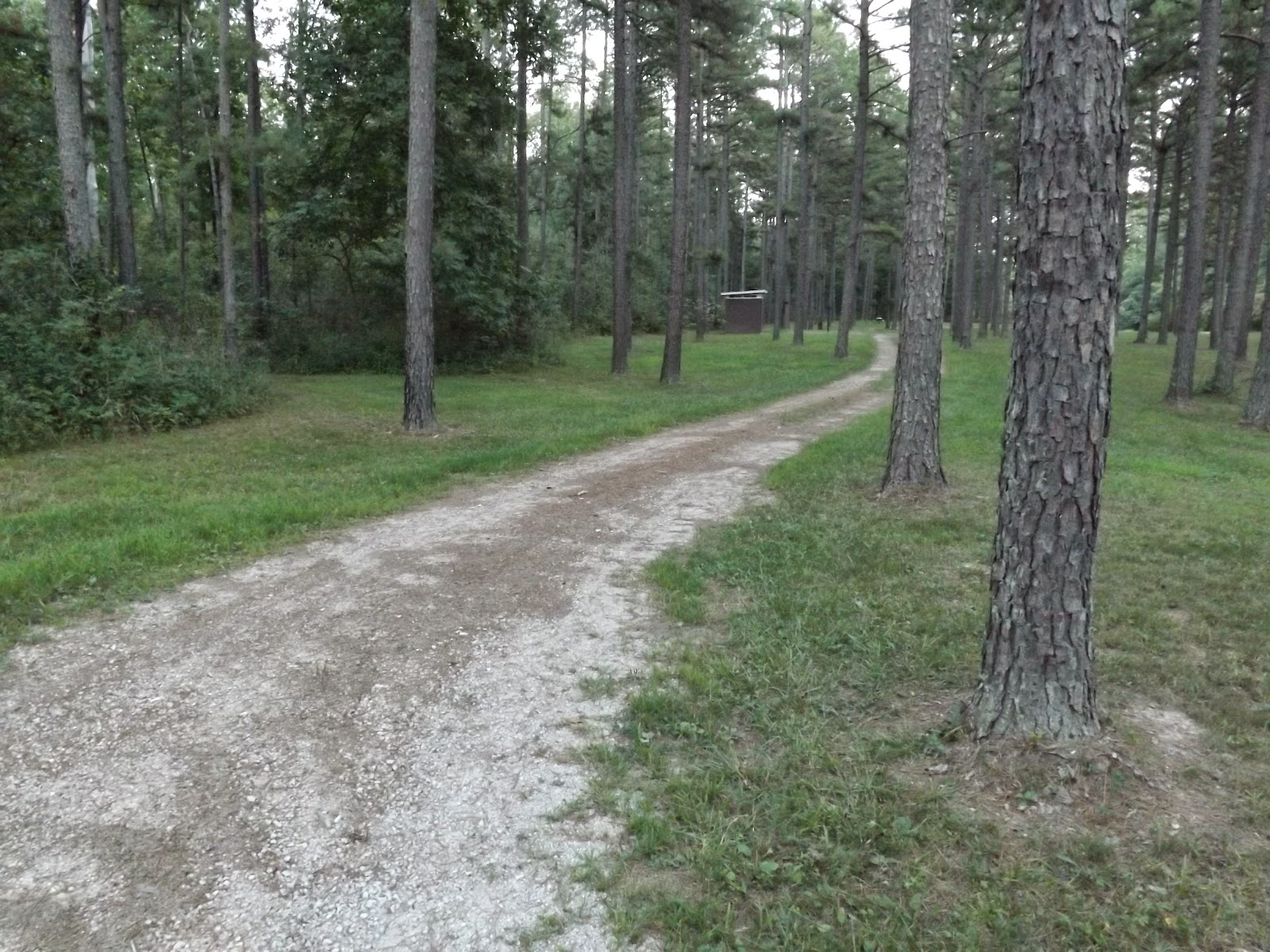
Family Camping amongst the shortleaf pines at Peck Ranch Conservation Area
There are some fairly incredible and underutilized camping opportunities across Missouri on Missouri Conservation Areas.  The really cool thing about this is that almost without exception, every county in Missouri has a conservation area where camping is permitted.

Though many conservation areas allow camping, some do not, and it should be noted that pretty much all the camping areas on MDC conservation area land are in the category of "primitive."

Many at least have outhouse type restrooms, but few if any even offer running water, let alone shower facilities like many state parks offer.  If that does not scare you off, then you just expanded your camping choices greatly in the Show-Me State!

Peck Ranch Campground
One of our favorites is Peck Ranch Conservation Area down in Carter and Shannon Counties, east and a little south of Eminence.  The area can be busy during deer seasons and even turkey season, and should probably just be avoided during special managed hunts held several times a year in the wildlife refuge portion.  A schedule for these hunts can be found here.

The main part of the campground is nestled into one of the most pristine stands of shortleaf pine trees that you will find anywhere in a campground setting.  Recreation opportunities in the surrounding areas abound.  The wildlife refuge now has an elk population.  A short drive away is one of Missouri's best swimming holes - Rocky Falls.  Within a 20 minute drive is some of
Missouri's best smallmouth bass fishing on the Current and Jacks Fork Rivers.  A section of the
View from firetower Stegall Mountain
famed Ozark Trail makes its way across Peck Ranch.  Finally, no visit to Peck is complete without a drive to the top of Stegall Mountain and climb as far as permitted up the steps of the resident firetower.  The views are amazing.

Just to bookend things, in the northern part of the state and a little west of Kirksville is Union Ridge Conservation Area.  It is one of the larger conservation areas in the northern part of Missouri at around 8000 acres.  There is fishing, hiking, hunting, and of course camping opportunities across this beautiful area.

Before you go, do a bit of research.  As mentioned before, some of these areas are open to camping and others are not. Also, quite a few have shooting ranges, which are fine, but may not fit into the tranquility you desire on a camping trip into nature.  To start research, visit the conservation atlas.

Rolling hills of Union Ridge Conservation Area
So, we encourage you to check out the camping opportunities available on these great areas.

Next, our series will begin to shift gears as we hone in on some unique areas, some of which we have mentioned already. The next in the series will come out June 21st, 2016.

Saturday, September 5, 2015

MDC seeking public input on changes for smallmouth and rock bass

Potential regulation changes will improve fishing and simplify length and daily limits.
JEFFERSON CITY, Mo. – Smallmouth bass and rock bass -- also called goggle eye -- are very popular with anglers on Missouri’s Ozark streams. However, research by the Missouri Department of Conservation (MDC) shows that both species grow slowly and that many do not reach a quality size before dying from natural causes or being caught by anglers.
As a result, many anglers surveyed by MDC have reported that fishing quality for rock bass has declined over the past decade. Many anglers also have responded that the minimum-length limits and daily limits for smallmouth on rivers and creeks varies and can be complicated.
According to MDC fishing regulations, there is no existing statewide minimum length limit for rock bass, but some rivers and creeks in MDC Special Management Areas have an eight-inch minimum. Smallmouth bass have a statewide minimum length limit of 12 inches with a six-fish daily limit, while MDC Special Management Areas have a minimum length limit of 15 or 18 inches with a daily limit of one or two fish.
As a result of research and angler feedback, the Conservation Department is proposing changes to fishing regulations for these two popular game fish that would help grow smallmouth and rock bass while simplifying regulations for smallmouth in MDC Special Management Areas.
For rock bass, MDC research shows that a majority of anglers favor a single, statewide minimum length limit. MDC is proposing setting it at seven inches.
For smallmouth bass, the proposed changes would maintain the current statewide length limit of 12-inches with a daily limit of six fish, but change all Special Management Areas to a 15-inch minimum length limit with a daily limit of one smallmouth bass.
Proposed regulations would also create a new Special Management Area on the Current River and expand the Special Management Areas on the Big Piney, Big River, Jacks Fork, and Meramec rivers.
MDC is seeking public input on these potential regulations changes and will host a series of open houses around the state to provide more information, answer questions, and get public comments. The Department invites anglers and others to stop by the following open houses between 6 and 8 p.m.:
  • Sept. 29 in Van Buren at The River Centre at The Landing, 110 E. Carter St.;
  • Oct. 1 in Blue Springs at the MDC Burr Oak Woods Nature Center, 1401 N.W. Park Road;
  • Oct. 5 in St. Robert at the St. Robert Community Center, 114 J.H. Williamson Drive;
  • Oct. 6 in Farmington at the Memorial United Methodist Church, 425 North St.;
  • Oct. 8 in Kirkwood at the MDC Powder Valley Nature Center, 11715 Cragwold Road;
  • Oct. 13 in Springfield at the MDC Springfield Nature Center, 4601 S. Nature Center Way;
  • Oct. 15 in Neosho at the National Fish Hatchery, 520 Park St.; and
  • Oct. 19 in Columbia at the MDC Central Regional Office and Conservation Research Center, 3500 E. Gans Road.
MDC is also accepting public comments online at mdc.mo.gov/node/9092 or through U.S. mail to: Missouri Department of Conservation, Attn: Policy Coordination, PO Box 180, Jefferson City, MO 65102.

Friday, May 24, 2013

MDC needs anglers’ help with bass tagging study in Ozark streams

Returning smallmouth bass tags can help Conservation Department manage this popular game fish.

WEST PLAINS, Mo. – The Missouri Department of Conservation (MDC) is asking anglers who fish select Ozark streams to help with a research project by reporting their catches of tagged smallmouth bass. One of Missouri’s most popular game fish, smallmouth bass are found predominantly in cool, clear streams and large reservoirs in the Ozarks. Bass season for Ozark streams runs from May 25 through Feb. 28, 2014.

MDC fisheries biologists are using information from the research project help manage bass habitat and harvest. This is the second and final year of the tagging effort, which involves MDC staff catching and tagging wild smallmouth bass to learn more about angler catch rates and fish movement in the Black River, Castor River, Courtois Creek, Current River and the North Fork of the White River.

Anglers are encouraged to report tagged smallmouth bass they catch in these waters. Each tag has a phone number printed on it. Anglers are asked to call the phone number listed on the tag and provide the following information: tag number, date of catch, length of bass, approximate location of the catch, and if the fish was kept or released.

“Angler participation was great during the first year and we need their continued help,” said MDC Fisheries Management Biologist Jen Girondo. “Information gained from reported catches of tagged smallmouth bass will help us manage this species, which many Missouri anglers love to pursue. Anglers don’t have to keep the fish. They may simply clip the tag and release the fish if they wish.”

Girondo said the tag return study was prompted by the need to directly measure how much harvest occurs in the Ozark streams.

“We need to ensure that our smallmouth bass fishing regulations are appropriate for providing quality fishing experiences for all Missouri stream anglers,” Girondo said. “Appropriate regulations entail that we understand where and how smallmouth use our streams and where
By: Brett Dufur
and how anglers catch smallmouth bass.”

MDC also conducted a mail survey of approximately 7,200 bass anglers from around the state in 2010 to gather their attitudes and opinions, and estimated efforts spent fishing for bass in Missouri streams. More than 4,000 anglers responded.

Results of the survey showed that anglers fished Missouri Ozark streams for smallmouth bass most often, followed by largemouth bass and rock bass. Wade/bank fishing was the most popular fishing method reported followed by float fishing. Jet boat fishing was the method least used. Most anglers reported taking multiple trips per year to fish for smallmouth bass, with 10 trips being the average. Most anglers reported catching multiple smallmouth bass per trip, with an average catch of seven per trip. Anglers also reported keeping an average of two smallmouth bass per trip. Anglers also provided more than 8,000 individual responses to what threatens the quality of Missouri stream fishing. Nearly half of all anglers responding cited pollution. For more information on the fishing survey, visit MDC online at mdc.mo.gov/node/21275 .

For more information on how MDC is working with conservation partners to manage bass habitat and harvest rates, read “Tracking River Smallmouth” in the May issue of the Missouri
By: Jim Rathert
Conservationist, available online at mdc.mo.gov/node/22005.
MDC’s smallmouth bass tagging study and fishing survey are two ways that conservation makes Missouri a great place to fish for more than one million anglers. Fishing activities in Missouri contribute more than $1.1 billion a year to the state and local economies, and support more than 10,800 jobs.

10 Tips to Keep Your Outdoor Gear in Working Order and Well Organized

Camping Gear - It's expensive to buy, make it last. Maintaining and organizing your outdoor gear is crucial for ensuring it remains func...