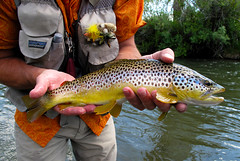
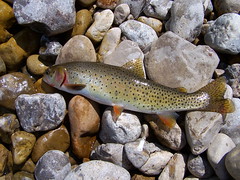
Showing posts with label Brown trout. Show all posts

Tuesday, February 19, 2013

Missouri Trout Parks - Part IV of the Missouri Trout Fishing Series


I have fished for trout in quite a few places and must say that I really do not know anyplace that quite equates to a Missouri Trout Park.  Now I am not asserting that similar places do not exist- heck, I am not even asserting that Missouri Trout Parks are going to be everyone's cup of tea.  In fact, I have encountered quite a few people who find them down right reprehensible.  I get that sentiment, but I surely do not share it.

Missouri Trout Parks are something akin to going to one of those game farms where they put out some pheasants or whatever you are hunting and then you "hunt" them.  There are some major differences, and I am going to make a case that they serve a valuable purpose in Missouri and for fishermen from anywhere.  Let me tell you just a bit about the parks that Missouri plays host to, all south of I-70 and all but one south of I-44.

Maramec Springs
The Missouri Trout Parks include Maramec Springs, Montauk, Bennett Spring, and Roaring River.  They are spread out in such a way that fishermen from just about anywhere in Missouri, western Illinois, eastern Kansas, northern Arkansas, and northeastern Oklahoma are within reasonable driving range of at least one of them.  All of them are fed by the cold water springs that make some Ozark Missouri streams suitable as trout habitat.  They are stocked mainly with rainbows, but also to a lesser e3xtent with brown trout.  They have opportunities for bait fishermen, spin fishermen, and to fly fishermen.  These parks are for many regional trout fishermen their introduction to the sport of trout fishing.  They often serve as a launching pad for a lifetime of trout fishing not just in the parks, but across the Ozark region and beyond.  For other trout fishermen, the parks fulfill their trout fishing desires for a lifetime.  For a few fishermen, they cut their teeth at these parks, then later experience more traditional waters perhaps in the Rocky Mountain West which brings them around to a snobbish attitude towards the waters where they began.  My trout fishing life kind of worked in reverse of this phenomenon.

Yampa River in NW Colorado
I was born in Colorado and raised in Alaska.  I really learned the art of trout fishing on waters of Baranof Island in Southeast Alaska, followed by a stint fishing for salmon trout and grayling in the Copper River Valley of Alaska.  Later, we moved back to Colorado, where we fished the Yampa, Green, and White Rivers of northwest Colorado.  These were trout fishing paradises, and I took them for granted.  I never even contemplated living somewhere that these kinds of fisheries did not exist.  Somewhere along the way, life happened, and I ended up in central Missouri for reasons not of interest to anyone reading this.  I never even knew that trout fishing existed in Missouri for perhaps six months or a year after I arrived.

As a matter of fact, I was really feeling sorry for myself.  I had lost all the hunting, fishing, and outdoor opportunities to which I was accustomed.  One day, I made a resolution that I would stop complaining about the opportunities that did not exist and try to find the ones that did.  That simple resolution changed my life.

The way this fits into this discussion of Missouri Trout Parks is that the discovery of these places got me, as well as my two boys (at the time elementary age kids), starting to get out and experience what the Ozark region of Missouri had to offer.  Given the fact that I had thought there were no trout fishing options in Missouri, the last thing I was going to do was turn my nose up at these places.  Plus, with younger kids, they were a pretty nice place to be able to set a kid in the bait fishing area and have them enjoy a great opportunity to catch their four fish limit and pretty much always have some action going.

During the "catch-and-keep" seasons at the trout parks, the Missouri Department of Conservation (MDC) essentially stocks fish based on the number of fishermen that visit the parks.  These are all hatchery fish, some from hatcheries on the premises and some from other hatcheries, primarily Shepherd of the Hills on Lake Taneycomo.  This is where I equate the trout parks to a game farm.  Of course they are not setting out specific trout with the idea that these trout are for you and those over their are for me.  The streams of the trout parks teem with fish and it's really kind of fun if you have the right attitude to do some site fishing and go after them.

Truthfully, the trout park fish are kind of naive.  They have been raised on hatchery food and are not exactly wise to the ways of the trout world.  Having said that, they do still retain a bit of their instincts to go after traditional trout offerings.  Fly fishermen probably use egg patterns ( a more common name for them in the trout parks is glow bugs or glow balls) more than anything else.  Other "flies" will work however - woollies, Adams, the locally known crackleback, Dave's hoppers, and many more.  One offering that bridges the gap between fly and spin fishermen is "mini-jigs" in white, reg, orange, black, pink, or some combination of these.  For bait fishermen in the parks, what you see used successfully most often is the prepared baits like Powerbait, or dough recipes made at home or purchased at one of the trout park stores.

Woolies are a great option
for fly fishermen in Missouri
Trout Parks
If you are fishing these parks in the summertime, you can get what you need to fish very cheaply.  The least expensive way to go is to get an ultralight with 4 lb test line, some tiny split shot sinkers and small treble hooks, and an assortment of colors of Powerbait pastes.  You will also need one of those nylon stringers that cost about a buck.  Throw in some tiny floats (bobbers) and an old pair of tennis shoes if you plan to "wet wade" and you are set.  Stop by the park store with your fishing license and you'll be set once you get your park tag for a just a few bucks (it's been $4 for as long as I can remember).  If you plan to bring home trout, bring a cooler too, but I recommend frying them or baking them the night you catch them at your campsite if you are making a camping trip out of it.

You can fish the parks in the winter too.  They are open limited days and hours for catch-and-release fishing. If you find the hustle and bustle of the parks a little to much during the regular trout park seasons, the winter season might be for you.  There are some additional regulations you must know during this time of the year, so make sure you visit the MDC site before you go.  Often, at this time of year, the park stores are not open to answer questions - but the parks are still patrolled by conservation areas and regulations enforced.

By: Larry R. Beckett
If you are a real adventurous soul, consider visiting a park on opening weekend.  The MDC stocks some real lunkers then and you will have the great honor to compete for them with thousands of other fishermen all around you.  It is not for everyone, myself included, but for some Missouri outdoorsmen, it is an annual tradition.

After getting familiar with the Missouri Trout Parks, we branched out to places like the Meramec River below Maramec Springs, the Current River below Montauk, and the Niangua below Bennett.  From there we have fished and learned the locations of dozens of other awesome streams across the Ozarks - some with their own unique strains of wild trout. These parks can be a lot of fun if approached with the right attitude.  They have served a great purpose in our outdoor lives and perhaps they can do the same for you.


Thursday, January 31, 2013

Trout Fishing on Missouri’s Current River

By David and Paul Mann

Part Two In Missouri Trout Fishing Series - Part One

Current River Trout Fishing

Montauk State Park Fishing

Missouri Trout Fishing

Ozarks Hatch Charts 

Missouri has a nice surprise for those unfamiliar with either the beauty of Missouri’s Ozarks or the regionally outstanding trout fishing.  One of the several places where this all comes together to create something truly magic is the Current River.

The Current River starts like rivers in few places do: from its outset it flows from the confines of Montauk State Park near Licking and Salem with strength. It emanates from the first of many springs which give it life and the cold water necessary to sustain its brown trout and rainbow trout populations.  While most of the trout that inhabit this stream are stockers, some from the hatchery at Montauk State Park where the river begins, and some from Shepherd of the Hills near Taneycomo, there are a small number of wild trout.  

Learning to fish this stream requires first a short description of the sections of trout water available.
As mentioned, the stream begins in Montauk State Park and also hosts one of Missouri’s entertaining trout parks.  In the park a hatchery supplies rainbow trout while browns are brought in smaller numbers from Shepherd of the Hills.  The park is a really fun place to spend some time and a great place to learn a few things about trout fishing.  We will come back later to specifics on fishing the park section.

The moment you pass the cable overhanging the river designating the end of Montauk, you enter into the Blue Ribbon trout section of the Current River.  This section continues down to the Cedar Grove Access/Low-water Bridge/Campground.  All together, the Blue Ribbon portion of the Current River trout fishing is a bit les than ten miles.

From Cedar Grove to Akers Ferry, the regulations change to White Ribbon rules.  This stretch of water is approximately nine miles.
Each of these three sections has different regulations, but also requires slightly different tactics for the fly or spin fisherman.  We will spend the balance of our time discussing tactics to get you catching fish on any of them.

Trout Park – Montauk State Park


Fishing Montauk State Trout Park is a great place to get started in the sport and in some really beautiful country, albeit in a setting with plenty of company.  The park is stocked during the Catch-and-keep season daily based on the number of fishermen that have bought trout park tags.  The catch-and-keep season runs from March 1st through October 31st as is the case in all of Missouri’s trout parks.  The park is closed for a short period and the rest of the year is catch-and-release.  The winter catch-and-release season can be a great time to visit as crowds are greatly diminished.

There are three basic areas with three sets of regulations at the park.  There is a fly-fishing only area that is designated catch-and-release only all year round.  The second zone is fly-fishing only but subject to a four fish limit (any combination of rainbows and browns – no size restrictions).  The third section is open to any legal fishing methods, including bait fishing.  In this park, fly fishing also can include spin fishing but using single hook spinners and other artificial baits that do not include soft plastics or scented presentations.  Please review the regulations through the park when you buy your tag to make sure you are abiding by park rules.  Conservation officers are present at all times when fishing is permitted.

Fly fishermen have much success nymphing under an indicator on 6x monofilament or fluorocarbon leader.  Popular presentations include prince nymphs, pheasant tails, copper johns, egg patterns, scud patterns, and san juans (please be aware we know some of these are not in fact technically in the nymph category – but are fished in a similar fashion under an indicator and we are thus lumping them together).  The princes, pheasant tails, coppers, and scuds can be fished effectively in #16-18 sizes.  The woolies work nicely in the sizes of #8-#10 and should be beaded. The egg patterns should also be beaded.  If you had to pick two flies try orange egg patterns and olive woolies.  All of these patterns are available at the park store for a reasonable price.

If you want to go with dries, during the winter afternoons you can usually find a few fish rising to blue winged olives and midges.  Summer months usually find fisherman having success fishing tricos and caddis patterns.  Don’t hesitate during these times to use royal wullfs and coachman attractors.  Terrestrials such as ant patterns and hoppers can be a nice option during the warm months as well.

Spin fishermen typically use marabou jigs in the fly area.  You will occasionally observe fly fisherman throwing these as well.

Bait fishing is extremely effective in the bait area.  There are many commercially prepared baits available, with perhaps the Berkeley Power Baits being most popular.  The park store carries some other options that work very well.  Additionally, corn, and homemade prepared baits work very well.  Worms will even work.  The “Social Hole” at Montauk has become locally famous.  If you are not the type to turn up your nose at bait fishing, you can really have some fun meeting some interesting folks here.

Blue Ribbon Section to Cedar Grove Access

The fishing (and the atmosphere) changes dramatically in the mileage below Montauk State Park. While the Montauk water is stocked once a day with trout during the regular season, the eight mile Blue Ribbon stretch from the Montauk lower boundary to Cedar Grove is only stocked once a year with the notoriously wily brown trout (which supplement the rainbows that make their way down from the park.) This has two effects, one positive, and one negative; the positive being that it reduces the number of anglers greatly, the negative being that there are obviously a lot less fish, and the ones that are there are more difficult to catch. That said, trout remain incredibly plentiful; indeed, only compared to the insane numbers of trout which roam the park waters would the population seem slight.

Caddis
The factors that really affect the fishing in this stretch have little to do with fish numbers. Still, nearly every cast will have your fly seen by a trout or two. The two most important differences are the bait restrictions and the more wild nature of the trout. Because this is a Blue Ribbon (otherwise known as ‘trophy trout’) section, the minimum length limit is high and only artificial lures and flies are allowed. This means the dough bait and worms which are so effective aren’t going to be an option. That’s okay though, because this section is best suited to fly fisherman anyway (though this is not to say that plenty of spin-fisherman don’t have success.) 

The quick, rocky riffles and deep pools are an inviting place for the fly angler. It seems that backcasting room abounds, and the nature of the current usually allows for easy drifts. Hatches occur almost daily, from the tricos of early summer mornings to the midge and blue-winged olive hatches on warm winter afternoons. This of course means that a healthy number of trout can be taken on dry flies just about the year-round. But don’t overlook nymphs and streamers; or more specifically, don’t overlook the egg pattern. Small egg patterns (or glo-bugs) account for a huge percentage of the trout taken here. I don’t know why supposedly selective resident trout are gullible to such ‘uncivilized’ fare, but they are, and why ask questions if a fly works? That said, a fair number of fly anglers can’t make themselves use egg patterns, and that’s okay too. Pheasant tail nymphs, Hare’s Ears, and even woolly buggers work quite well most of the time. A decent number of people do spin-fish here too, and small (1/32 ounce) spinners are usually great. The same is true with marabou jigs of the same weight.

The best two accesses to the Blue Ribbon stretch are at Tan Vat and Baptist Camp, each just down the road from Montauk Park. You’ll find a fair number of anglers around these accesses, but at least outside of the summer months, a short walk will get you to open, unfished water. Tan Vat tends to be a bit more crowded due to its (slightly) closer proximity to Montauk State Park.

Cedar Grove to Akers Ferry

The White Ribbon stretch (from Cedar Grove on down to Akers Ferry) doesn’t get a whole lot of press, and in some ways there is a reason for that. It’s stocked more often than the Blue Ribbon section, but unrestrictive regulations largely make up for that. The quantity of trout is just fine, but there aren’t a whole lot of lunkers here. Bait is allowed, and this is a great section to try Powerbait, worms, and even small minnows. The float from Cedar Grove to Akers Ferry is a bit long, but takes you through some awesome trout water, especially if you like to bait fish (and keep trout.) This is a wonderful place to catch some trout and eat them for a shore lunch with next to no regrets. These stocked rainbows allow for that.

The Current is a wonderful trout stream that takes many characters through its long stretch of trout water. From the crowded but trout-filled Montauk State Park, to the wild blue ribbon section, this is one of the true must-fish streams in Missouri. In our opinion, it’s the best trout stream in Missouri, although that can certainly be argued. But the ambience of this wild river mixed with the excellent trout fishing is always going to be tough to beat.

Tuesday, January 29, 2013

Missouri Trout Fishing has a lot to Offer


I grew up in Alaska and spent much time on the western slope of Colorado.  I have had the good fortune to take budget trips to some of the greatest trout waters in the East and West.  So I will not try to make the case that someone with the means to make a trip to one of these great destinations should cancel their trip and instead fish Missouri.  What I will do is get you excited about some truly terrific trout fishing that can be had in the Show-Me-State; at least by Midwestern standards.

One of the really cool things about fishing Missouri is the diversity of options.  There are classic freestone rivers of the western style, small babbling streams with small but wild trout, and at least one great option for lake fishing if that’s your style.  To top it off, Missouri hosts “trout parks” which as long as you do not mind a good measure of social interaction with fellow fishermen, you can stock up on stocked browns and/or rainbows with a limit every time.  If you want to put some trout on the table, these parks are the way to go. 
The purpose of this blog is to highlight some of the options available to the Missouri resident trout fisherman, or the fisherman making a visit.  It is not a comprehensive list of all the waters with detailed descriptions of each.  Next week, I will provide some tips on tactics for fishing these waters.  For highly detailed descriptions of nearly all Missouri trout fishing options, along with basic and more advanced tactics, visit the Family Outdoors Missouri Trout Fishing Section.

Freestone Rivers of Missouri

Believe it or not, and you probably won’t if you have never fished any of these waters, Missouri has some outstanding and cold crystal clear waters that might make you forget for a moment that you are not in Colorado or some other Western state.  The unique geography of Missouri has water erupting from massive springs after having spent long enough in the earth’s depths to arise crystal clear and cold (mid 50’s F).  This water has allowed for many miles of Missouri’s rivers fitting this description to be stocked with rainbows and browns, and in some sections to sustain what are now wild or mostly wild populations. Some of my purist friends do turn their noses up at our trout as being “unnatural” since they are stocked, or at least were at one time.  I find these fish to be game and in many cases, especially the wild fish, to be as beautiful as any I have observed.

Current River
The freestone stream on which we have spent the most time is the locally famous, at times infamous, Current River.  This stream has a partially deserved reputation as a party destination.  However, if one is at least moderately cognizant of the section of the river they will fish as well as the season, the Current can offer a terrific experience.  It begins at Montauk State Park near Salem and Licking Missouri.  There is a system of springs at Montauk that initiate the cold-water flow of the river, and is thus a great spot for a fish hatchery and one of Missouri’s trout parks. 

We will return to the trout parks later, but for now, the fisherman should understand that the first few miles of the river is in the Montauk Trout Park and stocked heavily with rainbows as well as a lesser number of browns.  It is also subject to the rules of the park in this section.

Below Montauk, the Current is a blue ribbon trout stream under Missouri Department of Conservation Regulations, which essentially means you are fishing catch-and-release, though you will occasionally pick up a fish, usually a brown that meets the 18 inch minimum.  Most fishermen will photograph their trophies if lucky enough to catch one, and then release them only to be remembered by the photograph, or perhaps a replica mount.

Current River
Below Montauk in the blue ribbon section, there are a couple of popular accesses, those being Tan Vat and Baptist Camp.  Tan Vat can be busy, and so can Baptist, but it seems like at Baptist fishermen do a better job spreading out along the river.  In all of this water, there is a nice mix of riffles which tend to produce more but smaller fish with deeper holes which produce larger and fewer fish.  Most of the nicer browns I have caught in this area were in these deep holes.  Do not confuse the deep holes with the slow rather stagnant sections.  The deep holes are downstream from riffles and often butt up against bluffs which plunge the water depth quickly to greater than ten feet. 

Downstream from the blue ribbon section is a white ribbon section with more liberal rules with regard to methods ande the fish you can keep.  These sections are stocked and I guess one can keep fish with a more clear conscience if that is his or her desire.  This section is equally beautiful, and is best accessed by canoe or kayak.

If you plan a visit to the Current, I suggest that you plan around the crowds of floaters.  From the park down to Baptist Camp, you will not encounter many of them, but if you fish downstream from here on a weekend in the summer, prepare for lots of company.  You are better off avoiding summer weekends if you can.  Fall and spring are in fact great times to fish the Current, with many days in the winter also being enjoyable times to be on the water.

For more information on the Current River, visit Family Outdoors Current River Trout Fishing.  You will find comprehensive answers to most of not all the questions you might have.

Eleven Point River's Greer Branch
The second river I will mention here is the Eleven Point.  It runs through some absolutely wild country, and has a fair number of wild rainbows resident to its waters.  If you wish to have more water all to yourself, this is a great option.  A nice place to start is at Greer Crossing.  There is very little in the way of access to the river except from on it, so this really is a canoe or kayaking river.  There are some potentially challenging spots on this stream for the novice if running the stream by canoe.  This sort of depends on river levels.

Without getting into too much detail, the Eleven Point differs from the Current in the respect that most of the fishing is streamer fishing and fairly deep.  There are some times where dries are effective, but the Eleven Point really is not the river for the dry fly purist. For more detail, visit Eleven Point Trout Fishing.

Small Stream Missouri Trout Fishing

With the internet, there are few secrets regarding places to fish.  Nevertheless, undoubtedly there are some who would rather there be no mention of these little trout fishing streams.  Several of them host wild rainbow populations and rarely produce fish that are larger than ten inches.  Unfortunately, despite almost all of these streams being confined to explicit fly only regulations, you will often find evidence of bait having been used leaving one to conclude that these fishermen were keeping the fish they caught.  These streams simply will not stand up to catch-and-keep fishing.

Having said all of that, perhaps the best protection for these little streams such as the Little Piney and Blue Springs Creek is the presence of ethical anglers willing to report transgressions of the necessary regulations.  This rationale, along with the simple reality that all of this information is in some form available anyway, will be my response to any who criticize me letting the cat out of the bag on these streams. 

Little Piney Creek
Vidas Slab
Little Piney is in fact my favorite place to fly fish in Missouri.  There is a blue ribbon and white ribbon section on the stream, with handy access right off of US 63 at Lane Springs just south of Rolla.  The section at Lane is in the blue ribbon section.  The white ribbon section is a bit more difficult to navigate to, but if you want the details on finding it, visit the Little Piney Creek Trout Fishing section of Family-Outdoors. 

There are numerous other of these beautiful little streams spread from down in the Springfield area all the way across the southern half of Missouri.

Trout Parks

Maramec Springs Trout Park in the Winter
Four trout parks are operated in Missouri by the Missouri Department of Conservation.  Many Missouri trout anglers ritualize the start of the Missouri trout park season as the start of spring.  On these first few days, the MDC releases some real lunkers, some topping ten pounds.  These first few days are combat fishing at its peak, and thus not really an attractive option for me even though they do offer some real chances for big fish.

There are a variety of options of regulations at these parks.  To the best of my knowledge, what they all have in common is a daily limit of four fish, and a great chance of filling that limit early in the day.  The parks are usually segregated as to the methods allowed in various sections.  Some sections allow bait fishing and some do not.  All offer some handicapped accessible areas.

These parks can be a lot of fun if you are in the right frame of mind.  They are also great introductions to the sport of trout fishing, whether you are a spin or fly fisherman.  Find specifics on the trout parks beginning at Missouri Trout Parks.

Lake Taneycomo

Lake Tanycomo
Here is a lake that has held and might in the future hold again record sized brown trout.  Fishing Taneycomo is a radical departure from the experience and methodology of trout fishing in the freestone streams, small streams, or even the trout parks of Missouri.

Taneycomo is stocked with over a half million rainbows every year, making the action up and down its twenty-two mile stretch pretty darn hot.  There are however some interesting tactics and baits that are used which we will discuss next week, or you can read about now at Taneycomo Trout Fishing.

So, despite Missouri not being blessed with a Madison, Frying Pan, Kenai, or Ausable River, it does have some pretty nice options for the trout angler.  Missouri is at the very least a great place to cut your teeth trout fishing, whether that be fly fishing or not.  Next week, we will get into some specifics on tactics including baits, lures, and flies, but much more.

What are some of your favorite Missouri trout fishing experiences?


Thursday, January 28, 2010

Trout Species of the Ozarks, by David Mann

Trout Species

Rainbow trout are far and away the most common trout in the Ozarks. Every trout stream in the region holds at least a decent population of rainbows, and they?re the predominant species in most Ozark streams. The Missouri Department of Conservation and the Arkansas Game and Fish Commission stock literally millions of rainbows each year. Also, they reproduce well in most trout streams here. They readily take spinners, spoons, nymphs, and various dry flies. Some seem extremely gullible, and easy to catch, but there are plenty of well educated specimens that require perfect presentation, and a good deal of luck to bring to net.


Brown trout are the proverbial "bullies" of the Ozark streams. While they are usually fewer in number than rainbows, they often take up most of the prime water, relegating the inferior water to other trout species. The trophy sized browns tend to be aggressive, more likely to strike a Rapala or a big streamer than a dainty dry fly. Smaller browns generally respond to the same techniques that produce rainbows. Brown trout tend to be more wary than other trout species, and generally require good technique. All of the Ozark tailwaters are good bets for trophy browns. The freestone streams may not hold as large of browns, but they make up for it in numbers. As a general rule, many or most browns caught from a tailwater will be wild fish, while freestone browns are always stocked.

Image of a brook trout (Salvelinus fontinalis)Image via Wikipedia


  • Brook Trout
Brook trout are often overlooked in the Ozarks. Only found in the Arkansas tailwaters (besides a small remnant population in the Spring River and several other small streams), these are probably the prettiest trout to be found in the area. They also tend to be relatively easy to catch, responding well to dry flies and nymphs, as well as spinners and spoons. Brook trout run much larger in the Ozarks than they do elsewhere, averaging between 12" and 14". Some trophy sized brooks up to 20" can be found. While all of the Arkansas tailwaters hold good populations of Brook trout, the best numbers will always be found the first 10 mile below the dam. The entire Norfork tailwater is a great bet for big brookies. There has been some reported natural spawning of brook trout, but they must be stocked to maintain fishable numbers.

  • Cutthroat Trout

YELLOWSTONE(Snake River Fine-spot?) CUTTHROAT ...Image by Fool-On-The-Hill via Flickr

Like Brook trout, Cutthroats are for the most part found only found in the tailwaters of Arkansas, although there is also a good population found in the Spring River. They're not difficult to catch, but good populations are only found in the first 15 or 20 miles below the dams, and in the first 5 miles below Mammoth Spring on the Spring River. Nothing makes you feel like your out west more than hooking cutthroat after cutthroat on a big dry fly. And that's very possible on all of the tailwaters, as cutthroat tend to be very willing to rise to dries (even when there's not actually a hatch occurring), especially during low water. The Little Red below Greers Ferry Dam may be the best bet for those targeting cutthroat. The Norfork and Bull Shoals tailwaters are close behind. Cutthroat trout populations are maintained by stocking.

These are the most common species of trout found in the Ozarks. While other species can be found sporadically from occasional stockings (Golden trout and Lake Trout being examples), these four are the only ones your likely to catch. All of these trout have many similarities, but they are different in some very special ways.
Reblog this post [with Zemanta]

Friday, August 21, 2009

Fishing Missouri's Forgotten Trout River - The Niangua River

Fishing Missouri's Forgotten Trout River - The Niangua River
By Davidson Manning

Niangua River, MOImage by Kyro S via Flickr


The Niangua River may be the most overlooked trout stream in the state of Missouri. It is widely known across the state as an excellent river for floating and smallmouth bass fishing, but the trout fishery is little known. Most area trout anglers only fish in the Niangua River's tributary, Bennett Spring Branch.

Above Bennett Spring Branch, the Niangua is a typical warm-water fishery. Smallmouth bass fishing is very good, but few trout are present. It is the cooling flows from Bennett Spring that make the river into a true trout stream. For eleven miles, the water is cool enough to hold year-round populations of rainbow and brown trout. Both species are stocked regularly.

The Niangua River isn't like other trout streams in the Ozarks. First of all, it just doesn't look like a trout stream. The river is big, and it usually isn't very clear. Also, the water temperature is usually above 70 degrees for most of the summer. With that said, for some unknown reason, the Niangua River does fish well all summer long, even when water temperatures are quite high. It is not uncommon to catch trout when the water temperature is 75 degrees. In other words, it's hard to believe trout do well in the Niangua, but they do.

Rainbow trout are the most common catch in the Niangua. They are stocked every few weeks during the spring, summer, and fall, and a good number also escape from Bennett Spring Branch into the river. They are easy to catch on a Powerbait, worms, small spinners, and spoons. Brown trout are not quite as common, but a good number can be found in the river. They respond better to small crankbaits, nightcrawlers, minnows, and crayfish. Both species of trout can be caught on a variety of flies including Woolly Buggers, Prince Nymphs, Pheasant Tail Nymphs, and Caddis imitators.

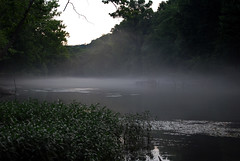
Mist on the Niangua in MissouriImage by Kyro S via Flickr


You can access the Niangua River's trout water at three points. The first is the Bennett Spring Access, where Bennett Spring Branch meets the Niangua. This is probably the most popular access point, and fish are always plentiful. The next access point is at Barclay Conservation area. This is a few miles downstream from the Bennett Spring Access. Fishing is very good in this area, especially for brown trout. The final access point is at Prosperine. Trout populations are a bit lower in this area, but you can find some of the biggest brown trout in the river both up and downstream of this access. Smallmouth bass are also abundant. Fishing regulations on the Niangua allow for all baits, lures, and flies to be used. Four trout may be kept, and there is no minimum length limit on rainbow trout. There is a 15" length limit on browns. In addition, only one brown may be kept. There are many other fantastic Missouri Trout fishing opportunities, but don't neglect this gem of a river!

No matter where you access it, the Niangua is a great stream. It may not be popular to trout fisherman, the fishing is very good. You'll see lots of floaters, especially in summertime, but fisherman will be few. This river is certainly worth a trip. If you have trouble, you can always drown your sorrows by catching a few stockers over at Bennett Springs.


Davdison Manning is an avid outdoorsman spending over 100 days per year pursuing his passion for fishing, many of them in the Ozarks of Missouri and Arkansas. He details many of his favorite spots on his website Family-Outdoors. His other pursuits include many days spent in the field camping and hunting. Davidson loves to share his knowledge of the outdoors in the hope of helping others to find their own connection to the outdoors.


Reblog this post [with Zemanta]

Friday, August 14, 2009

Trout Fishing in the Ozark Mountains

Trout Fishing in the Ozark Mountains
By Davidson Manning

Big Spring, a giant karst spring in The Ozarks...Image via Wikipedia


One thing is for sure. There is no shortage of trout streams in the Ozark Mountains of Missouri and Arkansas. Some are spring-fed rivers and creeks. These provide everything from daily stocked put and take fishing for gullible trout, to the pursuit of wild rainbows in a pretty spring creek. There are also trophy brown trout streams that can and do produce stream grown trout in the ten pound range. In all, there are eighteen spring-fed streams in the Ozarks that are managed for year-round trout fishing, seventeen of which are in Missouri. All have public access. Of these, the freestone section of the North Fork of the White is often considered to be the best, with trout populations in the thousands per mile, with the upper section holding lots of wild rainbows and some browns, and the lower section holding a lot of browns and some rainbows. Other streams that are well worth fishing are the Eleven Point, Little Piney, Current, Meramec, and Niangua Rivers in Missouri, and the Spring River in Arkansas.

The tailwaters of the Ozarks are a completely different animal. All of the Ozark tailwaters are part of the White River System. All of these tailwaters of bottom draw dams hold thousands of rainbow trout per mile, as well as the constant chance of catching a world record brown. Cutthroat and brook trout can be found as well. There are about 150 miles of year-round trout tailwaters in the Ozarks, and about 130 miles of these can be found in Arkansas. Access is ample. The White River below Bull Shoals Dam is the most well known, providing one hundred miles of quality trout water. The upper twenty miles is the most heavily fished of this tailwater, but there are year-round populations of trout all the way to Guion, which is 92 miles below Bull Shoals Dam, and trout range considerably further downstream in the winter. The reason why this tailwater can produce trout for such a long distance is due to the fact the North Fork River flows in about fifty miles below the dam. The North Fork River also provides world class tailwater trout fishing, and it gives the White River the shot of cold water it needs to extend its trout water by fifty miles. Every true trout fisherman should make a visit to the White River in their lifetime, because 100 fish days can, and regularly do happen. This article just scratches the surface of trout fishing in the Ozarks, and I will describe specific streams in detail in coming articles.

In short, there is something for every trout fisherman in the Ozarks. There are not as many streams as there are in the Appalachians or the Rockies, but the ones that we do have compare favorably to the trout streams anywhere else in the world. Come and give Ozark trout fishing a try.
Davdison Manning is an avid outdoorsman spending over 100 days per year pursuing his passion for fishing, many of them in the Ozarks of Missouri and Arkansas. He details many of his favorite spots on his website http://family-outdoors.com His other pursuits include many days spent in the field camping and hunting. Davidson loves to share his knowledge of the outdoors in the hope of helping others to find their own connection to the outdoors.

Article Source: http://EzineArticles.com/?expert=Davidson_Manning
http://EzineArticles.com/?Trout-Fishing-in-the-Ozark-Mountains&id=2010616


Reblog this post [with Zemanta]

Missouri's Lake Taneycomo - Midwest Trout Fishing Mecca

Missouri's Lake Taneycomo - Midwest Trout Fishing Mecca
By Davidson Manning
Main Species Present: rainbow trout, brown trout, suckers, and largemouth bass

Lake Taneycomo as seen from an observation poi...Image via Wikipedia


Lake Taneycomo in southwestern Missouri might well be considered the world's finest trout fishery. Its popularity mostly relies on the approximately 700,000 rainbow trout stocked per year, which causes this twenty-two mile riverine lake to be positively loaded with dumb stockies at all times. They are stocked once a month, and even towards the end of each stocking period the lake holds many trout. Due to these easy to catch fish, few people come up empty handed here.

However, there are many fisheries around that hold lots of easy to catch rainbow trout. What sets Taneycomo apart is the enormous brown trout it produces. Twenty inch browns are routine, ten pound trout aren't at all out of place, and each year several larger than twenty pounds are pulled from its icy waters. All this was capped off when a Missouri Department of Conservation agent who was sampling the lake found a thirty six pound brown trout. There is little doubt that some day this lake will produce the world record brown trout to some lucky angler.

The lake can be effectively broken down into three sections. The first would be the section of lake from Table Rock Dam downstream to Fall Creek. Legal fishing begins a few hundred yards downstream from the dam. This section has special trophy regulations for both rainbows and browns, and this is where most of the largest trout in the lake live. Flies and lures only are allowed in this section. This part of the "lake" is for all intents and purposes a river, and can be waded if Table Rock Dam is not generating.

The next section of the lake worth mentioning is from Fall Creek to the Highway 65 Bridge. The upper part of this section looks like a river, but the further downstream you get, the more it becomes a lake. This entire part of the lake holds many trout, both rainbow and brown, and it can be effectively fished from the bank with bait, as that is legal below Fall Creek's mouth. Another popular method is to get a boat and troll spoons and spinners. Trophy regulations remain in effect for brown trout, but not rainbows.

The final section of the lake is from Highway 65 to Powersite Dam, which is the lake's lower boundary. This far downstream, Taneycomo is indeed a lake, although it is quite shallow. Effective bank fishing can be done with worms and Powerbait, but it is more of a boat fishery. Both rainbow and brown trout respond to the same trolling methods as above Highway 65, and that is probably the best way to fish. You won't need downriggers, or other special equipment due to the lake's shallow depth. This section also boasts some pretty good largemouth bass fishing in the creek arms, and gigging for non-game fish is quite popular in this part of the lake.

One item of caution is in order with regard to Taneycomo. Water levels can rise rapidly in some locations. Anglers are well-advised to do their homework on this matter ahead of time. Better yet, consider hiring a Tanycomo Guide to help you get on more fish and to help keep you safe.

Davdison Manning is an avid outdoorsman spending over 100 days per year pursuing his passion for fishing, many of them in the Ozarks of Missouri and Arkansas. He details many of his favorite spots on his website http://family-outdoors.com/. His other pursuits include many days spent in the field camping and hunting. Davidson loves to share his knowledge of the outdoors in the hope of helping others to find their own connection to the outdoors.

Article Source: http://EzineArticles.com/?expert=Davidson_Manning
http://EzineArticles.com/?Missouris-Lake-Taneycomo---Midwest-Trout-Fishing-Mecca&id=2048973


Reblog this post [with Zemanta]

Fishing the Current River of Missouri's Ozarks


Fishing the Current River of Missouri's Ozarks

By Davidson Manning

There is no doubt that the Current River is the most diverse stream in Missouri. It begins as a spring creek style trout river, and slowly transforms into one of the best smallmouth bass streams in the nation. Besides these species, there are also populations of Rock Bass, Walleye, and of course Bluegill.

The first twenty miles of the river make up the classic trout water. The river begins where Montauk Spring rises in the streambed of Pigeon Creek. For three miles below this point, the stream is stocked once a day with rainbow trout from March 1 through October 31. The upper part of this stretch which flows through Montauk State Park is managed for flies only. Artificial lures such as marabou jigs and single hooked rooster tail spinners fished on a spinning rod are perfectly legal, along with traditional fly gear. The rest of the river in the park allows all lures and baits. Montauk Spring Branch also flows through the park. The first quarter mile is catch and release only with flies only .Below there, all baits are allowed until it reaches the Current River, and fish may be kept. This area is also stocked daily.

Below Montauk State Park for nine miles, the river is managed for trophy rainbow and brown trout. The trout population varies from year, but you can count on there being between 250 and 700 trout per mile, which is a respectable number. Most are browns, but there are quite a few rainbows as well, including a number of wild trout. This is a great area to float, but there is wading access at the lower end of Montauk State Park, Tan Vat, Baptist Camp, Parker Hollow, and Cedar Grove. This is a year-round fishery, with the best fishing in the seven miles between Montauk State Park and the Parker Hollow Access. Between Parker Hollow and Cedar Grove there are certainly trout, but wading can be tough, and the fish numbers are not terribly high. Artificial lures and flies only are allowed, and there is a restrictive length limit in place.

The eight miles between Cedar Grove and Akers Ferry is managed as a put and take trout fishery. It is heavily stocked with rainbow trout between March and September. In the four miles between Cedar Grove and Welch Spring the best trout fishing will be in the spring and fall, as that is the only time trout are stocked. Below Welch Spring until Akers Ferry, the water is significantly cooler, and trout are stocked all summer long. The best fishing is generally near the mouth of Welch Spring, where trout are stocked extensively. Below Akers Ferry, there are pockets of trout all the way to Pulltite Spring seven miles further downstream, but numbers drop significantly the further below Akers Ferry you get.

Between Akers Ferry and Round Spring, the fishing is spotty for both smallmouth bass and trout. There are decent rainbow trout numbers in the upper half, and decent smallmouth bass numbers in the lower half, but the fishing will be marginal. Smallmouth bass fishing picks up in earnest at the mouth of Round Spring. Between this point and Doniphan, Missouri lies some of the finest smallmouth water in the state. Fish in the one to three pound range abound, and larger fish are not uncommon at all. Rock Bass and Bluegill can also be found in great numbers. Around Van Buren, walleye enter the scene. This is one of the best stream walleye fisheries in the nation, and big Ozark strain walleyes abound. The next world record could come from the Current River. Jigging, trolling, and live bait fishing are all popular to catch these big walleye.

Every fisherman in Missouri should try fishing the beautiful Current River. Its crystal clear waters are home to some of the best fishing to be found in the United States. Whether you like smallmouth bass, trout, walleye, or just a big stringer of bluegill or suckers, this is a great place to go.

Davdison Manning is an avid outdoorsman spending over 100 days per year pursuing his passion for fishing, many of them in the Ozarks of Missouri and Arkansas. He details many of his favorite spots on his website http://family-outdoors.com/ He has devoted a section of his site strictly to Missouri's trout streams at http://family-outdoors.com/Missouri_Trout_Fishing.html

His other pursuits include many days spent in the field camping and hunting. Davidson loves to share his knowledge of the outdoors in the hope of helping others to find their own connection to the outdoors.

Article Source: http://EzineArticles.com/?expert=Davidson_Manning

http://EzineArticles.com/?Fishing-the-Current-River-of-Missouris-Ozarks&id=2195992


Reblog this post [with Zemanta]

10 Tips to Keep Your Outdoor Gear in Working Order and Well Organized

Camping Gear - It's expensive to buy, make it last. Maintaining and organizing your outdoor gear is crucial for ensuring it remains func...