Showing posts with label Invasive species. Show all posts

Thursday, June 6, 2024

Why Conservation Agencies like Missouri Department of Conservation Discourages Planting Invasive Species and How to Eliminate Them

Bush Honeysuckle - Invasive Species
Bush Honeysuckle

As stewards of our natural landscapes, it is our responsibility to protect the health and biodiversity of our environment. However, certain plants, despite their aesthetic appeal or quick growth, can have devastating effects on local ecosystems. In Missouri, the Department of Conservation (MDC) and other conservation groups strongly discourage the planting of invasive species such as honeysuckle and autumn olive. Here’s why these plants pose such a threat and how homeowners and landowners can take effective steps to eliminate them.

The Threat of Invasive Species

1. Disruption of Native Ecosystems:
Invasive species like honeysuckle and autumn olive outcompete native plants for resources such as light, water, and nutrients. This disruption can lead to the decline of native plant populations, which in turn affects the wildlife that depends on them. For instance, birds and insects that rely on native plants for food and habitat may struggle to survive. In particular, Missouri's wild turkey habitat has been negatively impacted as their main sense for defense is their eyesight (as Missouri  turkey hunters well know). Since areas with thick invasive species make it hard for them to see in the choked out forest understory they avoid these areas resulting in habitat loss.

2. Alteration of Soil Chemistry:
Autumn olive, in particular, can change the nitrogen levels in the soil, making it less suitable for native plants that thrive in low-nitrogen environments. This alteration can lead to a cascade of negative effects on the entire ecosystem.

3. Decreased Biodiversity:
By dominating the landscape, invasive species reduce plant diversity. This monoculture can weaken ecosystems, making them more susceptible to diseases, pests, and climate change.

4. Economic Impact:
Controlling invasive species and mitigating their damage can be costly for landowners and government agencies. The presence of these plants can also lower property values and reduce the productivity of agricultural land.

Autumn Olive - Invasive Species

Why Honeysuckle and Autumn Olive Are Problematic

Honeysuckle:
Honeysuckle species, particularly the bush honeysuckle, grow rapidly and form dense thickets that choke out native plants. They produce a large number of seeds that are easily dispersed by birds, leading to widespread colonization. Additionally, their early leaf-out in the spring shades out native plants before they have a chance to grow.

Autumn Olive:
Autumn olive is a hardy shrub that thrives in a variety of soil conditions. It produces abundant fruit, which birds eat and disperse widely. Its ability to fix nitrogen allows it to grow in poor soils, further outcompeting native plants that are adapted to those conditions.

Tips for Eliminating Invasive Species

Successfully removing invasive species requires persistence and a combination of methods. Here are some strategies for homeowners and landowners:

1. Mechanical Removal:

  • Hand-pulling: For smaller plants or seedlings, hand-pulling can be effective, especially when the soil is moist. Ensure you remove the entire root to prevent regrowth.
  • Cutting and Mowing: Regularly cutting or mowing can weaken the plants over time. However, this method often needs to be combined with other techniques, as it may not kill the root systems.

2. Chemical Control:

  • Herbicides: Apply appropriate herbicides to cut stumps or foliage following guidelines from the MDC or a professional. Herbicides can be effective, but they must be used responsibly to avoid harming native plants and wildlife.

3. Prescribed Burning:

  • In some cases, controlled burns can help manage invasive species. This method should only be carried out by trained professionals to ensure safety and effectiveness.

4. Replanting with Native Species:

  • After removing invasive plants, replant the area with native species to prevent re-invasion. Native plants help restore the ecosystem balance and provide habitat for local wildlife.

5. Monitoring and Maintenance:

  • Regularly check your property for new growth of invasive species and address them promptly. Consistent monitoring is crucial for long-term control.

Conclusion

The fight against invasive species like honeysuckle and autumn olive is crucial for preserving Missouri's natural beauty and biodiversity. By understanding the threats these plants pose and taking proactive steps to eliminate them, homeowners and landowners can play a significant role in conservation efforts. Remember, healthy ecosystems benefit everyone, from the smallest insects to the largest mammals, and ultimately, to us as well. Let’s work together to protect our environment for future generations.

More Info from MDC

Monday, August 29, 2016

Invasive zebra mussels now widespread at Truman Lake

MDC urges boaters to clean and dry all boats and bait gear

 Warsaw, Mo. – Zebra mussels, a harmful invasive species, are now present in all arms of Truman Lake, said Mike Bayless, fisheries management biologist for the Missouri Department of Conservation (MDC). Evidence that mussels might be present in the lake was found in prior years. But inspections conducted by the U.S. Army Corps of Engineers in recent weeks have determined that they are now fairly widespread in the lake, Bayless said. This makes it imperative for boaters and anglers at Truman Lake to take steps to avoid spreading zebra mussels to other waters.
Zebra mussels are fingernail-sized bivalve mollusks native to the Caspian Sea region of Asia. The mussels arrived in the United States in the ballast water of ships. They were first discovered in a lake near Detroit in the late 1980s. Since then, they have spread into the Mississippi and Missouri River basins. The mussels reproduce rapidly and can form dense colonies attached to boat hulls, docks, pipes and other submerged materials. Nationally, they have caused billions of dollars in damage. The mussels also filter nutrients from the water that benefit native fishes. No natural or man-made controls are effective in eliminating them from large bodies of water. But they can be prevented from entering new waters.
The microscopic young, called veligers, can survive in lake water left in boat live wells, bilge pumps or bait buckets. Adult mussels attached to hulls, engine drive units and anchor chains can survive several days out of the water. Zebra mussels usually enter new lakes or rivers when a boat or dock is moved from one body of water to another.
Boaters and anglers can help prevent zebra mussels and other exotic species from spreading into new waters by draining, cleaning and drying watercraft, Bayless said. Inspect all parts of boats and motors before moving them, scrape off and trash any suspected mussels however small. Remove all water weeds from boats and trailers. Drain all water from boats and motors while on dry land before leaving a water body. Dump leftover bait on dry land. Wash and dry boats before moving them if your craft was in infested waters for a long period of time.
Zebra mussels have been found in Missouri in Smithville Lake, Lake Taneycomo, Bull Shoals Lake, Lake of the Ozarks, the Missouri River and the Mississippi River. They also occur in Lake Lotawana in the Kansas City area, the lower Meramec River in the St. Louis area, and in rivers that drain into Missouri from other states. MDC encourages all water recreationists to help keep them from spreading to other waters, Bayless said.
For more information on zebra mussels in Missouri, visit http://on.mo.gov/2bBnqY7.

Monday, August 8, 2016

Grant funds, hog hunting ban make gains in feral hog fight

MDC, partner agencies are committed to ridding Missouri of this invasive species.
PIEDMONT, Mo. – The Missouri Department of Conservation (MDC) and its partners are already seeing the benefits of grant funds designated to help fight the invasive feral hog population. Paired with recent banning of hog hunting on conservation areas, this marks progress in the fight against feral hogs according to John Burk, a regional wildlife biologist with the National Wild Turkey Federation (NWTF).
Burk and a group of representatives of the organizations partnered in the feral hog fight had the chance to watch new trapping equipment in action recently.
“A frustrated landowner, who’d experienced significant damage to his bean and hay fields, was able to benefit from a new remotely operated Boar Buster feral hog trap,” Burk said. “The trap was deployed and within four hours, 11 hogs were captured and removed from his land.”
Tony Jaco, MDC’s private lands regional supervisor for the southeast region, said the partnership with other agencies in the feral hog fight, and the assistance available to private landowners is key to success.
“Over 90 percent of Missouri land is privately owned, which is why it’s vital we work with private landowners, as well as other wildlife organizations, to help get hogs off the whole landscape,” Jaco said. “Win or lose, we’re in this together and we have to win for the sake of our native wildlife resources.”
Feral hogs are a destructive invasive species that has expanded its range into Missouri in recent years. According to Burk, this expansion is partially due to the behavior and biology of the animal and the rugged and remote nature of the Ozark landscape. However, expansion has also come about as a result of the misguided efforts of those wanting hog populations to grow and assisting their dispersal and expansion by trapping and relocating them. 
Organizations that have partnered together in Missouri’s fight against feral hogs include MDC, NWTF, Quail Forever, Quality Deer Management Association, Quail and Upland Wildlife Federation, Missouri Corn Growers Association, Missouri Soybean Association, Missouri Pork Association, Missouri Cattlemen’s Association, Missouri Agribusiness Association, Missouri Conservation Heritage Foundation, and Missouri Farmers Association. The contributions of this group are improving MDC’s capability of reducing feral hog populations to manageable levels.
“However, it is also our responsibility as conservationists to educate as many as we can about the real threat that feral hogs pose to our natural systems and native plants and animals,” Burk said. “The recent regulations to ban hog hunting on MDC owned lands is a necessary step in trying to get feral hog populations under control before it is too late.”
At its meeting on June 24, the Missouri Conservation Commission approved changes to the Wildlife Code of Missouri that would prohibit the hunting of feral hogs on conservation areas and other lands owned, leased, or managed by MDC. The new regulation prohibiting hog hunting on MDC areas does not apply to private property. The effective date of the regulation change is Sept. 30.
Burk added that these regulations are based on sound science and a desire to facilitate and provide opportunity for all citizens to use, enjoy, and learn about their natural resources.
“The goal is not to manage feral hog populations, it’s to eliminate them,” Burk said. “To have the greatest chance of accomplishing this goal, a variety of nontraditional techniques need to be implemented.”
Different kinds of traps and trapping techniques combined with night vision technology, aerial gunning, and others are necessary to have a measurable impact on the growing menace, he said.
“Hunting feral hogs gets a few here and there but hogs respond quickly and negatively to hunting pressure and this often gets in the way of trapping,” Burk explained. “Trapping is better because it removes entire sounders, not just one or two hogs.”
Burk asks for the community to join in the fight against feral hogs.
“If you know of folks that are moving pigs around or interfering with trapping efforts, or are sympathetic to those that are, try to educate them,” he said. “This is a real threat to our precious native plants and wildlife and it should not be tolerated any more than poaching.”
Jaco added MDC is committed to the eradication of feral hogs in Missouri.
“The bottom line is that feral hogs are destructive to everything in their path and we’re committed to ridding Missouri of this invasive species,” Jaco said.
For more information on feral hogs in Missouri, or to report sightings, go tomdc.mo.gov/feralhog.

Sunday, June 12, 2016

Emerald Ash Borer advances across more Missouri Counties

Emerald ash borer (EAB) infestations have been detected for the first time in 12 Missouri counties this spring. In southeastern Missouri, EAB was detected in Carter, Dent, Iron, Phelps, Ripley, Shannon, Stoddard, St. Francois, St. Genevieve, and Texas counties. The addition of those counties to previously known infestations results in a contiguous block of 18 EAB positive counties in that part of the state. 
EAB was also detected for the first time this spring in Clinton and Ray counties, adding to the four other Missouri counties and five Kansas counties with EAB infestations in the vicinity of Kansas City and St. Joseph. Other infestations are present in the St. Louis and Hannibal areas. A total of 27 counties are now known to have EAB infestations across Missouri.
The big jump in number of EAB detections this year is largely due to an increased effort by the US Department of Agriculture (USDA) visually surveying for infestations in southeast Missouri. The USDA and Missouri Department of Agriculture are also monitoring EAB traps in many counties throughout the state to detect additional infestations.
EAB populations can expand slowly on their own to new areas, but the primary way that EAB spreads quickly is by movement of firewood. As the number of EAB infestations increases, the risk of EAB hitchhiking on firewood increases. To slow the spread of EAB and other invasive forest pests, don’t move firewood. Buy it near where you burn it!
You can prepare for EAB’s arrival by knowing the signs of an EAB infestation. Report EAB suspects if they’re in a new county where EAB has not yet been found. And start planning how you can manage EAB infestations when they arrive in your community. For more information see: eab.missouri.edu

Sunday, June 5, 2016

Tree health in the Ozarks, a growing concern

View from Stegall Mtn Firetower
People with tree concerns or questions can get answers at June 18 event
WEST PLAINS, Mo. – Missourians love their trees and each summer, a number of diseases and pests cause concern for tree owners throughout the region.
People can get information about tree problems they may be experiencing at the Missouri Department of Conservation (MDC) seminar “Are Trees In Trouble.” This free event will be 9 a.m.-2 p.m. June 18 at the MDC Ozark Regional Office in West Plains (551 Joe Jones Blvd.). Lunch will be provided.
Part of the workshop will focus on invasive species that could have critical impacts on Missouri forests. Also discussed will be the benefits of urban trees and I-Tree Streets, a computer-based program that allows communities to conduct and analyze street tree inventory. I-Tree Streets software allows homeowners in urban areas to see the benefits of having trees in their neighborhood and around town.
The workshop will conclude with a showing of “Trees in Trouble,” a documentary that tells the story of America’s urban and community forests; their history, their growing importance to our health, economy and environment.
People can register for this workshop by to register for this workshop, contact MDC’s Ozark Regional Office at 417-256-7161. Information about tree pests and tree management can also be found at mdc.mo.gov.

Wednesday, February 24, 2016

Conservation and agriculture groups partner against feral hogs

Ten groups work with MDC and Missouri Conservation Heritage Foundation to fund feral hog trapping equipment.
JEFFERSON CITY, Mo. – The Missouri Department of Conservation (MDC) has partnered with other conservation groups, agriculture organizations, and the Missouri Conservation Heritage Foundation (MCHF) to provide the state’s feral hog strike team with more trapping equipment and increase feral hog communications to the public.
“The number of requests MDC gets asking for help with feral hogs continues to increase as landowners become aware of the problem with feral hogs and hog hunting,” said MDC Agriculture Liaison Brent Vandeloecht. “By collaborating with non-government organizations, MDC can increase funding to provide more traps for use on private and public land and also educate the public on the need to eradicate feral hogs.”
The total amount of funds raised equals $53,600 in cash and $23,000 in-kind, which includes costs incurred for the organizations to produce feral hog media efforts for public education.
“This is an excellent opportunity to work in collaboration with MDC and its partners to address a serious threat to agricultural and conservation resources,” said Chief Administrative Officer for the Missouri Farm Bureau Federation Dan Cassidy.
MDC currently works with private landowners to set traps to catch feral hogs. With the current equipment available, traps are moved from one private property to another after a successful trapping. However, MDC employees have noticed that once a trap is active on a property, there are usually opportunities to trap hogs in that area again. It will be more efficient to leave traps in place on private land for longer periods of time until all hogs have been trapped. This will be possible with the addition of more trapping equipment.
The following organizations have partnered with MDC and MCHF to provide resources for 65 traps and drop gates to be used by MDC for trapping efforts on private and public land, and to fund public education efforts on the dangers of feral hogs:
  • Missouri Farm Bureau
  • Missouri Corn Growers Association
  • Missouri Soybean Association
  • Missouri Cattlemen’s Association
  • MFA
  • Missouri Pork Association
  • Missouri Agribusiness
  • National Wild Turkey Federation
  • Quality Deer Management Association
  • Quail Forever
“Quail Forever understands the value of conserving our natural resources and we further understand the degradation that occurs when feral hogs are present,” said Elsa Gallagher, Missouri State Quail Coordinator for Quail Forever. “We fully support the Department’s efforts to eradicate feral hogs.”
Feral hogs are not wildlife and are a serious threat. Feral hogs have expanded their range in the U.S. from 17 to 38 states over the past 30 years, according to Vandeloecht. Their populations grow rapidly because feral hogs can breed any time of year and produce two litters of one to seven piglets every 12 to 15 months. Feral hogs are also known to carry diseases such as swine brucellosis, pseudorabies, trichinosis and leptospirosis, which are a threat to Missouri agriculture and human health.
“Research shows that about 70 percent of the feral hog population needs to be removed yearly to keep populations of feral hogs from increasing,” Vandeloecht said. “We cannot achieve that without this partnership to increase equipment availability and we won’t achieve that without continued education and cooperation with the public.”
For more information on feral hogs in Missouri, or to report a sighting, go online tomdc.mo.gov/feralhog.

Invasive black carp weren’t supposed to be capable of reproducing, but they are

Black carp are just one species of invasive Asian carp
that are found in many rivers in Missouri. (MDC photo)
Population growth threatens native species, but everyone can help prevent it.
CAPE GIRARDEAU, Mo. – Researchers with the Missouri Department of Conservation (MDC) report the first documented evidence of invasive black carp reproduction in the wild in North America. This means big problems for native river species, according to MDC Resource Scientist Quinton Phelps.
“The finding of reproductive-capable black carp means their population will expand possibly unchecked,” Phelps said.
The finding resulted after two small unidentified carp were collected in a ditch directly connected to the Mississippi River near Cape Girardeau in November. After genetic analysis, they were determined to be juvenile black carp and were also tested to determine their reproductive capability. Both juvenile black carp were found to be capable of reproduction. Scientists are able to determine future reproductive capability of juvenile fish through chromosome analysis.
Black carp are just one species of invasive Asian carp that are found in many rivers in Missouri. They originally arrived in the United States mistakenly in shipments of grass carpand were introduced into farm ponds first for control of parasites, then as a food fish. When they were introduced, regulations specified they be altered so they could not reproduce. Due to flooding, and cases of accidental release in bait buckets, they’ve spread in recent decades and thrive in many rivers.
This newly confirmed information about their reproductive capability suggests there are likely more adults present in the river than biologists originally anticipated, Phelps said, which is a big problem. Invasive species in Missouri can be detrimental to the survival of native species. For example, Asian carp compete with native fish species for food sources. They’re voracious eaters of native mussels, which are a vital species to the health of river habitat.
“Given that many of our mussel populations in the state are currently in jeopardy, additional consumption by black carp could drastically reduce their numbers,” Phelps said.
Nearly two-thirds of the 65 species of mussels found in Missouri are of conservation concern. These freshwater mussels are filter feeders, meaning they clean impurities from the water. They provide food for native muskrats, raccoons, river otters, some birds, and many native fish species. Through their gills, mussels filter out small particles from the water and transform them into food for fish and other animals.
Black carp consumption of native mussels and competition with native species could lead to an overall poor water quality system, directly affecting humans as well as native fish.
Although this news paints a discouraging picture, Phelps said it doesn’t mean the fight is over against black carp. Instead, he said everyone can get involved in reducing their spread by avoiding accidentally introducing the species into new bodies of water when they dump bait, ensuring stocked fish come from licensed vendors, and sharing information about these practices with others.
Black carp sightings should be reported to the MDC, either by contacting a fisheries biologist at the Southeast Regional Office at (573)290-5730, or by contacting Phelps and his colleagues at the Big Rivers and Wetlands Field Station in Jackson at (573)243-2659. For general information about black carp, go online to http://mdc.mo.gov/node/10336.

Sunday, November 29, 2015

MDC says invasive bush honeysuckle vulnerable now

Late fall is a good time to battle invasive species that harms native plant communities

Volunteers for Kansas City Wildlands recently held workdays to cut, pull and spray invasive bush honeysuckle at several parks in the metro area. The volunteer program is a partner with MDC and public park agencies to remove invasive species from high-quality natural communities on park land.
Kansas City, Mo. – Bush honeysuckle remains green as autumn fades and winter arrives, which offers a chance for homeowners to help battle this invasive species. It’s easy to spot in early winter as one of the last shrubs to drop leaves. Missouri Department of Conservation (MDC) biologists and other public land managers work to reduce bush honeysuckle in the Kansas City area because its prolific growth chokes out native plants valuable for their beauty and wildlife habitat.
   Bush honeysuckle is an import from Asia that produces leaves earlier in the spring and holds on to them late in autumn. Some stands will still be green into December given mild weather conditions, said Larry Rizzo, MDC natural history biologist. That gives it a competitive advantage over many native plants. Plus, the plant’s roots produce a chemical that inhibits the roots of other plants. The shrub grows fast and produces bright red berries in fall that birds eat and then spread the seeds.
   But those berries are not very nutritious for birds, Rizzo said. And bush honeysuckle crowds out plants and trees that are good for birds and other wildlife.
   “It’s like the potato chips of berries for birds,” he said.
   Volunteers recently donated workdays to remove bush honeysuckle at several public parks in the Kansas City metro area. Those projects are a partnership between MDC, the non-profit Kansas City Wildlands, and municipal park agencies. The goal is keeping harmful invasive plants out of high quality natural areas on public lands.
   But bush honeysuckle is also harmful growing in yards and on acreages or farms. It often sprouts up along fence lines and in brushy areas. Once started, it’s hard to stop. Homeowners can help by spotting bush honeysuckle and removing it from their property.
   “It’s really easy to identify right now,” said Erin Shank, MDC wildlife biologist.  “Our native vegetation is not green anymore this time of year so bush honeysuckle really stands out.”
   The plant’s active state also makes it susceptible to treating its foliage with herbicides if it remains green in November.
    “You can do so with minimal to no damage to native vegetation because natives are dormant and won’t uptake the chemical,” Shank advised.
   Foliar spraying of honeysuckle is most effective on young to middle-aged stands that average less than seven feet in height. The most efficient tool for foliar treatment is a mist blower, which is most useful on areas larger than one acre. Foliar spraying can also be accomplished less expensively with simple backpack sprayers. Shank recommends a three percent glyphosate (Roundup) solution with an added surfactant. Coat as much of the foliage as possible. Foliar spray when weather forecast predicts dry conditions for at least four hours after treatment.
   When plants are over seven feet high, cutting and stump treating honeysuckle is necessary. This practice can be done any time of year when the temperature is above freezing though there is some evidence that mid-autumn timing may be more effective. Cut stumps as low to the ground as possible, then treat the stump with 20 percent glyphosate solution using a squirt bottle within 10 minutes. It is crucial to treat the stump quickly after cutting. The low humidity conditions of fall causes stumps to dry enough in a short time to inhibit the uptake of the chemical to the root system. The cut surface of the stump should be lightly coated; herbicide does not need to be dripping off the stump.
    Once bush honeysuckle is gone, what are some good ways to get green back into a yard?
    “There is a whole suite of native plants that are great to replace it with,” Shank said.  She suggests American beauty berry, fragrant sumac, vernal witch hazel, wild plum, and choke cherry to name a few.  An excellent source of native plant alternatives can be found atwww.GrowNative.org.  These plants will also be far more beneficial to native wildlife than the exotic bush honeysuckle.
   Homeowners can help win the war against the invasive bush honeysuckle, and now is the perfect time to attack it.  For more information on controlling bush honeysuckle, go tohttp://mdc.mo.gov/node/5411.
   Kansas City Wildlands program has also developed a Honeysuckle Academy training program to help homeowners associations or other groups battle the invasive species in their neighborhood. For information, call (816) 561-1087.

Friday, September 4, 2015

MDC closes parts of Schell-Osage for grassland restoration

The Missouri Department of Conservation is restoring portions of the Schell-Osage Conservation Area to native grasslands for the benefit of numerous species of native wildlife such as quail, rabbits, grassland songbirds, and pollinators such as monarch butterflies and native bees.
Temporary closings of sections for habitat improvements will continue until April 2016.
VERNON COUNTY, Mo. – The Missouri Department of Conservation is informing the public that portions of the Schell-Osage Conservation Area covering parts of Vernon and St. Clair counties will be closed for public safety as contractors remove invasive trees from prairies and old fields as part of a grassland restoration project. The temporary closings of various areas will take place from Sept. 1 to April 1, 2016. Closed portions will be posted with signs. Other portions of 8,633-acre conservation area will remain open during the habitat improvement project. 
According to MDC, the work is being done to improve habitat for many species of native wildlife including quail, rabbits, grassland songbirds, and pollinators such as monarch butterflies and bees. The work will focus on large-scale removal of invasive trees, controlling invasive plants with herbicide, and seeding native prairie plants. Grassland wildlife need connected habitat for foraging, migration, nesting, and brood rearing. In some areas where trees are being removed, shrubs will be allowed to regrow to provide important escape cover from predators or extreme weather.
The Department apologizes for any short-term inconvenience to area users and invites the public to visit the area after restoration work is complete to see the resulting benefits.
Call the MDC office at Schell-Osage for more information at 417-432-3414.

Friday, April 17, 2015

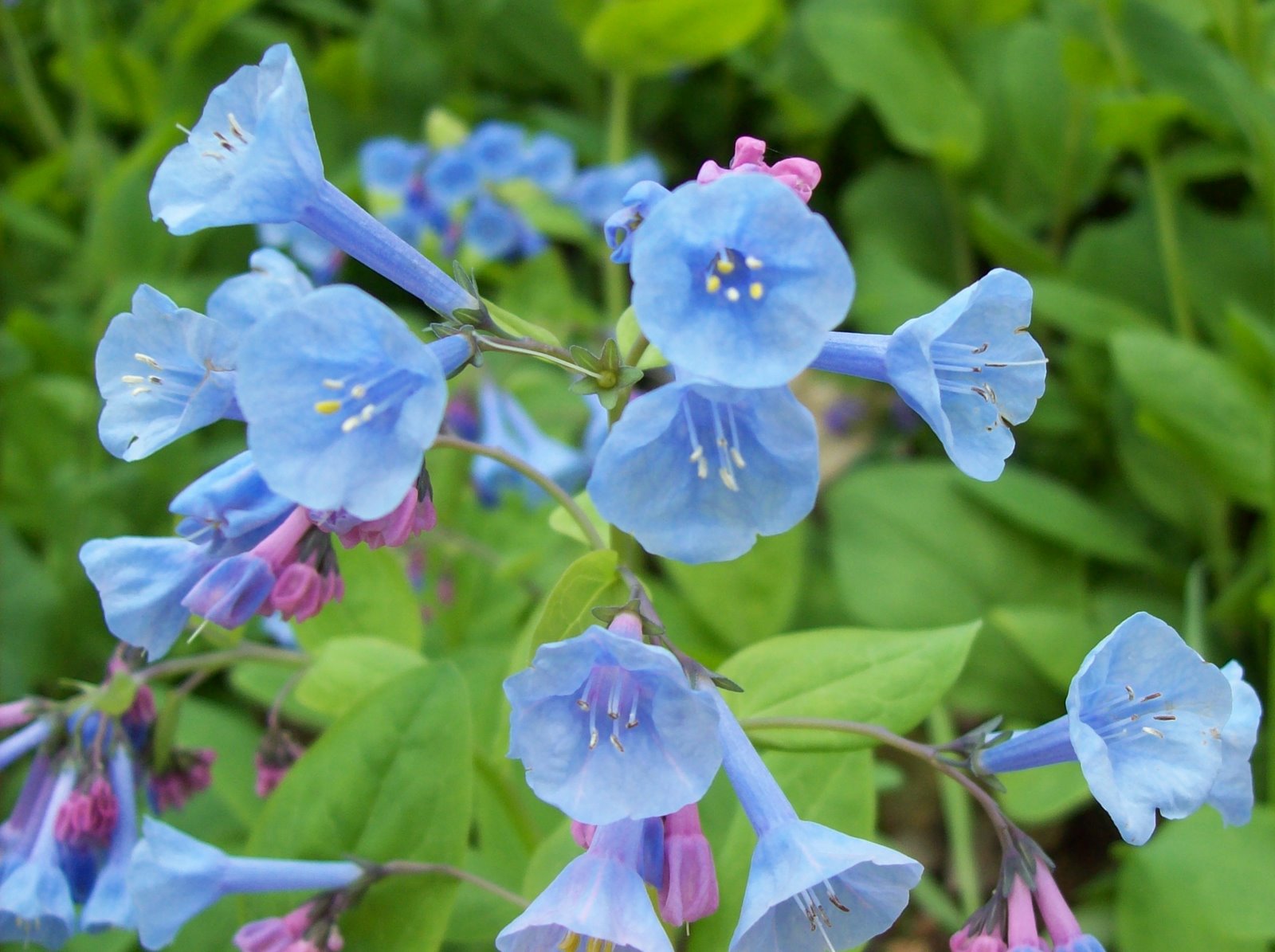
St. Francois State Park hosts “Save the Bluebells” April 25


The second “Save the Bluebells” event will be held on Saturday, April 25 at St. Francois State Park in Bonne Terre. Sponsored by Missouri State Parks, the event is open to the public. Participants should meet at the park amphitheater at 2 p.m.

The Virginia Bluebells that carpet the ground each spring bring many visitors to St. Francois State Park, but they are threatened by garlic mustard, an invasive plant species that has begun to move into the area. This plant produces toxins in its roots that keep other plants from growing. Last year, a group of scouts and park visitors pulled more than 500 pounds of this “alien” plant.

Participants will receive a certificate and a special snack made with the garlic mustard as a token of thanks. Trash bags will be provided. Volunteers wishing to wear gloves should bring a pair.

St. Francois State Park is located 4 miles north of Bonne Terre on Highway 67. For more information about the event, call St. Francois State Park at 573-358-2173. For more information on state parks and historic sites, visit mostateparks.com. Missouri State Parks is a division of the Missouri Department of Natural Resources.

Friday, October 3, 2014

Conservation Department teaches fish cleaning, cooking at Cape Riverfront Market

CAPE GIRARDEAU, Mo. -- Fish cleaning and cooking may not be an intuitive skill, but it’s Saturday, Oct. 25, at 8:459:30 and 10:15 a.m. Knuth will even have samples of the fish for the crowd to taste.
easy to learn. Dave Knuth, a fisheries management biologist with the Missouri Department of Conservation (MDC), will demonstrate how to properly clean and cook catfish, crappie and Asian carp at the Cape Riverfront Market,
“This is an opportunity for people who aren’t comfortable cleaning fish to see how easy it really is, and also for folks to try a taste of these fish,” Knuth said.
He said the trick to cleaning a fish is getting to know its internal structure.
“There are specific ways to clean different species of fish. For example, Asian carp have a very different bone structure than many of our native fish,” he said.
Knuth said these demonstrations are an effort to inform people of the benefits of properly cleaning fish and also to gain awareness for the invasive Asian carp. Asian carp populations are growing in many of our large rivers and are competing with some of our native fish, he said.
“Asian carp, specifically the silver carp, are not only causing declines in some of our native fish populations, but can also to be a  danger to boaters in the waters where they exist,” Knuth said.
Silver carp jump when they are frightened and many times will jump into the boat.
“I used to wear a football helmet to keep from getting hit in the head by them,” he said.
Knuth said Missourians can be an integral part in reducing the numbers of Asian carp by harvesting them. Knuth also said that because Asian carp are an invasive species, there’s no limit to how many anglers can keep. He and other conservation officials hope once people know how to clean and cook the troublesome fish, they will “kill the species with a fork.” The first step is getting people to try it and learn how to prepare it. Knuth said Asian carp have a very white and flaky meat and some even prefer it over tilapia or catfish.
“Sometimes people just need to see something firsthand to get the hang of it,” Knuth said, adding he will also take the time to interact with the crowd and answer questions.
Fishing is a time-honored tradition in Missouri and a great way to discover nature as a family. Educational programs like fish cleaning demonstrations help to continue that tradition for future generations.
The Cape Riverfront Market is open on Saturdays from  8 a.m. to 12 p.m. in the parking lot at 35 S. Spanish, next to Celebrations Downtown and across from Bel-Air Bar & Grill. For more information about the Cape Riverfront Market, please visit caperiverfrontmarket.com.
For more information on where to fish or how to clean and cook fish, go online to mdc.mo.gov.

Friday, June 15, 2012

Crayfish Regulation Discussions Continue

English: Rusty crayfish flexing its major chel...
 (Photo credit: Wikipedia)

The Department of Conservation continues to gather information to make an informed scientific decision on invasive crayfish. The Department has listened and consulted with bait producers and dealers on invasive crayfish. Education efforts have worked to inform anglers and bait sellers about how to prevent invasive crayfish from damaging the state’s sport-fishing industry.
A proposed course of action would prohibit the importation, purchase or sale of live crayfish, commonly called crawdads, for use as fish bait. It would not prevent anglers from catching crayfish and using them as bait. This action is intended to prevent damage to stream and lake ecology, species losses and protect recreational and economic values associated with fishing. More than 1.1 million Missourians enjoy sport fishing, which generates more than $2 billion in economic activity in the state annually.

Surveys conducted in 2010 and 2011 showed crayfish sales were minor for most Missouri bait shops, pet shops and aquaculture operations, typically representing only about 1 percent of their income. Nevertheless, Deputy Director Tom Draper, who chairs MDC’s Regulations Committee, says the decision to consider banning commercial crayfish sales was not taken lightly.
“The Conservation Department is responsible to the citizens of Missouri for protecting fish and wildlife and the economic and recreational benefits that go with them,” says Draper. “Other states already are seeing declines in the quality of fishing because of invasive crayfish. We don’t want to get 20 or 30 years down the road and wish we had done something to protect our fishing when we had the chance. Knowing what we do, it would be irresponsible not to take some type of action to protect Missouri’s aquatic resources.” 
MDC Resource Scientist Bob DiStefano says crayfish are unlike many invasive species, because they don’t have to be far from their native areas to cause trouble. A crayfish species whose population is in balance with other species in its native waters can cause ecological problems when introduced to a neighboring watershed.
 “Many crayfish species can become invasive if moved into the wrong setting,” says DiStefano. Imported crayfish also can carry diseases with the potential of decimating native crayfish populations. Crayfish are a staple food for black bass, sunfish and many other sport fish.
What MDC knows about invasive crayfish comes from dozens of studies in Missouri and other states. DiStefano says those studies show that the danger posed by commercial trade in crayfish is real and serious. 
For example, spot checks conducted by MDC before passage of the crayfish sales ban showed that more than one-quarter of bait shops were selling crayfish species that already were illegal under previous regulations. In most cases, these were not willful violations. Bait shop owners simply did not know the difference between crayfish species including the invasive species. Even if dealers could tell the difference, they could not be expected to detect a few individuals of an invasive species mixed in with a shipment of thousands of less-destructive crayfish.
MDC inspections also found that many bait shops were selling crayfish obtained from outside of Missouri and that some shops were illegally selling crayfish collected from the wild.
Invasive crayfish already are impacting Missouri waters. DiStefano said field studies have documented 25 instances of crayfish invasions in Missouri. Those invasions have caused declines of six native species.
DiStefano says invasive crayfish have been shown to out-compete native crayfish, compete with game fish for food, destroy aquatic plant beds used as spawning grounds and nurseries for game fish, and are known to also eat fish eggs. This combined with reduced spawning habitat and food means fewer and smaller fish. A study of lakes in Vilas County, Wisc., documented resource damage from invasions of rusty crayfish of more than $1 million annually.
Draper noted that Missouri anglers would still be allowed to catch crayfish and use them for bait if the Department implemented a regulation. A ban would only prohibit commercial trade in live crayfish bait. Bait shops would still be permitted to sell dead or preserved crayfish for bait. He says delaying implementation of a ban would give MDC time to inform anglers about the risks associated with moving crayfish from one place to another.
“The Department needs anglers’ help to protect Missouri’s lake and stream fishing,” says Draper. “It is critical for anglers to know the danger posed by moving crayfish and other bait from one place to another. How well we do our job of educating the public will make a huge difference for the future of fishing in Missouri.”
A recent survey of anglers showed that 40 percent of Missouri anglers release live bait into fishing waters. DiStefano urges anglers to use crayfish for bait only if they are caught in the same body of water where they will be used. He also asks anglers not to release commercially purchased live bait, including minnows and worms, at the end of a fishing trip. He says this has serious potential consequences, because both commercially sold live bait and bait caught by anglers often is transported across natural or state borders.
“The world is a lot smaller today than it was even a few decades ago,” says DiStefano. “In the past, we didn’t have to worry as much about introduction of exotic species, but those days are gone. We have to change our habits if we want to protect Missouri’s fisheries and other aquatic resources.” 
Besides allowing anglers to use crayfish that they catch themselves, a crayfish ban would include two exceptions for commercial sales. One is for human consumption. The other is for crayfish used for scientific research or for food for confined animals held by authorized representatives of universities, colleges, schools, incorporated city, state or federal agencies, publicly-owned zoo or other qualified individuals. Anyone who imports, sells or buys crayfish under these exceptions must meet certain record-keeping requirements. Buying or selling live crayfish taken from waters of the state already was prohibited.
For more information about invasive crayfish, visit:
·               mdc.mo.gov/node/5826,
·               news.wisc.edu/9996,

10 Tips to Keep Your Outdoor Gear in Working Order and Well Organized

Camping Gear - It's expensive to buy, make it last. Maintaining and organizing your outdoor gear is crucial for ensuring it remains func...