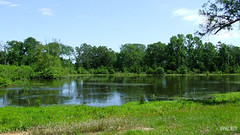
Showing posts with label Pond. Show all posts

Wednesday, July 6, 2016

MDC’s Nature Center at Night focuses on pond life

Pond life is the topic for the Cape Girardeau
Conservation Nature Center event, Nature Center at Night,
Thursday, July 7, from 5 to 8 p.m. (MDC file photo)
This “after hours” event gives working parents an opportunity to bring their family.
CAPE GIRARDEAU, Mo. – Pond life is the topic for the Cape Girardeau Conservation Nature Center event, Nature Center at Night, Thursday, July 7, from 5 to 8 p.m.
“Ponds are teeming with life from top to bottom,” said Sara Turner, MDC manager of the nature center. “The display at the July Nature at Night event will explore how some animals live in ponds and others just visit.”
Turner said guests will discover the many layers of life in a pond through the hands on displays. She said one purpose of the monthly “after hours” event is to give working parents a chance to bring children to the center at a time that’s more convenient for them.
“We know that working parents have different schedules and this is our way of making sure we do our best to serve everyone,” she said. “It’s also a chance to see what the center’s reptiles and amphibians are like late in the day.”
All ages are welcome at Nature Center at Night and no registration is required. Youth and adult groups are welcome. For information on other programs at the Cape Girardeau Conservation Nature Center, go online to www.mdc.mo.gov/CapeNatureCenter.

Sunday, August 19, 2012

MDC offers bright side for drought-lowered fishing ponds

Pond on Stallion Park Place
 (Photo credit: gval.net)

By Bill Graham, MDC

KANSAS CITY, Mo -- There are some upsides to this summer’s withering heat and drought conditions that have lowered pond and lake levels. In ponds with deep enough water for fish to survive, the big fish are eating well. For pond owners, low water offers a good time to make improvements in ponds that can help in future drought.

Some ponds receive too little fishing pressure, said Scott Ryan, MDC Fisheries regional supervisor for Northwest Missouri. That can lead to stunted growth in bass and bluegill. Plus, vegetative growth can get heavy near pond banks and keep prey fish hidden.

But when water levels drop below vegetative lines, prey fish are forced into deeper water with the predators like largemouth bass.

“This allows the stunted largemouth bass the opportunity to grow significantly with the newly available food source,” Ryan said, “and by thinning the number of bluegill, the surviving bluegill have more food so they too will tend to grow to a larger size.”

The setback for vegetation can also provide a few years with less growth and improved fishing conditions for anglers.

“One of the biggest problems landowners report with their ponds is excessive vegetation,” he said. “If water levels stay low over the winter, a significant portion of emergent vegetation will be exposed to winter freezes and will not survive into next year. Droughts can improve the overall conditions in many ponds.”

Shallow depths and hot temperatures can cause low oxygen levels in pond water, which can cause fish kills. A partial fish kill in a pond with an overabundance of fish can thin out the weaker fish and allow survivors to grow larger in coming years, Ryan said.

Major fish kills are not good. Some have been reported in shallow ponds this summer. The best prevention for summer fish kills is to construct ponds properly or deepen them if siltation occurs, said Jake Allman, MDC Fisheries biologist in the Kansas City region. Ponds that have water depths eight feet or greater over at least 25 percent of the pond’s acreage are much more likely to keep fish alive during these hot and dry conditions.

If your pond does have a fish kill, it may be time to deepen it and make it more hospitable for fish in extreme weather, Allman said.
Good rains, full ponds and healthy aquatic ecosystems make for happy fishing outings. But even in this summer of extreme drought, the fish in many ponds will survive and thrive in seasons ahead.

For more information, visit MDC online at mdc.mo.gov/landwater-care/lake-and-pond-management.

Friday, March 23, 2012

Pond Management Workshop

Map of Missouri highlighting Cape Girardeau CountyMap of Missouri highlighting Cape Girardeau County (Photo credit: Wikipedia)
  • Why aren’t there big bass in my pond? 

  • Do I need to treat aquatic vegetation? 

  • What types of fish are best to stock in a pond? 

  • How many fish can you harvest from your pond each year? 

Fisheries Management Biologists Salvador Mondragon and Jason Crites will provide the answers to these and other commonly asked questions at the Cape Girardeau Nature Center on Thursday, March 29 from 6:30-9 pm.

Ages 12 and up, registration is required. Call 573-290-5218 to register or for more information.

Saturday, June 25, 2011

Bullfrogs and green frogs up for grabs June 30

Bullfrog - Rana catesbeianaImage via Wikipedia
Missouri’s annual frogging season runs from June 30 to Oct. 31.

JEFFERSON CITY, Mo. – Bullfrogs and green frogs are up for grabs beginning at sunset on June 30 as Missouri enters its annual frogging season.

A favorite outdoor pastime of many Missourians, frogging spans the gap between hunting and fishing. The Missouri Department of Conservation (MDC) allows harvest of frogs by hand net, gig, trotline, throw line, limb line, bank line, jug line, snagging, snaring, grabbing or pole and line with a fishing permit. With a hunting permit, frogs can be harvested using .22-caliber firearms, pellet guns, atlatls, longbows and crossbows. The use of an artificial light is permitted when frogging. Children under the age of 16 and adults over 65 are not required to have a permit.

The daily limit is an eight-frog total of both species, with a possession limit of 16. If you catch eight before midnight, you can start frogging again at 12:01 a.m. and catch another day’s limit. To do this legally, the first eight frogs must be kept separate from the second set.

Once a frog is speared, it must be harvested. You should not release an injured frog, as the animal is not likely to recover. However, a frog is not fatally injured by methods such as grabbing or pole and line and thus may be released.

Frog legs have a mild flavor similar to that of fish. They can be battered and fried or sautéed in butter with garlic or herbs. They also make a good base for Cajun dishes that call for fish or shellfish. To top off your frogging experience, try this basic frying recipe:

Fried Frog Legs

Ingredients:
1 cup flour
1 cup crushed saltine crackers
1/4 cup cornstarch
1 tablespoon black pepper
1 tablespoon season salt
1 tablespoon lemon pepper salt
2 eggs
1 cup milk
2 quarts peanut oil

Instructions:
Thaw a possession limit of frog legs (16 pairs), drain and pat dry with paper towels. Heat oil to 375 degrees. Combine dry ingredients in a large plastic bowl with lid. Dip legs into milk and egg mixture, then drop into bowl with dry ingredients. Cover bowl and shake. Drop legs in hot oil and cook until golden brown.

Enhanced by Zemanta

10 Tips to Keep Your Outdoor Gear in Working Order and Well Organized

Camping Gear - It's expensive to buy, make it last. Maintaining and organizing your outdoor gear is crucial for ensuring it remains func...