Showing posts with label Native plant. Show all posts

Monday, February 15, 2016

MDC offers Conservation Management Workshop Feb. 23

Workshop in Independence designed to help acreage owners manage for wildlife


Kansas City, Mo. – Wildlife and native plants can thrive on small acreages given nurturing management practices. The Missouri Department of Conservation (MDC) will offer a free Conservation Management Workshop 6:30 to 9 p.m. on Tuesday, Feb. 23, at the Bass Pro Shops, 18001 Bass Pro Drive in Independence.
   MDC staff will discuss topics such as native plants useful for wildlife and landscaping, timber stand improvement, and reducing problems from invasive species.
   “We’ll talk about what trees to plant and what not to plant for wildlife,” said Andy Carmack, MDC private land conservationist. “We’ll talk about improvements they can make for quail and other wildlife.”
   The workshop is useful for anyone interested in wildlife-friendly practices. However, the
topics covered will be especially useful to acreage owners in suburban or rural settings, Carmack said.
   Advance registration for the workshop is requested. To register or for more information, call816-228-3766.
   MDC will also be offering two other workshops in March to assist private landowners. An Invasive Plant Identification and Control Workshop will be held 8 to 10 a.m. on Thursday, March 10, at the Warrensburg Community Center, 445 East Gay St. To register, call 660-747-7178. A Prescribed Burn Workshop will be held 5:30 to 9 p.m. on Wednesday, March 16, at the Bass Pro Shops in Independence. Call 816-228-3766 to register.
   For more information on MDC programs that assist private landowners, visithttps://mdc.mo.gov/your-property.

Friday, September 4, 2015

MDC closes parts of Schell-Osage for grassland restoration

The Missouri Department of Conservation is restoring portions of the Schell-Osage Conservation Area to native grasslands for the benefit of numerous species of native wildlife such as quail, rabbits, grassland songbirds, and pollinators such as monarch butterflies and native bees.
Temporary closings of sections for habitat improvements will continue until April 2016.
VERNON COUNTY, Mo. – The Missouri Department of Conservation is informing the public that portions of the Schell-Osage Conservation Area covering parts of Vernon and St. Clair counties will be closed for public safety as contractors remove invasive trees from prairies and old fields as part of a grassland restoration project. The temporary closings of various areas will take place from Sept. 1 to April 1, 2016. Closed portions will be posted with signs. Other portions of 8,633-acre conservation area will remain open during the habitat improvement project. 
According to MDC, the work is being done to improve habitat for many species of native wildlife including quail, rabbits, grassland songbirds, and pollinators such as monarch butterflies and bees. The work will focus on large-scale removal of invasive trees, controlling invasive plants with herbicide, and seeding native prairie plants. Grassland wildlife need connected habitat for foraging, migration, nesting, and brood rearing. In some areas where trees are being removed, shrubs will be allowed to regrow to provide important escape cover from predators or extreme weather.
The Department apologizes for any short-term inconvenience to area users and invites the public to visit the area after restoration work is complete to see the resulting benefits.
Call the MDC office at Schell-Osage for more information at 417-432-3414.

Thursday, August 27, 2015

MDC offers invasive plant clinic at Springfield Nature Center

Invasive plants like this non-native bush honeysuckle can cause problems for native wildlife species and for humans. A Sept. 18 Missouri Department of Conservation workshop at the Springfield Conservation Nature Center will provide information about how to deal with exotic plant problems
SPRINGFIELD, Mo. – Introducing non-native plants into a wildlife habitat can be compared to throwing a rock into a machine: This may cause the machine to operate at a reduced efficiency or it may shut it down completely.
People can learn more about problems non-native plants can cause - and how to solve those problems - at the Missouri Department of Conservation’s (MDC) Invasive Plant Species Workshop. This event will be 9-11:45 a.m. Sept. 18 at MDC’s Springfield Conservation Nature Center. An optional work project portion will be offered from 12:30-3 p.m. at the Nature Center.
The workshop will feature sessions on Callery pearwintercreeperexotic honeysuckles andhydrilla. These non-native plants provide good examples of some of the problems exotic species can cause. When exotic plant species invade an area and crowd out native plants, habitats often change for the worse. Insects that were attracted to native flowers go elsewhere. Native birds might not be able to find as many food sources. Nesting and brood-rearing might not be present any more or are available at a reduced presence because the vegetation the animals need isn’t there anymore. These changes can have significant impacts on insect, songbird and other wildlife populations which, in turn, can have economic and aesthetic impacts for humans, too.
To register for this free workshop, e-mail the Springfield Conservation Nature Center atSprfdNatureCenter@mdc.mo.gov or call 417-888-4237. When you register or call, indicate if you are staying for lunch and the afternoon work projects. (A free lunch will be provided from 11:45 a.m. to 12:30 p.m. for those who participate in afternoon work projects.)
The Springfield Conservation Nature Center is located at 4601 South Nature Center Way in Springfield. This workshop is an example of how the Missouri Department of Conservation works with you and for you to sustain healthy forests, fish and wildlife.

Wednesday, April 29, 2015

MDC to host a tree workshop in Columbia on May 13

Learn how to select and plant the right tree in the right place.
Trees can provide many benefits.
Planning should always take place before planting
to make sure the trees you plant will flourish.
COLUMBIA, Mo.—Are you wanting to plant a tree this spring and are overwhelmed with what to plant? Do you want to pick a tree that will provide the most benefits now and in the future? The Missouri Department of Conservation (MDC) invites homeowners to attend aHow to Pick the Perfect Tree workshop from 6 to 7:30 p.m. on Wednesday, May 13, at Shakespeare’s Pizza South, 3911 Peachtree Dr. in Columbia. The workshop is free, but you must register by May 12.
MDC foresters will share tips on how to select the right tree for your property, tree placement, and techniques for planting trees.
“Trees are valuable to our health, wealth, environment, and happiness,” said MDC Forester Ann Koenig. “There are a large variety of trees that are suitable to plant in central Missouri, but knowing how and why are just as critical as knowing what to plant. This workshop will cover the basics to give a homeowner the necessary knowledge so their tree will survive and thrive for many years.”
The workshop is co-sponsored by the Missouri Community Forestry Council and Columbia’s Tree Task Force.
For information or questions, contact Koenig at Ann.Koenig@mdc.mo.gov. To register visitmidmotaproot.bpt.me.
To learn about other Discover Nature programs in mid-Missouri, visit mdc.mo.gov.

Monday, April 27, 2015

Go Wild -Go Native

MDC offers Grow Native event May 2 at Discovery Center

Free event in KC offers tips and seedlings for native plant landscaping
Kansas City, Mo. – Native wildflowers and grasses work well in home landscape plantings, and a free Grow Native special event will teach participants about planting and caring for native varieties 9:30 a.m. to 2:30 p.m. on Saturday, May 2, at the Anita B. Gorman Discovery Center, 4750 Troost Ave. in Kansas City. The event will include guided tours of the Discovery Center’s diverse wildflower garden, now with spring flowers in full bloom, given by MDC staff.
  
Many native wildflowers work well in home landscaping
 and attract pollinators such as butterflies.
The purple coneflower (top photo) and purple poppy
mallow are popular with gardeners.
Photos by Bill Graham, Missouri Department of Conservation
 Participants will have a chance to take home free native plants and grasses, as well as tree seedlings such as redbud, dogwood and plum, while supplies last.  Demonstrations will include making seed balls for home flower gardens, potting native plants and grasses, rock painting and crafts for children.
    All ages are welcome and participants are welcome to walk in, no advance registration is needed.  For more information, call 816-759-7300 or visit http://mdc.mo.gov/node/281.

Friday, February 13, 2015

MDC Cape Nature Center to host 10th annual Native Plant & Garden Seminar

When landscapers decide to grow native, native plants can be difficult to find. The Missouri 8 a.m. to 3 p.m. at the MDC Cape Girardeau Conservation Nature Center. This event is designed to help well intentioned gardeners and landscapers find what they need.
Department of Conservation (MDC) and the Cape Girardeau County Master Gardeners will host the tenth annual Native Plant and Garden Seminar Saturday, March 14, from
“This is a much anticipated event in our area,” said Sara Turner, manager of the Cape Nature Center. “Each year we look forward to sharing ideas and connecting with fellow native plant enthusiasts.”
The Native Plant & Garden Seminar traditionally features guest speakers to offer inspiration and tips, presentations on choosing native plants, wildlife damage, propagation, herbs, mushrooms and other topics, as well as a native plant sale, coordinated with the Cape Girardeau County Master Gardeners.
Native plant and garden product vendors, such as the Missouri Wildflowers Nursery, Forrest Keeling Nursery, and the Master Gardeners, will be available Saturday from 8 a.m. to 3 p.m. 
This event is free, but seating is limited for both sessions. Registration begins Feb. 2. To register, call (573)290-5218. For more information about this and other nature programs at the Cape Nature Center, go online to mdc.mo.gov/capenaturecenter.

Saturday, April 26, 2014

Avoid invasive trees such as Bradford Pears

Kansas City, Mo. – Spring is a wonderful time to plant new trees and shrubs, but landscapers should be careful not to plant species that can harm native habitats such as
woodlands. Bradford pear, for one, is an ornamental tree that has become invasive and chokes out native species in natural areas and parks. Gardeners and homeowners are urged to consider native alternatives for spring planting, such as the downy serviceberry.
   Bradford pears have been planted in the past because they produce white flowers in spring, are hardy, and experts formerly considered them safe. Because they are hybrids, it was believed they could not produce viable seed.
   But a varied mix of cultivars allowed some Bradford pears to cross pollinate and produce viable seed. Wildlife such as birds eat the fruits and scatter seeds, spreading the trees. Bradford pears, also called callery pears, compete well against native plants and trees because they leaf out early.
      “It’s also not a good ornamental tree because they’re not strong,” said Wendy Sangster, an urban forester for Missouri Department of Conservation (MDC). “They don’t stand up well in storms and the limbs break easily.”
   An alternative is downy serviceberry, a native tree that produces a small red fruit edible for people and wildlife. The trees also produce showy white blooms in April and make good landscape additions.
   A reliable and always showy native is the redbud tree. They’re quick growing with lovely lavender early-spring flowers and shapely green summer foliage. Wild plum is another good alternative tree that provides showy white blooms in spring. Dogwood trees will grow and bloom in Kansas City if planted in shady areas.
    Butterflies and birds like native wildflowers and trees in landscape settings. They utilize the flowers, fruits and sheltering branches. For information on natives, see http://www.grownative.org.
    For more information about rees, go to http://www.mdc.mo.gov/discover-nature/trees-work. Heartland Tree Alliance offers information specific to the Kansas City area at https://www.bridgingthegap.org/heartland-tree-alliance.
   Trees provide shade, clean air, scenery, wildlife habitat, lumber and boost property values. But extra care in choosing tree species and locations helps keep both the urban forest and wild lands healthy.

Friday, May 10, 2013

Think native when replacing landscape trees

Smart choices can prevent problems.

JEFFERSON CITY–Stately oaks that once shaded front yards lost the battle with drought. Ornamental pear trees that used to bid ironic farewells to winter with blizzards of white blossoms were wrecked by winter storms. As home and business owners set about replacing lost landscape trees, the Missouri Department of Conservation has a word of advice – natives.

The past 12 months have not been pretty for the Show-Me State’s home and community landscapes. Many trees withered in last year’s record-breaking heat and drought. Ash trees and others already stressed by disease, parasites, or storm damage were particularly hard-hit. January and February brought wet, heavy snowfall that ripped limbs from silver maples, Bradford pears, and other fast-growing trees with soft wood.

With every challenge comes opportunity, however. The need to replace trees is a chance to choose varieties that prevent future problems. The first thing to do is not plant trees that are doomed to failure. Ash trees fall in this category, because of the relentless approach of the emerald ash borer.

Bradford and other varieties of the decorative callery pear tree grow fast and flower profusely. However, their fast growth produces soft, weak wood that makes the trees vulnerable to snow, ice, and wind storms.

Another strike against the callery pear is the ability of different sterile varieties of this Asian import to cross pollinate. The resulting seeds grow into trees that are extremely aggressive and thorny. They rapidly take over old fields and displace native trees in forests.

“The thorns on these will make control and removal VERY difficult, certainly dangerous, and definitely costly once they have matured and grown together,” says Forestry Field Programs Supervisor Nick Kuhn.”

Natural History Biologist Susan Farrington says native tree species offer landowners a variety of excellent choices for replacing lost or damaged trees.

“The best tree to substitute for a callery pear is our native serviceberry,” says Farrington. “It blooms just as early, has gorgeous white flowers, great fall color, and great berries that are attractive to birds and humans alike. Serviceberry is a little more difficult to find at nurseries than exotic pears, but it’s well worth the trouble. They are adapted to Missouri’s climate and soils, are less prone to weather damage, and they don’t come with the ecological liabilities of imports.”

Farrington says nurseries specializing in native plants are more likely to sell serviceberry trees.

Missouri’s state tree, the flowering dogwood, blooms a little later than serviceberry and has a highly
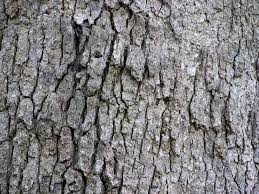
White Oak
aesthetic, tiered shape that makes it a favorite of landscapers. The redbud tree, another native, also is well-adapted to Missouri, and its vivid purple blossoms are unexcelled for spring beauty. These and other trees from Missouri stock are best suited to growing here. When possible, buy from locally owned nurseries that grow trees in Missouri.

For replacing larger shade trees, Farrington suggests red or white oaks and red or sugar maples. She cautions against golden rain tree, tree of heaven, and princess tree, all Asian imports that drop lots of litter on the ground and can be invasive. Exotic Norway maples and Amur maples are also highly invasive.

“Just explain to the nursery staff that you want to stick with native trees,” says Farrington. “There are plenty of great trees out there that don’t have all the disadvantages of many imports.”

Saturday, April 16, 2011

MU to host Missouri Bobwhite Quail Summit and Quail Field Day, June 16

male Bobwhite quail (colinus virginianus)Image via Wikipedia
COLUMBIA, Mo. – This year’s University of Missouri bobwhite quail and native plant field day expands to include a Missouri Bobwhite Quail Summit, June 16 at MU’s Bradford Research and Extension Center near Columbia. Both events will be free.
The northern bobwhite quail, a once-abundant upland game bird, has suffered a steep population decline in Missouri and across its range during the past few decades, partly due to modern farming practices that have erased prime quail habitat. In recent years, MU Bradford Farm has served as a laboratory for implementing practices that integrate habitat management for bobwhites into modern farm operations.
The field day, 4-8 p.m., will feature wagon tours of habitat management techniques that have created the mixture of plant communities bobwhites need for nesting, feeding and protection from predators.  These practices have helped increase the population of bobwhites on the farm and surrounding area. 
“We’re going to talk about conducting management practices in stands of warm-season grasses so that they don’t become so overgrown and that encourage  a greater diversity of plants, such as legumes and other native forbs,” said Tim Reinbott, superintendent at the 591-acre research farm several miles east of Columbia. “We’ll also show how to renovate tall fescue to make it more wildlife-friendly.”
MU Extension agricultural economist Joe Horner will talk about the economics of integrating wildlife habitat and crop production. Other new topics this year include native pollinators, enhancing wildlife on small acreage, and pond and waterway management.
According to Bob Pierce, MU Extension fish and wildlife specialist, the field day will also include indoor workshops on quail ecology, habitat management, and population dynamics, including the impact of predators. Drinks and hamburgers will be served and visitors will have the opportunity to buy native plants.
There will be two sessions conducted during the Missouri Bobwhite Quail Summit.    The morning session will be organized specifically for wildlife and natural resource professionals.  The afternoon session, 1-4 p.m., will bring together private landowners, natural resource professionals and other interested persons to discuss the latest research on strategies and tools for conserving and restoring bobwhite habitat, learn about funding opportunities, and hear landowner success stories, said Pierce. 
Both events are free and open to the public. Registration is not required for the field day but people interested in participating in the afternoon session of the Bobwhite Quail Summit  should RSVP to MU BREC, 4968 Rangeline Road, Columbia, MO 65201-8973 or ChismT@missouri.edu, or call 573-884-7945.
For more information about these events, contact Bob Pierce at 573-882-4337 or PierceR@missouri.edu.
Field day sponsors are MU Extension; the MU College of Agriculture, Food and Natural Resources; Lincoln University; Missouri Department of Conservation; the Missouri Soybean Association; and the USDA’s Natural Resources Conservation Service.
Sponsors for the Missouri Bobwhite Quail Summit include the Conservation Federation of Missouri, Quail Forever; the Quail and Upland Wildlife Federation; Quail Unlimited; the National Bobwhite Conservation Initiative; MU Extension; and the MU College of Agriculture, Food and Natural Resources.

Enhanced by Zemanta

10 Tips to Keep Your Outdoor Gear in Working Order and Well Organized

Camping Gear - It's expensive to buy, make it last. Maintaining and organizing your outdoor gear is crucial for ensuring it remains func...