Showing posts with label Squirrel. Show all posts

Friday, May 6, 2016

Squirrel, black-bass seasons open Memorial Day weekend

Get more hunting and fishing information from MDC website at mdc.mo.gov.
JEFFERSON CITY, Mo. – Memorial Day weekend brings an extra-special celebration for squirrel hunters and bass anglers in Missouri. The Missouri Department of Conservation (MDC) reminds them that the Saturday of Memorial Day weekend, May 28, marks the opening of both squirrel season statewide and catch-and-keep bass season in most streams south of the Missouri River.
SQUIRRELS
Hunters can pursue fox and gray squirrels from May 28 through Feb. 15, 2017, with rifles, shotguns, and other legal firearms methods, along with archery equipment, slingshots, or atlatls. The daily limit for hunting and trapping is 10 with a possession limit of 20. Valid permits for squirrel hunting are: Archery Hunting, Daily Small Game, Small Game Hunting and Fishing, and Small Game Hunting.
Hunters with valid permits can also take squirrels with cage-type traps. Traps must be plainly labeled on a durable material with the user's full name and address, or Conservation Number. Squirrel traps must have openings measuring 144 square inches or less, for instance, 12 inches by 12 inches. Hunters must attend their traps daily. The same regulations apply to rabbits and groundhogs during their respective seasons.
Get more information on squirrel hunting from MDC’s 2016 Summary of Missouri Hunting and Trapping Regulations, available where permits are sold, or online athuntfish.mdc.mo.gov/hunting-trapping/species/squirrel.
BLACK BASS
The black bass catch-and-keep season applies to most streams south of the Missouri River for largemouth, smallmouth, and spotted or Kentucky bass and runs from May 28 to Feb. 28, 2017. Anglers may catch these species legally all year, anywhere in the state. They may keep legal-sized bass caught from impoundments all year long, statewide. In most of the state's waters, the daily limit on black bass is six, with a possession limit of 12. Black bass taken from streams must be at least 12 inches long in most areas. Additional specific regulations may apply to specific waters or areas. Anglers must have a valid fishing permit or be exempt.
Get more information on bass fishing from MDC’s 2016 Summary of Missouri Fishing Regulations, available where permits are sold, or online at huntfish.mdc.mo.gov/fishing/species/black-bass.

Thursday, April 30, 2015

Squirrel, black-bass seasons open Memorial Day weekend

Conservation makes Missouri a great place to hunt and fish.
JEFFERSON CITY, Mo. – Memorial Day weekend brings an extra-special celebration for squirrel hunters and bass anglers in Missouri. According to the Missouri Department of Conservation (MDC), the Saturday of this fourth weekend in May -- May 23 this year -- is when squirrel season opens and when anglers can keep legal-sized bass in most southern Missouri streams.
SQUIRRELS
Hunters can pursue fox and gray squirrels from May 23 through Feb. 15, 2016, with rifles, shotguns, archery equipment, or atlatls. Summer foliage makes rifle shots more difficult than in late fall and winter, when leaves no longer obscure a shooter’s view. As a result, shotguns are the preferred method for many hunters during the early part of the season.
Valid permits for squirrel hunting are: Archery Hunting, Daily Small Game, Small Game Hunting and Fishing, and Small Game Hunting.
Hunters with valid permits can also take squirrels with cage-type traps. Traps must be labeled with the hunter’s full name and address, or Conservation Number. Squirrel traps must have openings measuring 144 square inches or less, for instance, 12 inches by 12 inches. Hunters must attend their traps daily. The same regulations apply to rabbits and groundhogs during their respective seasons.
The daily limit is 10 with a possession limit of 20. For more information, visitmdc.mo.gov/node/10810.
BASS
The bass catch-and-keep season in most southern Missouri streams applies to largemouth, smallmouth, and spotted/Kentucky bass and runs from May 23 to Feb. 29, 2016. Anglers may catch these species legally all year, anywhere in the state. They may keep legal-sized bass caught from impoundments all year long, statewide.
However, from March 1 through the Friday before the fourth Saturday in May, you may only keep black bass caught in streams if you are:
  • On the Mississippi River;
  • North of the south bank of the Missouri River;
  • In that portion of southeast Missouri south and east of Cape Girardeau following Highways 74 and 25, U.S. Highways 60, 67, and 160 and the west bank of the Little Black River to the Arkansas state line; or
  • On the St. Francis River downstream from Wappapello Dam.
In the rest of the state, black-bass fishing is catch-and-release only from March 1 through theFriday before the fourth Saturday in May.
In most of the state’s waters, the daily limit on black bass is six, with a possession limit of 12. Black bass taken from streams must be at least 12 inches long in most areas. However, many lakes and streams have special length and daily limits. To ensure that you keep only legal bass, you must check for special regulations on the waters you intend to fish. You can find these posted at areas with special regulations, in the 2015 Summary of Missouri Fishing Regulations available where permits are sold, and online at mdc.mo.gov/node/10358.
All anglers must have an appropriate lifetime, annual, or daily fishing permit, or qualify for an exemption. Get more information on fishing permits at mdc.mo.gov/node/5006.

squirrel
Hunters can pursue fox and gray squirrels from May 23 through Feb. 15, 2016, with rifles, shotguns, archery equipment, or atlatls. Squirrel hunting is a good introduction to the sport of hunting. They also make good table fare.

bass
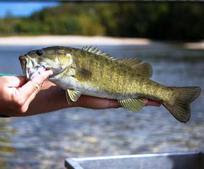
The bass catch-and-keep season in most southern Missouri streams applies to largemouth, smallmouth (shown here), and spotted/Kentucky bass and runs fromMay 23 to Feb. 29, 2016.

Sunday, October 6, 2013

Missouri’s small-game hunting forecast

Here’s what to expect when you head out to hunt
quail, pheasants, rabbits, squirrels, and furbearers.
When everything comes together, bird hunters and their four-legged partners share a moment of satisfaction.
JEFFERSON CITY– Hunters wondering about prospects for quail, rabbits, squirrels, and other small game in Missouri will find many answers in the past two years’ weather.
The fortunes of wild animals always depend heavily on weather. But what’s good for one game animal doesn’t always favor others. Squirrels and quail offer a good example of the contrasting effects of weather.
Bobwhite quail build their nests on the ground. Immediately after hatching, bobwhite chicks are barely larger than bumblebees, and their downy plumage is not waterproof. This makes them extremely vulnerable to death by hypothermia. Consequently, quail nesting success falters when cool, wet weather lingers into summer. Drought doesn’t exactly help quail, but they are much better adapted to hot, dry conditions than to wet and cold.
In contrast, gray and fox squirrels generally rear their young in hollow trees, where they are protected from the elements. By the time they emerge from den trees six or seven weeks after birth, they are half grown and well equipped with insulating fur. Damp summers don’t bother them much. However, they depend heavily on acorns and other nuts for food. In years when acorns are scarce – as they were across much of southern Missouri in 2012 because of drought – squirrels go hungry. That means fewer squirrels survive the following winter. And because squirrels go into the next breeding season in poor physical condition, they tend to raise only one litter of young instead of two. So the effects of a bad nut crop are felt for at least two years.
That scenario is exactly what is unfolding this year.
“The effects always are more severe in southern Missouri,” says Lonnie Hansen, a resource scientist for the Missouri Department of Conservation. “That is because acorns and other nuts make up so much of the food base for squirrels and other wildlife in heavily forested areas. A poor nut crop is less detrimental in northern Missouri, where row crops like corn and soybeans help create a more diverse and stable diet.”
Nevertheless, Hansen says his and others’ observations indicate that squirrel numbers are down in northern Missouri, too.
“I think there has been somewhat of a crash, especially in the Ozarks,” he says, “but they will come back.”
Resource Scientist Beth Emmerich says the news for quail is better. In spite of a couple of major snow events, the winter of 2012-2013 was fairly mild, allowing good carry-over of bobwhites for the 2013 nesting season. A late spring meant quail got a late start, with the peak hatch occurring in July. However, the warm, dry conditions that prevailed after that were ideal for bobwhite nesting.
“The record rainfall of 2008 made things extremely hard for nesting quail,” says Emmerich. “2009 and 2010 also were cooler and wetter than normal, continuing the trend of bad news for quail and quail hunters. But the summers of 2011 and 2012 were dry and warm, and quail made some gains.”
Reports from the field lead Emmerich to believe another warm, dry summer allowed quail to build on recent years’ success.
“People report seeing more quail and pheasants compared to last year,” says Emmerich. “Areas that likely had a noticeable increase in quail were northwest Missouri, the Ozarks, and southeast Missouri. I’ve heard good reports on pheasant production in the northern part of the state, where pockets of pheasant populations still exist.”
Rabbit population changes tend to mirror those of quail because their habitat needs are similar. Larger size and fur make cottontails slightly less vulnerable to weather, so their population swings are less dramatic. But warm, dry weather favors rabbit reproduction, so rabbit hunters get good news this year, too.
Emmerich says lack of suitable habitat continues to be the biggest obstacle to increasing quail and rabbit populations.
“Good brood-rearing habitat is most limiting statewide,” she says. “Quail chicks need bare ground to be able to forage effectively, with weedy plant species providing food as well as overhead protective cover."
Trappers and furbearer hunters have a bright outlook this fall. Resource Scientist Jeff Beringer says populations of all commercial fur-bearing species in Missouri are stable or slightly increasing.
According to Beringer, favorable weather and strong fur prices resulted in high participation by hunters and trappers during the 2012-2013 season. The Conservation Department sold more than 9,000 trapping permits, which was a 25-year high. Last year’s bobcat harvest was an all-time record, with 5,059 harvested. The otter harvest was the second-largest on record, and the coyote harvest was the largest in 25 years.
Raccoons bucked the trend, with a 12-percent decrease in the combined trapping and hunting harvest from 2011-2012 to the 2012-2013 season. The decline was in line with archery hunter observations, which showed a 35-percent decline in raccoon sightings. Beringer attributes the decrease to deaths of young raccoons during last year’s drought.
Meanwhile, last year’s red and gray fox harvests increased by 18 and 41 percent, respectively. Beringer said this probably occurred because the value of bobcat pelts was high last year.
“A lot of foxes are taken incidentally by trappers targeting bobcats and coyotes,” says Beringer. “We have seen a long-term decline in both red and gray fox numbers, probably due to competition with coyotes and bobcats. Distemper might have played a part in this decline, too. However, archer observations and sign-station surveys suggested increases for both fox species from 2011 to 2012.
Recent survey data indicate that more than 13,000 hunters pursued raccoons in Missouri last year and more than 25,000 hunted coyotes last year. Beringer says he expects the trend toward greater participation in furbearer trapping and hunting to continue.
“I look for a big furbearer harvest this year and large numbers of trappers and predator hunters,” says Beringer. He said he expects more than 10,000 trappers and 20,000 furbearer hunters to take to Missouri’s fields, woods, and waters this year.
Permit requirements, season dates, bag limits, and other details of trapping and small-game hunting seasons are found in the 2013 Summary of Missouri Hunting & Trapping Regulations. This booklet is available wherever hunting permits are sold, at Conservation Department offices and nature centers, or online atmdc.mo.gov/node/11416.

Wednesday, May 15, 2013

Bushytails and bronzebacks are legal May 25


Whether your taste in outdoor activities runs toward fishing or hunting, May 25 is a day to mark on your calendar.
Missouri’s hunting season for gray and fox squirrels opens May 25 and runs through Feb. 15,
Courtesy Missouri Department of Conservation
2014. Legal methods include rifles, shotguns, or archery equipment. The aggregate bag limit is 10 squirrels and the possession limit is 20.
“Aggregate” means hunters may harvest any combination of fox and gray squirrels so long as they do not exceed 10 squirrels total in one day. If hunters bag a daily limit two days in a row, they will have a possession limit of 20 squirrels. After that, they must eat or give away some squirrels before going hunting again in order to stay within the possession limit.
Largemouth, smallmouth, and spotted bass, known collectively as black bass, may be caught and possessed throughout the year from impoundments and in areas other than the Ozarks. These “other” areas are defined as the Mississippi River, all waters north of the south bank of the Missouri River, the St. Francis River downstream from Wappapello Dam, and streams in that portion of southeast Missouri bounded by a line from Cape Girardeau following Missouri highways 74 and 25, U.S. highways 60, 67, and 160, and the west bank of the Little Black River to the Arkansas state line. Black bass may be caught year-round in the defined area of the Ozarks, but they must be released immediately after being caught from March 1 through the Friday before fourth Saturday in May.
The daily limit on black bass in most of the state’s waters is six, with a possession limit of 12. However, many lakes and streams are subject to special daily and length limits. These are listed in the 2013 Summary of Missouri Fishing Regulations. The booklet is available from permit vendors, Missouri Department of Conservation offices, and online at mdc.mo.gov/node/11414. The 2013 Summary of Missouri Hunting and Trapping Regulations is available at mdc.mo.gov/node/3611416.
-Jim Low-

Thursday, October 13, 2011

Discover Nature Women Squirrel Hunting A to Z

An Eastern Grey Squirrel (Sciurus carolinensis...Image via Wikipedia
Ladies, are you new to squirrel hunting or do you want some additional tips to better your squirrel hunting experience?  If you fall into either category, our Squirrel Hunting A to Z clinic is just what you’re looking for to get you started or help you hone your skills.  We’ll cover everything from clothing, firearms, and habitat to field dressing, cleaning and fixing a delicious meal!  Squirrel season opened 5/28/11 and will close 2/15/12, so there is still time left to take up this enjoyable outdoor activity.  Women ages 18 and up (age 14 and up when accompanied by an adult) are invited to attend this clinic on Saturday, October 15 from 9 am until noon.   Registration is required and can be done by calling the Cape Girardeau Nature Center at 573-290-5218.  Give us a call and let us help you Discover Nature!   


Thursday, May 26, 2011

Squirrel season opens May 28

Bag limit is 10 and possession limit is 20.

JEFFERSON CITY MO – The fourth Saturday in May marks the opening of squirrel season in Missouri. Hunters may pursue gray and fox squirrels from May 28 through Feb. 15, 2012, with rifles, shotguns or archery equipment. The aggregate bag limit is 10 squirrels and the possession limit is 20.

“Aggregate” means hunters may harvest any combination of fox and gray squirrels so long as they do not exceed 10 squirrels total in one day. If hunters bag a daily limit two days in a row, they will have a possession limit of 20 squirrels. After that, they must eat or give away some squirrels before going hunting again in order to stay within the possession limit.

Hunters also may take squirrels with cage-type traps, as long as they label traps with their full name and address, or their Conservation number. Squirrel traps also must have openings measuring 144 square inches or less, for instance, 12 inches by 12 inches. Hunters must attend their traps daily. The same regulations apply to rabbits and groundhogs during their respective seasons.

Lonnie Hansen, the Missouri Department of Conservation’s resource scientist in charge of squirrel management, explained that squirrel numbers in the Ozarks are somewhat dependent on acorn production while squirrels have a more diverse and dependable food base in northern Missouri thanks to agricultural crops. As a result, squirrel populations are more stable there, and hunting is uniformly good from year to year.

We had a tremendous acorn crop last fall so squirrel numbers should be building in the Ozarks,” Hansen said. “Squirrel numbers should also be high elsewhere. I think squirrel hunting should be excellent this year.” 

Enhanced by Zemanta

10 Tips to Keep Your Outdoor Gear in Working Order and Well Organized

Camping Gear - It's expensive to buy, make it last. Maintaining and organizing your outdoor gear is crucial for ensuring it remains func...