Saturday, November 5, 2011

CIA (Conservation in Action) Nature Journaling

journalsImage by yelahneb via FlickrNature provides an abundance of awe and experiences when you explore the outdoors.  Why not journal these to remember them?  Nature journaling is a centuries-old, but still fun way to record your natural sightings and we want to help you get started.  If you are between the ages of 12-15, call the Cape Girardeau Conservation Nature Center at 573-290-5218 to register for CIA-Nature Journaling on Saturday, November 12 from 1-3pm

Friday, November 4, 2011

Native American Heritage Month observed Nov. 12 at Van Meter State Park

Missouri state parks and historical districts ...Image via Wikipedia
JEFFERSON CITY, MO., NOV. 2, 2011 -- Observe Native American Heritage Month with a special program on American Indian involvement in the Civil War Nov. 12 at Van Meter State Historic Site near Miami. The free program will be given at 2 p.m. in Missouri's American Indian Cultural Center and the public is invited.

Steve Cottrell, author of “Civil War in the Indian Territory,” will discuss American Indian involvement in Missouri Civil War battles and skirmishes. The program will include a documentary on the Battle of Newtonia in southwest Missouri. At this battle in 1862, Missouri American Indians served on both the Union and Confederate sides.

            Steve Cottrell is a descendant of a Sixth Kansas Cavalry member who served in the Indian Territory during the Civil War. He has participated in several battle re-enactments, including the Academy Award-winning motion picture “Glory.” Cottrell is also the author of “Civil War in Texas and New Mexico Territory,” “Civil War in Tennessee,” and “Haunted Ozark Battlefields.”

            From May through September, Missouri's American Indian Cultural Center is open from 10 a.m. to 4 p.m. on Wednesday through Saturday and from 1 to 5 p.m. on Sundays. The center is closed Monday and Tuesday. Van Meter State Park is located 12 miles northwest of Marshall on Highway 122. For more information, contact the park at 660-886-7537 or the Missouri Department of Natural Resources toll free at 800-334-6946 (voice) or 800-349-2419(Telecommunications Device for the Deaf). For information on state parks and historic sites, visit mostateparks.com.

Thursday, November 3, 2011

Fall firearms turkey harvest up 19 percent


The increase reflects improved nesting success.

By Jim Low, MDC

JEFFERSON CITY Mo – An increase in this year’s fall firearms turkey harvest could be the first concrete evidence that Missouri’s wild-turkey population is recovering.

The Missouri Department of Conservation (MDC) Telecheck database shows that hunters checked 7,077 turkeys during the fall firearms turkey season Oct. 1 through 31. Top harvest counties were Greene, with 209 turkeys checked, Franklin with 194 and Henry with 175. Juvenile turkeys made up 58.2 percent of the total, up from 55.5 percent last year.

This year’s fall firearms turkey harvest is 1,150 more than last year, a 19.4-percent increase. MDC Resource Scientist Jason Isabelle credits weather for the jump in fall turkey harvest.

“Our turkey flock has had a hard go for the past few years,” said Isabelle. “Cold, wet weather kept down nesting success from 2003 through 2005. We got a break in 2006, but then we had that amazing Easter freeze in 2007. 2008 was the wettest year in Missouri history, and 2009 and 2010 weren’t much better. All that took a toll on turkeys and other ground-nesting wildlife.”

Isabelle said this year’s spring and summer floods were tough on turkeys in the Missouri and Mississippi river valleys, but unusually dry weather throughout most of the state gave turkeys their first real break in five years. Surveys conducted during the summer showed a significant increase in the number of poults, as young turkeys are known.

This year’s statewide hatch of 1.7 poults per hen was the best since 2002. In Northeast Missouri, this year’s poult-to-hen ratio of 2.1 was the best it’s been since 2000. Most of Southeast Missouri also experienced a much-improved hatch this year, with the region’s poult-to-hen ratio also exceeding 2 poults per hen.

Isabelle said he expected an uptick in the fall turkey harvest, based on the improvement in nesting success. He also anticipated increased sales of fall turkey-hunting permits as hunters noticed the increased number of young turkeys in the woods. MDC sold 14,717 fall firearms turkey hunting permits this fall, compared to 13,736 last year.

Isabelle said he is encouraged by the increased fall turkey harvest and cautiously optimistic about prospects for the 2012 spring turkey season and beyond.

“This is a good first step,” said Isabelle. “We have always known that turkey numbers would rebound once the birds got a break from the weather. We still have a long way to go, but if the weather continues to be more normal we can hope for continued improvement in our turkey numbers.”

According to Isabelle, it is unlikely Missouri will ever see the numbers of turkeys it had in the late 1990s and early 2000s. That high-water mark was the culmination of a restoration program in which turkeys were reintroduced into areas where they had been absent for decades. Turkey populations expanded rapidly until they encountered “biological resistance” from predators and other limiting factors. From that peak, turkey numbers decreased slightly to sustainable levels.

“We are going to see the return of more abundant turkey numbers again,” said Isabelle. “As long as we have enough habitat, Missouri will have a great turkey resource. But wildlife populations always have peaks during periods of favorable conditions and valleys like the one we are experiencing at the moment.”


Additional Firefighting Crews Arriving to Hold Wild Fires around Salem, Missouri

Northwest Crown Fire Experiment, Northwest Ter...Image via Wikipedia
SALEM, Mo. – Additional firefighting crews and other resources are being called in to help hold a 5,000-acre wild fire in Salem, Missouri area that started November 1, 2011.
As of 10:30 am Thursday, November 3, 2011, a fire line had been established around the entire fire perimeter.
The wildfire was originally three separate fires that have merged. The Minninghaw fire is located on Mark Twain National Forest’s Salem Ranger District, in southern Dent County near the Shannon County line, approximately 7 miles west of Bunker, Missouri. 
Two twenty-person hand crews, one from North Carolina and a second from Georgia, are expected to arrive late November 3, 2011.  These resources will provide Mark Twain national Forest additional help and rotate firefighters who have been fighting the wildfire since mid-afternoon Tuesday, November 1, 2011.
Currently, there are more than 40 firefighters, five bulldozers and four engines assigned to the wildfire; most are from Mark Twain National Forest.   This includes one 7-person firefighting crew from Mingo Job Corps center in Puxico, Missouri.
The wildfire is burning in heavy fuels created from the May 2009 Derecho wind event.
“These heavy fuels are contributing to increased intensity and extreme fire behavior, especially on a day like November 2, 2011, when moderate to high winds and low relative humidity pushed the fire across containment lines on the west,” said Salem District Ranger Thom Haines.  “Firefighters were able to contain the spot fire to around 100 acres. “
At present, no homes are immediately threatened.  However, the wildfire has burned some private lands.  Nearby neighbors of the Forest have been notified of the situation, said Mark Twain National Forest Salem District Ranger Haines.
Rainfall received overnight has helped suppression. However, predicted weather for the next few days shows a drying trend, and the wildfire is expected to become active again within the next few days. 
Arson is the suspected cause of the wild fires. 
“Additional law enforcement personnel have been assigned to patrol and investigate the wild fires,” Haines said. “If anyone has any information on who set these fires, please let us know.”
To report information, contact Mark Twain National Forest Salem Ranger District Office at 573-729-6656 or the toll free arson hotline at 1-800-392-1111.
Salem Ranger District had two other suspected arson wild fires yesterday; one wild fire was 5 acres, and a second wild fire approximately 310 acres in size.  Two wildland fire engines and two dozers were assigned to the larger West Fork Fire.
“Firefighters were able to establish containment lines around these wildfires,” Haines said. “Personnel assigned to the larger fire conducted burnout operations last night to further secure containment lines.” 

Informational meeting planned Nov. 10 for St. Joe State Park and Missouri Mines State Historic Site


JEFFERSON CITY, MO., NOV. 2, 2011 -- The public is invited to bring their ideas to an informational meeting Thursday, Nov. 10 at Missouri Mines State Historic Site in Park Hills. The meeting, which will also cover issues about St. Joe State Park, will be held from 3 to 5 p.m. at the site's museum.

            Recent accomplishments at the park and site will be highlighted during this open house. The agenda will include an update on the remedial action work plan under way at St. Joe State Park. Visitors are invited to share comments on the services and operations of St. Joe State Park and Missouri Mines State Historic Site. 

            These informational meeting are part of ongoing effort by Missouri State Parks to ensure the public has input on services and facilities offered in state parks and historic sites.

            Missouri Mines State Historic Site is located on Highway 32 in Park Hills.   People requiring special services or accommodations to attend the meeting can make arrangements by calling the historic site directly at 573-431-6226 or by calling the Missouri Department of Natural Resources toll free at 800-334-6946(voice) or 800-379-2419 (Telecommunications Device for the Deaf). For information about state parks and historic sites, visit mostateparks.com.

Wednesday, November 2, 2011

Quail Forecast has bright spots

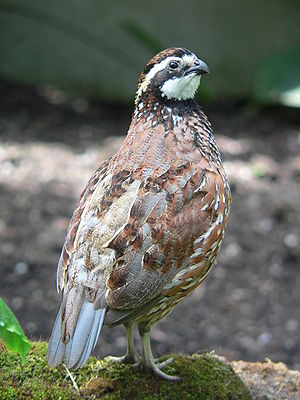
Virginia WAchtelImage via Wikipedia
Population surveys on Quail Emphasis Areas and private land
present a different picture than those for the state as a whole.
JEFFERSON CITY–Results of Missouri’s annual statewide quail population survey give quail hunters little to rejoice about. However, bobwhites are holding their own in some areas and making gains in others where landowners and the Missouri Department of Conservation (MDC) have made quail management a priority.
One way the agency tracks quail is through roadside surveys. Each August, conservation agents count quail along 30-mile routes in 110 of Missouri’s 114 counties. Only Clay, Jackson, St. Louis and St. Charles counties are not surveyed. The 2011 roadside surveys recorded an average of 1.4 quail per 30-mile route. That is 36 percent lower than last year and 56 percent below the average over the past 10 years. Results from the roadside survey are consistent with other measures that document a continuing, long-term decline in bobwhite numbers statewide and throughout most of their range.
Agricultural Wildlife Ecologist Beth Emmerich, who analyzes bobwhite quail population data gathered by MDC field staff, says that while Missouri’s quail picture is not rosy, it isn’t as bad as the roadside survey numbers make it seem. Shenotes that quail populations vary significantly in different parts of the state and even locally. Some of those variations reflect differences in weather patterns. Others show where MDC and private conservationists have been at work.
“Quail counts in northwest Missouri are up 63-percent compared to last year,” said Emmerich, “while counts in the Mississippi lowlands, which had severe and extended flooding this year, show a 92-percent decline over the same period. Looking at the roadside survey numbers, you might think it wasn’t worth getting your dog out of its pen, but that is absolutely not true.”
Emmerich said roadside quail surveys occur on the same routes every year. They document quail population changes in those areas over time. However, they don’t take into account quail population trends in areas where work is underway to create quality quail habitat. That is why MDC conducts fall covey counts at 19 conservation areas (CAs) that have been designated Quail Emphasis Areas.
Starting in mid-October each fall, MDC biologists visit randomly selected plots on Quail Emphasis Areas early in the morning and listen for calling quail. They record the location of each covey in earshot. They flush some of the coveys to get an idea of how many birds are in each. Feeding these data into statistical population models allows biologists to estimate area quail populations. Covey counts are a practical way to evaluate the effectiveness of habitat management efforts.
Emmerich said results from this year’s covey counts are not all in yet, and she won’t finish analyzing those data until next year. But early results already document some quail-management success stories. They also illustrate how weather affects quail populations. 
On Oct. 11, Resource Assistant Chez Kleeman flushed a covey of quail at Bois D’Arc CA in Greene County. Some of the birds were sparrow-sized and barely able to fly. Quail that successfully raise early clutches sometimes nest again and raise a second brood that year. Seeing small birds in October indicates Bois D’Arc’s quail may have “double-clutched.” Backing this up are reports from Bois D’Arc staff that quail numbers are up this year.
According to Private Land Conservationist Mike Gaskins, landowners in Dent and Shannon counties also have reported are seeing late-hatched quail and turkey broods in recent weeks.
Resource Forester Phil Sneed, who manages Poosey CA in Livingston County, also reported seeing very young quail in some covey counts, so portions of northern Missouri have experienced late quail nesting success as well.
Sneed also reported hearing coveys in new locations. That is a sign of good habitat conditions. Average covey size on Poosey was 11 to 12 quail, with two 20-bird coveys.
Dave Hoover, manager of the Seat CA in Worth County, reported covey counts slightly better than the last year. However, he cautions that quail numbers remain low there, due to extremely difficult weather conditions that plagued ground-nesting birds from 2007 through 2010. 
Staff at Whetstone Creek CA in Callaway County and William White Memorial CA in Lincoln County reported covey counts 50 percent smaller than in 2010.  Heavy snow that lingered throughout much of last winter in parts of central Missouri may have cut into this and some other local populations.
Private Land Conservationist Nathan Mechlin called 2011 a good quail-production year for Clinton, Caldwell and Daviess counties. He said both quail and turkey brood sightings are up from previous years. Those results are spotty, however, and landowners in some areas report seeing very few birds.
Each year, MDC makes habitat improvements on more than 75,000 acres on CAs. These improvements benefit quail and other wildlife that share the bobwhite’s habitat needs. Roadside quail counts occur along routes established before this work began and are not designed to measure the success of quail management on CAs.
Just as the roadside survey fails to capture information about Quail Emphasis Areas, it also does not reflect progress made on private land. Emmerich said hundreds of Missourians are working to restore quail habitat. Some have organized cooperatives to work with MDC and other agencies in dozens of Quail Focus Areas around the state.
“The Conservation Department is making a significant investment in quail management on private land each year through cost-share and landowner incentive programs,” said Emmerich.  “One partnership we are especially proud of is the Habitat Challenge Grants program. This summer, the Department awarded a total of $133,000 in funding to Quail Forever, the Quail  and Upland Wildlife Federation, Quail Unlimited and the National Wild Turkey Federation. Through habitat challenge grants, each of these conservation organizations provides matching funds to help landowners complete habitat work on their land.”
Emmerich said MDC’s Landowner Assistance Program channels more than $1 million a year into habitat enhancements that benefit quail and other wildlife that share the bobwhite’s habitat needs. The agency also promotes federal farm bill programs such as the Conservation Reserve Program, which funds quail-friendly habitat work.
For locations and additional information about MDC’s Quail Emphasis Areas, visit mdc.mo.gov/node/3333. For more information about Quail Opportunity Areas and quail management, visit mdc.mo.gov/node/12606.

Tuesday, November 1, 2011

Deer hunters reminded of changed permit format, tagging procedures

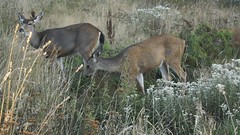
DeerImage by gibsonsgolfer via Flickr
A new YouTube video shows how to “bag it,
notch it, tag it and check it.” Free permit protectors
are available from conservation agents and MDC offices.
JEFFERSON CITY–With the November firearms deer season on the horizon, the Missouri Department of Conservation (MDC) reminds hunters of changes to deer and turkey permits and tagging procedures that went into effect in this year.
The November firearms deer hunt starts Nov. 12. The 11-day season typically accounts for approximately 80 percent of the firearms deer harvest each year.
This year is the first time that Missouri hunters can buy deer and other hunting permits online, print them and use them immediately. Hunters can use this new e-Permits system to buy permits online or purchase them in person at MDC regional offices, nature centers and other offices statewide. Hunters also still can buy permits from hundreds of vendors statewide.
Vendors still are printing permits on the familiar yellow plastic material that has been used in the past. However, the format has changed and no longer includes a separate self-adhesive tag. Within a couple of years, all permits will be issued on plain paper.
The new format does not include separate tags for deer or turkeys as in the past. Under this new e-Permits format, deer and turkey permits are permit-and-tag in one.
With these changes come some changes in deer and turkey tagging and checking procedures. These are explained in the 2011 Fall Deer and Turkey Hunting Regulations and Information booklet, which is available wherever permits are sold or at mdc.mo.gov/node/3656. MDC also has a Web page (mdc.mo.gov/node/3891) explaining the procedure. It even has a short video at youtube.com/watch?v=CHFp_9UiKjg that illustrates the reminder phrase, “Bag it, notch it, tag it, check it.”
“E-Permits offer some significant advantages in terms of convenience,” said MDC Permit Services Supervisor Greg Jones. “We know that changes can be confusing. We want to be sure hunters have easy access to permits and information about the new procedures in whatever form they like best – in person, in print, online text or video. If folks still have questions, they can call or visit any of our offices for help.”
MDC is providing free permit protectors through its conservation agents and regional offices.
-Jim Low-

10 Tips to Keep Your Outdoor Gear in Working Order and Well Organized

Camping Gear - It's expensive to buy, make it last. Maintaining and organizing your outdoor gear is crucial for ensuring it remains func...