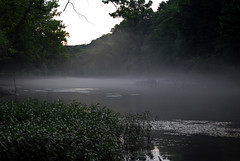
Thursday, September 10, 2009

The Wild Trout Creeks of Missouri

By: David Mann

The littlest known trout fishery in the Ozark hills would definitely be the small wild trout streams that lace southern Missouri. These streams get very little pressure, and they provide excellent fishing. But they aren’t for everyone. It takes a lot of work, and a bit of skill to take these stream-bred trout. If you like easy fishing for hatchery raised trout, chances are you’ll only be frustrated. If you enjoy being on a quiet, natural stream, and catching trout on their own terms, you’ll really enjoy this type of fishing.

Tactics are pretty universal for catching the wild rainbows that inhabit these small streams. In short, you want to imitate the natural food base. For that reason, if there’s a hatch, fly fisherman that are “matching the hatch”, will generally take more fish than others. When fish aren’t rising, spin fisherman, or fly anglers tossing streamers or nymphs will do quite well. In short, you have to know what the trout are feeding on at that particular moment to be successful.

Stealth may be an even more important element of success. If you spook the trout before you begin fishing, it won’t matter how enticing your offering is. When you come up on a likely run, wade quietly (i.e. do not step heavily or crunch gravel), and try to keep your profile down. Some even approach on their hands and knees. Also, do not allow your lure of fly to make a loud splash when it hits the water. The more educated fish will be put off their feed by this. If your fly fishing, keep your false casts to a minimum. For fly fisherman, 7x tippet is often necessary, and spin fisherman should use line no heavier than four pound test.

Only fish the productive water. There is no point in wasting your time on water that is unlikely to hold fish. In short, if there is little or no current, you won’t find many or any trout. Pools are a good place to fish, provided they have a decent current, and a defined channel. Riffles are arguably even more productive, especially on the larger creeks. Any thing over 10” deep can, and probably does hold trout from time to time.

Enjoy fishing, even if it’s slow. The biggest part of the fun in this type of fishing is just being out in nature on a wild stream. If that’s not enough for you to have a good day, these streams probably aren’t for you anyway. Also, enjoy every fish you catch. Any fish you catch in one of these streams is a trophy. You have taken it on its terms, in the wild. It doesn’t get any better.

Here’s a few short lists to help you get started. First, is a list of wild trout streams, and the prime water in each of them. Note that the “prime water” that I highlight usually isn’t the entire area of stream managed for wild trout, just the stretch you’re mostly to find good populations of wild trout. Also, on all streams listed, artificial lures and flies only are allowed. You can keep one fish over 18”, but we encourage you release each one you catch. Next, I’ll list some lures and flies that are very successful on just about all the wild trout streams in the region. This is just a very general list, and there are no doubt many more that will get the job done.

Wild Trout Streams

1. Barren Fork Creek

Prime Water- Twin Springs to mouth

Description: This stream has a pretty low population of wild trout. With that said, you can find a few in some of the better holes. This is not a destination stream, but if your in the area anyway, you may as well give it a try. Public access is from Twin Spring downstream for about ½ Mile.

2.Mill Creek

Prime Water- Wilkin Spring to mouth

Description: This creek has a pretty respectable population of wild trout in the first few miles below Wilkin Spring. It’s not the stream it once was, but it’s definitely worth the trip if you like a good challenge. The MDC provides access below Wilkin Spring, and the Forest Service has an access on the stream’s lower reaches.

3. Spring Creek

Prime Water- Relfe Spring to mouth

Description: This creek has a decent trout population, and is very pretty. Also, it’s nearby several other trout streams, including Mill and Little Piney Creek. It’s definitely worth a few hours. There is public access on a nice stretch of stream toward the lower end.

4. Little Piney Creek

Prime Water- Highway 63 Bridge to CR 7460 Bridge (Vida Slab)

Description: This is an awesome creek, with a very good wild trout population. It used to be managed as a put and take fishery, but they stopped stocking it a few years ago, and instituted a length limit. Sure enough, the trout began spawning, and the Little Piney became one of the best wild trout streams in the Ozarks. Access is at the Highway 63 Bridge, Lane Spring Recreation area, and Vida Slab. There is a lot of quality water here, about seven miles in all.

5. Crane Creek

Prime Water- City of Crane to Quail Spur Road

Description: Home to one of the last pure populations of McCloud Rainbow trout, Crane Creek is an excellent fishery. Trout numbers are high, and this little stream is known around the country for its excellent fishing. Public access is found at the Crane City Park, and the Lower Wire Road Access. Unfortunately, some short-sighted folks are currently conspiring to dam it up, and form a lake. God forbid!

6. Blue Spring Creek

Prime Water- Blue Spring to mouth

Description: This tiny little creek is home to a tremendous population of wild rainbow trout. With 290 trout per mile, you won’t find a trout creek in Missouri with more fish. The catch is, they are very spooky, and difficult to catch. Also, this is a very tiny creek, and backcasting room is virtually non-existant. All except for the first few hundred yards of the creek are publicly owned. Access isn’t a problem.


Flies

Pheasant Tail NymphImage via WikipediaFlies

1. Woolly Bugger, Olive, White, or Black #10
2. Prince Nymph #14-18
3. Pheasant Tail Nymph #14-18
4. Copper John #18
5. Hare’s Ear Nymph #14-18
6. Elk Hair Caddis #14-18
7. Don’s Crawdad #10

Lures

1. Panther Martin Spinner 1/24-1/32 ounce
2. Rooster Tail Spinner 1/24-1/32 ounce
3. Mepp’s Spinner #0
4. Little Cleo 1/16 ounce
5. Rebel Crawdad crankbait
Reblog this post [with Zemanta]

Friday, August 21, 2009

Fishing Missouri's Forgotten Trout River - The Niangua River

Fishing Missouri's Forgotten Trout River - The Niangua River
By Davidson Manning

Niangua River, MOImage by Kyro S via Flickr


The Niangua River may be the most overlooked trout stream in the state of Missouri. It is widely known across the state as an excellent river for floating and smallmouth bass fishing, but the trout fishery is little known. Most area trout anglers only fish in the Niangua River's tributary, Bennett Spring Branch.

Above Bennett Spring Branch, the Niangua is a typical warm-water fishery. Smallmouth bass fishing is very good, but few trout are present. It is the cooling flows from Bennett Spring that make the river into a true trout stream. For eleven miles, the water is cool enough to hold year-round populations of rainbow and brown trout. Both species are stocked regularly.

The Niangua River isn't like other trout streams in the Ozarks. First of all, it just doesn't look like a trout stream. The river is big, and it usually isn't very clear. Also, the water temperature is usually above 70 degrees for most of the summer. With that said, for some unknown reason, the Niangua River does fish well all summer long, even when water temperatures are quite high. It is not uncommon to catch trout when the water temperature is 75 degrees. In other words, it's hard to believe trout do well in the Niangua, but they do.

Rainbow trout are the most common catch in the Niangua. They are stocked every few weeks during the spring, summer, and fall, and a good number also escape from Bennett Spring Branch into the river. They are easy to catch on a Powerbait, worms, small spinners, and spoons. Brown trout are not quite as common, but a good number can be found in the river. They respond better to small crankbaits, nightcrawlers, minnows, and crayfish. Both species of trout can be caught on a variety of flies including Woolly Buggers, Prince Nymphs, Pheasant Tail Nymphs, and Caddis imitators.

Mist on the Niangua in MissouriImage by Kyro S via Flickr


You can access the Niangua River's trout water at three points. The first is the Bennett Spring Access, where Bennett Spring Branch meets the Niangua. This is probably the most popular access point, and fish are always plentiful. The next access point is at Barclay Conservation area. This is a few miles downstream from the Bennett Spring Access. Fishing is very good in this area, especially for brown trout. The final access point is at Prosperine. Trout populations are a bit lower in this area, but you can find some of the biggest brown trout in the river both up and downstream of this access. Smallmouth bass are also abundant. Fishing regulations on the Niangua allow for all baits, lures, and flies to be used. Four trout may be kept, and there is no minimum length limit on rainbow trout. There is a 15" length limit on browns. In addition, only one brown may be kept. There are many other fantastic Missouri Trout fishing opportunities, but don't neglect this gem of a river!

No matter where you access it, the Niangua is a great stream. It may not be popular to trout fisherman, the fishing is very good. You'll see lots of floaters, especially in summertime, but fisherman will be few. This river is certainly worth a trip. If you have trouble, you can always drown your sorrows by catching a few stockers over at Bennett Springs.


Davdison Manning is an avid outdoorsman spending over 100 days per year pursuing his passion for fishing, many of them in the Ozarks of Missouri and Arkansas. He details many of his favorite spots on his website Family-Outdoors. His other pursuits include many days spent in the field camping and hunting. Davidson loves to share his knowledge of the outdoors in the hope of helping others to find their own connection to the outdoors.


Reblog this post [with Zemanta]

Friday, August 14, 2009

Trout Fishing in the Ozark Mountains

Trout Fishing in the Ozark Mountains
By Davidson Manning

Big Spring, a giant karst spring in The Ozarks...Image via Wikipedia


One thing is for sure. There is no shortage of trout streams in the Ozark Mountains of Missouri and Arkansas. Some are spring-fed rivers and creeks. These provide everything from daily stocked put and take fishing for gullible trout, to the pursuit of wild rainbows in a pretty spring creek. There are also trophy brown trout streams that can and do produce stream grown trout in the ten pound range. In all, there are eighteen spring-fed streams in the Ozarks that are managed for year-round trout fishing, seventeen of which are in Missouri. All have public access. Of these, the freestone section of the North Fork of the White is often considered to be the best, with trout populations in the thousands per mile, with the upper section holding lots of wild rainbows and some browns, and the lower section holding a lot of browns and some rainbows. Other streams that are well worth fishing are the Eleven Point, Little Piney, Current, Meramec, and Niangua Rivers in Missouri, and the Spring River in Arkansas.

The tailwaters of the Ozarks are a completely different animal. All of the Ozark tailwaters are part of the White River System. All of these tailwaters of bottom draw dams hold thousands of rainbow trout per mile, as well as the constant chance of catching a world record brown. Cutthroat and brook trout can be found as well. There are about 150 miles of year-round trout tailwaters in the Ozarks, and about 130 miles of these can be found in Arkansas. Access is ample. The White River below Bull Shoals Dam is the most well known, providing one hundred miles of quality trout water. The upper twenty miles is the most heavily fished of this tailwater, but there are year-round populations of trout all the way to Guion, which is 92 miles below Bull Shoals Dam, and trout range considerably further downstream in the winter. The reason why this tailwater can produce trout for such a long distance is due to the fact the North Fork River flows in about fifty miles below the dam. The North Fork River also provides world class tailwater trout fishing, and it gives the White River the shot of cold water it needs to extend its trout water by fifty miles. Every true trout fisherman should make a visit to the White River in their lifetime, because 100 fish days can, and regularly do happen. This article just scratches the surface of trout fishing in the Ozarks, and I will describe specific streams in detail in coming articles.

In short, there is something for every trout fisherman in the Ozarks. There are not as many streams as there are in the Appalachians or the Rockies, but the ones that we do have compare favorably to the trout streams anywhere else in the world. Come and give Ozark trout fishing a try.
Davdison Manning is an avid outdoorsman spending over 100 days per year pursuing his passion for fishing, many of them in the Ozarks of Missouri and Arkansas. He details many of his favorite spots on his website http://family-outdoors.com His other pursuits include many days spent in the field camping and hunting. Davidson loves to share his knowledge of the outdoors in the hope of helping others to find their own connection to the outdoors.

Article Source: http://EzineArticles.com/?expert=Davidson_Manning
http://EzineArticles.com/?Trout-Fishing-in-the-Ozark-Mountains&id=2010616


Reblog this post [with Zemanta]

Missouri's Lake Taneycomo - Midwest Trout Fishing Mecca

Missouri's Lake Taneycomo - Midwest Trout Fishing Mecca
By Davidson Manning
Main Species Present: rainbow trout, brown trout, suckers, and largemouth bass

Lake Taneycomo as seen from an observation poi...Image via Wikipedia


Lake Taneycomo in southwestern Missouri might well be considered the world's finest trout fishery. Its popularity mostly relies on the approximately 700,000 rainbow trout stocked per year, which causes this twenty-two mile riverine lake to be positively loaded with dumb stockies at all times. They are stocked once a month, and even towards the end of each stocking period the lake holds many trout. Due to these easy to catch fish, few people come up empty handed here.

However, there are many fisheries around that hold lots of easy to catch rainbow trout. What sets Taneycomo apart is the enormous brown trout it produces. Twenty inch browns are routine, ten pound trout aren't at all out of place, and each year several larger than twenty pounds are pulled from its icy waters. All this was capped off when a Missouri Department of Conservation agent who was sampling the lake found a thirty six pound brown trout. There is little doubt that some day this lake will produce the world record brown trout to some lucky angler.

The lake can be effectively broken down into three sections. The first would be the section of lake from Table Rock Dam downstream to Fall Creek. Legal fishing begins a few hundred yards downstream from the dam. This section has special trophy regulations for both rainbows and browns, and this is where most of the largest trout in the lake live. Flies and lures only are allowed in this section. This part of the "lake" is for all intents and purposes a river, and can be waded if Table Rock Dam is not generating.

The next section of the lake worth mentioning is from Fall Creek to the Highway 65 Bridge. The upper part of this section looks like a river, but the further downstream you get, the more it becomes a lake. This entire part of the lake holds many trout, both rainbow and brown, and it can be effectively fished from the bank with bait, as that is legal below Fall Creek's mouth. Another popular method is to get a boat and troll spoons and spinners. Trophy regulations remain in effect for brown trout, but not rainbows.

The final section of the lake is from Highway 65 to Powersite Dam, which is the lake's lower boundary. This far downstream, Taneycomo is indeed a lake, although it is quite shallow. Effective bank fishing can be done with worms and Powerbait, but it is more of a boat fishery. Both rainbow and brown trout respond to the same trolling methods as above Highway 65, and that is probably the best way to fish. You won't need downriggers, or other special equipment due to the lake's shallow depth. This section also boasts some pretty good largemouth bass fishing in the creek arms, and gigging for non-game fish is quite popular in this part of the lake.

One item of caution is in order with regard to Taneycomo. Water levels can rise rapidly in some locations. Anglers are well-advised to do their homework on this matter ahead of time. Better yet, consider hiring a Tanycomo Guide to help you get on more fish and to help keep you safe.

Davdison Manning is an avid outdoorsman spending over 100 days per year pursuing his passion for fishing, many of them in the Ozarks of Missouri and Arkansas. He details many of his favorite spots on his website http://family-outdoors.com/. His other pursuits include many days spent in the field camping and hunting. Davidson loves to share his knowledge of the outdoors in the hope of helping others to find their own connection to the outdoors.

Article Source: http://EzineArticles.com/?expert=Davidson_Manning
http://EzineArticles.com/?Missouris-Lake-Taneycomo---Midwest-Trout-Fishing-Mecca&id=2048973


Reblog this post [with Zemanta]

Bull Shoals Lake - Missouri and Arkansas Shared Fishing Treasure

Bull Shoals Lake - Missouri and Arkansas Shared Fishing Treasure
By Davidson Manning

Bull Shoals Lake -Image via Wikipedia


Main Species Present: Largemouth Bass, Smallmouth Bass, Spotted Bass, Walleye, White Bass, Channel Catfish, Blue Catfish, Crappie, Rainbow Trout, Striped Bass, Carp, Suckers, Bluegill, Yellow Perch, Rock Bass

Bull Shoals Lake in southwestern Missouri and northern Arkansas is a world class fishery by every standard. It offers great fishing for largemouth bass, smallmouth bass, walleye, trout, white bass, bluegill, catfish, and countless other fish species. The upper section of the lake from Powersite Dam to Beaver Creek is the place to go if you're looking to get a taste of everything the lake has to offer. Walleye, white bass, rainbow trout, crappie, and spotted bass are the most sought after species in this part of the lake, but there are many others. Just below Powersite Dam is a popular area that is easily accessible by boat or by foot called the Pothole. This pool in actuality reaches a short length below the dam, but the section of the lake for several miles below the dam usually goes by this name.

March through June is prime time here, with great numbers of walleye, white bass, and trout, and crappie stacked up in this riverine area below Powersite Dam. 1/32 ounce white jigs are very popular here, as they work very well for all of the species listed above. Nightcrawlers are also popular for those seeking all species. By late June, most of the Walleye and White Bass have moved for deeper waters, but the area just below Powersite fishes quite well for black bass and rainbow trout in from Late June through mid- October, providing you fish early or late in the day.

At Beaver Creek, the classic bass fishing waters of Bull Shoals Lake begin. There are some true hogs in the middle and lower lake, and the current Missouri state record largemouth was caught here. During the summertime, the bass tend to hold in the 10 to 25 foot range during the day, and often fall victim to drop shot or Carolina rigged soft plastics. Even during the dog days of summer, bass come in shallow in the early morning just after dawn, and can be caught by bank fisherman, often on top water lures.

Keep in mind that Bull Shoals Lake is usually ultra-clear, so light lines are best. Walleye fishing is also very good in the lower lake. Walleye fishing is very different than in the upper lake, but it is arguably as good or better. Daytime fishing during the summer will pretty much require a boat. Some troll, and some fish the deep water with a slip bobber rig using nightrcwlers or minnows as bait. Night fishing is by far best in the summer. The most effective technique is to fish anywhere a light shines upon the water, especially around docks. Shad are attracted to these areas, and walleye follow. Minnows and night- crawlers are best in this situation. Trout fishing can also be had in the lower lake, near Bull Shoals Dam. This is purely a boat fishery, and nighttime fishing is best. Most people fish nightcrawlers or corn thirty to fifty feet deep.

This is a relatively untapped fishery, but it is very productive, as 30,000 rainbow trout are stocked into the lake each spring. Many survive for many years after stocking and grow quite large. Catfish abound. Most are channel catfish in the two to fifteen pound range, but there are some blue catfish in the lake as well, some of which reach the fifty pound mark. White Bass, Crappie, and Bluegill also are often targeted.

Davdison Manning is an avid outdoorsman spending over 100 days per year pursuing his passion for fishing, many of them in the Ozarks of Missouri and Arkansas. He details many of his favorite spots on his website http://family-outdoors.com/

His other pursuits include many days spent in the field camping and hunting. Davidson loves to share his knowledge of the outdoors in the hope of helping others to find their own connection to the outdoors.

Article Source: http://EzineArticles.com/?expert=Davidson_Manning
http://EzineArticles.com/?Bull-Shoals-Lake---Missouri-and-Arkansas-Shared-Fishing-Treasure&id=2102020


Reblog this post [with Zemanta]

Fishing - Table Rock Lake

Fishing - Table Rock Lake
By Davidson Manning

Fishing at Table Rock LakeImage by matneym via Flickr


Main Species Present: Largemouth Bass, Smallmouth Bass, Spotted Bass, Channel Catfish, Blue Catfish, Walleye, Rainbow Trout, White Bass, Crappie, Bluegill, Carp

Missouri's Table Rock Lake is certainly famous. The lake plays host to everything from important Bassmaster Tournaments to Cable Television Shows. There is a reason for this. It is one of the best bass fishing lakes in the United States. The lake holds almost equal numbers of largemouth, smallmouth, and spotted bass. During the summertime, look for large mouth in five to ten feet of water, and smallmouth and spotted bass in ten to thirty feet of water. The lake's water is gin clear; it is common to be able to see the bottom in fifteen feet of water. This necessitates two things. The first is light line. Eight pound line is the norm, and you shouldn't use anything a whole lot larger than ten pound test mono filament. The second thing this clear water means is that you must approach the bass as stealthily as possible. This means not waving your rod unnecessarily, not banging your tackle box on the boat, and not motoring too close to the structure you are planning to cast to. Soft plastics such as tube baits and Carolina Rigged soft plastics are the most popular way to fish the lake. Casting crankbaits and spinnerbaits is also a popular way to fish.

There are other species in the lake besides black bass that are worth casting a line to. Walleye are stocked heavily in the lake, and can be taken by trolling crankbaits, as well as casting jigs and live bait such as minnows or nightcrawlers. Walleye tend to hold in fifteen to twenty-five feet of water in the summer. Night time fishing is best during the warm months. Another popular species in the lake is White Bass. The best time to fish for these feisty fish is in the spring when they make their annual spawning runs. During the rest of the year, they can be caught in water that is approximately twenty feet deep. Catfish are also abundant everywhere in the lake. Channel Catfish are most common, but large blue catfish can also be caught. Rainbow trout can be found in deep water in the upper lake in the White River Arm and Roaring River arms. Trolling is the best method for trout fishing in Table Rock Lake, but there aren't enough to make fishing for them truly worthwhile. If you want to catch trout, it's best to take the time to drive to either the White River or Roaring River themselves.

The clear waters of Table Rock Lake hold some of the best fishing to be had in the Midwest. Whether you like smallmouth bass, largemouth bass, walleye, or catfish, this is a great lake for you.

Davdison Manning is an avid outdoorsman spending over 100 days per year pursuing his passion for fishing, many of them in the Ozarks of Missouri and Arkansas. He details many of his favorite spots on his website http://family-outdoors.com/ Check out his assessment of many fishing areas around the U.S. at http://family-outdoors.com/FISHING_PLACES.htm His other pursuits include many days spent in the field camping and hunting. Davidson loves to share his knowledge of the outdoors in the hope of helping others to find their own connection to the outdoors.

Article Source: http://EzineArticles.com/?expert=Davidson_Manning
http://EzineArticles.com/?Fishing---Table-Rock-Lake&id=2191039


Reblog this post [with Zemanta]

Fishing the Eleven Point - A Crown Jewel of the Ozark National Scenic Riverways

Fishing the Eleven Point
By Davidson Manning

Rainbow Trout (Oncorhynchus mykiss)Image via Wikipedia

There is no other river like the Eleven Point. Its wilderness atmosphere, combined with blue ribbon trout and smallmouth bass populations make this one of the true jewels of the Ozarks. The river is situated in south-central Missouri, and north central Arkansas. The forty miles of river between the Thomasville, and the Narrows Access to the river is part of the National Scenic Riverways system. This means there is little or no commercial activity, or private land along the river. This helps keep the habitat, water quality, and beauty at a level unsurpassed in the Midwest.

The Eleven Point begins as a small stream high in the Ozark Mountains. From the headwaters to Thomasville, the river is lightly fished, but can produce very well for smallmouth bass. Almost no one floats this section. Below Thomasville, the river becomes a national river, and fishing becomes better. The area of river between Thomasville and Greer Spring is known for producing some of the biggest stream smallmouth anywhere. Trophy regulations help maintain this world class fishery. Shadow bass (also known as rock bass or goggle-eye) also are abundant, as well as several other species of sunfish.

The river changes dramatically at the mouth of Greer Spring. This massive, cold and very wild spring immediately transform an easy going, warm smallmouth stream into a large river with deep and rushing flows. Most notably, it makes the Eleven Point an excellent trout stream. From the mouth of the spring branch downstream to Turner Mill Access the stream is managed under Blue Ribbon trout regulations. This means an 18" length limit, and artificial lures and flies only. This beautiful and interesting stretch of trout water relies on both stocking and natural spawning to keep fish populations up. About 5000 rainbow trout are stocked each year in this five and one half mile portion of the river. You can access this part the Eleven Point at the Greer Crossing Access at the upper end, and the Turner Mill Access at the lower end. You can expect 300 to 500 trout per mile. Wading anglers do well wading up, or downstream of these public access areas. Most people float it.

Below the Blue Ribbon trout area, you will find the White Ribbon Area. This is managed a lot differently. It is stocked every few weeks from April through September, but you will find trout here all year-long. The White Ribbon area allows four trout to be kept, with no length limit, and no bait restrictions. Most people think of this trout water as a put and take area, but there is only limited truth to this. Fish populations do decrease rather significantly between stockings, especially in the winter when no fish are stocked. However, even at times when fish populations are at the very lowest, (which is usually during February or March) trout can be caught, and good catches can be made consistently, if you know how to read the water. The best fishing generally is in June, July, and August when fish populations are really built up. About 15,000 rainbow trout are stocked per year in this fourteen mile section of river each year.. Wading and floating access will be found at Turner Mill, Whitten, McDowell Access, and Riverton. The best trout fishing will be found between the Turner Mill and McDowell Access, but trout can be found in fair numbers all the way downstream to the Riverton Access, and sometimes even significantly further downstream. Below Riverton, the river transforms back into a smallmouth bass stream, typical of the Ozarks. It is now a large river, and species such as largemouth bass, spotted bass, and even walleye can be found. The river slowly warms, and by the time it reaches the Black River in Arkansas it appears very little like the upper section.

The Eleven Point is certainly special. This is one of the best rainbow trout streams in the Ozarks, as well as an excellent smallmouth bass river. It is however, rather undiscovered. It is not used nearly so much as nearby streams such as the Current River, Buffalo River, or the Black River. Come out and give it a try.

Davdison Manning is an avid outdoorsman spending over 100 days per year pursuing his passion for fishing, many of them in the Ozarks of Missouri and Arkansas. He details many of his favorite spots on his website http://family-outdoors.com/ which is a good resource for general fishing, hunting, and camping information. His website area on Missouri Trout Streams and techniques can be located at http://family-outdoors.com/Missouri_Trout_Fishing.html and covers some amazing opportunities.

His other pursuits include many days spent in the field camping and hunting. Davidson loves to share his knowledge of the outdoors in the hope of helping others to find their own connection to the outdoors.

Article Source: http://EzineArticles.com/?expert=Davidson_Manning
http://EzineArticles.com/?Fishing-the-Eleven-Point---A-Crown-Jewel-of-the-Ozark-National-Scenic-Riverways&id=2226991


Reblog this post [with Zemanta]

10 Tips to Keep Your Outdoor Gear in Working Order and Well Organized

Camping Gear - It's expensive to buy, make it last. Maintaining and organizing your outdoor gear is crucial for ensuring it remains func...