Thursday, November 19, 2009

Hunting Mark Twain National Forest

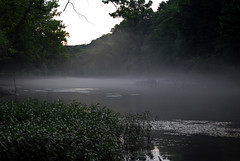
Mark Twain National ForestImage via Wikipedia


General Information
:

Mark Twain National Forest is divided into nine main areas spread across southern Missouri. These areas make up a total of approximately 1.5 million acres. Approximately 100,000 of these acres are roadless and/or Wilderness/National Scenic Riverways acreage. Hunting is regulated on these lands by the Missouri Department of Conservation, although wildlife habitat is mostly managed by the USFS. Because regulations change, and areas can be redesignated, it is vital to make certain that you know the regulation in the areas you will hunt. For example, some areas allow horseback and/or ATV travel and a few do not.

Options:
  • Cedar Creek
This area is approximately 15,000 acres and is the northernmost section of Mark Twain. It is also situated relatively closely to a sizable population center in Columbia and Jefferson City. Having said this, there are some good opportunities here. There are plenty of areas where a hunter can go here where they will not be overrun by others, but it does require some advanced scouting.

There are three accesses with facilities managed by the Forest Service in this section, but there are some other adjoining land public accesses with hunting opportunities. The three USFS accesses are Carrington Pits, Dry Fork, and Pine Ridge. Also in the area is a conservation area including and surrounding Little Dixie Lake and Earthquake Hollow Conservation Area.

The Carrington Pits area is open year round. For more information and maps, call 573-592-1400 (Fulton Office).

Another resource for great hunting opportunities in the area is the Cedar Creek Trail, a trail of total of 36 miles in length. Directions from Fulton, Missouri are: take Hwy. 54 south to Route H; west to Rt. J, south to Rt. Y, west to Pine Ridge Recreation Area. Horse users, travel to Dry Fork Campground, located 4 miles northeast on County Road 361. Or from Columbia MO, take Hwy 63 south to County Road AB (Barnes Chapel Road), left to Ginn Lane, right to Ginn Road Trail Head. A TRAIL MAP is available from the USFS.

Campgrounds include Pine Ridge Recreation Area (includes Cedar Creek Trailhead) and Dry Fork Recreation Area (alternative Cedar Creek Trailhead).
This section is comprised of approximately 190,000 acres. There are also multiple opportunities here. This is really getting into Ozark Country and is made up of hardwood forests spread across rolling hills. There are lots of deer, but they are spread out and scouting, as always, is critical. This area has some pressure, but there are plenty of off-the-beaten-path areas. A hunter willing to work a bit can really have a wilderness hunting experience here.

Included in this area is the Paddy Creek Wilderness Area (approx. 7019 acres) and the Big Piney Trail. Big Piney Trail is in Paddy Creek Wilderness. The total of the two sections of this trail are seventeen miles and provide many launching off points for a truly secluded hunting experience. There is a campground at Paddy Creek Recreation Area with 23 total sites. The Recreation area closes December 1. Also, keep in mind that the wilderness area is a Leave No Trace area. Please follow the tenets of this directive to keep others positive about the hunting community. Maps in various formats and in a variety of downloadable files can be found by following the link Paddy Creek Wilderness Maps. This is through Wilderness.net. Directions to the area are from Rolla, take Hwy 63 south about 35 miles to Hwy 32 and turn west. Drive 3.7 miles to Hwy N, which branches to the right. Drive 2.1 miles to Hwy AF, turn left. Hwy AF turns into Slabtown Road and passes close to a farmhouse, almost making the road look like a driveway. Continue driving for 7.5 miles until you see the sign for Big Piney Trail Camp, turn left. The trail is often used by horses/trailriders, so be cautious.

The main office for this district can be reached at 417-967-4194.

  • Potosi, Salem and Fredrictown Sections
These are actually managed as two sections of Mark Twain National Forest. They are in roughly the same area and I will look at opportunities in both areas. In the Potosi/Fredricktown section there are two designated wilderness areas. One is the Bell Mountain Wilderness and the other is the Rockpile Mountain Wilderness. The Bell Mountain Wilderness is approximately 9000 acres in size and is in the St. Francois Mountains, and contains some of the higher elevations in Missouri. A very nice brocuhre of Bell Mountain Wilderness area is available HERE (PDF Form). Camping is allowed in the area following the designated rules and the Leave No Trace ethic. There are two trailheads accessing the wilderness. Directions to each are from Potosi. To the FT 12 Trailhead, take Hwy 21 South 18 miles to Hwy 32. Take Hwy 32 West 8 miles to Hwy A. Take Hwy A South approx 1/4 mile to first Forest Road SE Go approx 1/4 mile SE to site. To the Hwy A Trailhead, take Hwy 8 one mile East to Hwy 21. Go South on Hwy 21 for 11 miles. Or take Hwy 21 South for 17 miles to Hwy 32. Take Hwy 32 West for 8 miles to Hwy A. Take Hwy A approx 5 miles South to site.

Also in the Potosi/Fredricktown section is the Rockpile Mountain Wilderness. This area is a bit smaller, but still has plenty of room at approximately 4,000 acres. Trails are more limited (only about 2 miles of maintained trail), perhaps of benefit to the hunter attempting to escape the crowds. A brochure for the area is available HERE. The directions to the area are, from Fredericktown via Highway 67 :south to County Road C, then about 10 miles on C to County road 406. Follow 406 to Forest Road 2124.

The Salem area just south of the Potosi section, is a vast area of multiple hunting opportunities. There are numerous developed campgrounds as well as areas where the hunter can find solitiude. As in most areas of the Ozark Region, the hunter will benefit from a thorough effort at scouting with particular interest paid to water sources.

This section is approximately 150,000 acres in size. Lake Wappappello is on the eastern border of the section of forest and the Black River runs through the area between generally the northwest corner and the southeast corner. As with the other areas of Mark Twain National Forest, there are many private land inholdings within the broad boundaries of the forest. Maps and knowledge/scouting of the area are essential.

There are several forest service camping areas as well as a conservation area or two managed by the Missouri Department of Conservation. One such conservation area is Bradley A. Hammer Memeorial Conservation Area (PDF Format). As of the most recent regulations, it should be noted that regular firearms deer hunting was not permitted. As always, familiarize yourself thoroughly with the state and area regulations for each area you will hunt as they do vary. To access this area, from Williamsville take County Road 417 to County Road 419. Turn right and go .5 mile to County Road 424. Turn right again and go .25 mile to the entrance. It is relatively small in area, but allows primitive camping in designated areas and could be a good base camp area.

  • Eleven Point Section
The Eleven Point Ranger District of Mark Twain National Forest is around 180,000 acres and includes some of the most neautiful and rugged terrain in Missouri. Embedded in this section of forest is the Eleven Point Wild and Scenic River area and the Irish Wilderness. There are numerous methods by which the hunter can approach deer hunting in this area, including via canoe on the Eleven Point River. Should you choose this method, we strongly suggest getting familiar with the sections of the river that are at least mildly challenging. Canoe rentals are widely available in the area.

There are numerous trails and campgrounds in this section of forest. If you will be floating the river, there are several choices. One of our favorites is Greer Crossing. This campground is open year round.

More Hunting information can be found Here.


Reblog this post [with Zemanta]

Sunday, November 8, 2009

Winter Trout Fishing

Ok...yesterday did not have the feel of a winter trout fishing day. But, since the rifle deer season starts next week, we decided to hit one of the local non-park trout streams. We had a great time. I thought to inspire those who put the trout gear away when winter rolls around, I'd republish this article my son wrote on Winter Trout Fishing.

David Mann
Many trout fisherman choose to hang up their rods for the winter. That is a shame, because some of the best fishing of the year often occurs in the cool months. You will have to adapt to the conditions however, and that means some of your summertime methods will not w

Fly fishing in a riverImage via Wikipedia

ork very well.

The first thing to remember during in the wintertime is to fish slow. The fish do not need to eat a lot of food when the water is cold, so your lure, bait, or fly needs to appear to be easy to catch. Fast moving spinners, spoons, and streamers are not a good bet now. Generally, spin fisherman will do well with jigs, worms, and other live baits, and fly fisherman will do best with nymphs and wet flies fished deep, near the bottom.

Also, you need to look for different kinds of water. Fish generally vacate fast moving riffles and runs, and spend their days in deep, slow pools. This allows the fish to hold their positions without using too much energy. For this reason, you should focus on slow water, and move past water that has a high gradient. Also, winter fishing tends to be best on rivers and streams where water temperatures are relatively stable. The best waters are spring creeks, and tailwaters. The water temperatures in these areas generally stay comfortable even in the coldest weather, and you will catch more fish.

It is important to fish during the warmest part of the day. Although during the summer you probably spent most of your time fishing in the early mornings and late evenings, you should do the exact opposite now. Generally, the best fishing occurs from 10 A.M. to 3 P.M. This is especially important on free-flowing rivers that get very cold in the winter, but it applies on any trout water during the winter.

Another important factor is to imitate what the fish are eating this time of year. Most of the fish will be feeding on nymphs or crustaceans near the bottom of the river. This means that dry fly fisherman tend to struggle. Beadhead nymphs fished deep are often the ticket. Also, this is spawning season on many trout waters, so flies imitating eggs often are best. Although worms and nightcrawlers do not occur naturally this time of year, you can still use them as bait with great success. Salmon eggs are also a top bait.

Although winter is not one of the most popular times to fish for trout, it may be one of the best. Just keep these tips in mind, and you should be able to catch fish even in the toughest conditions. So do not put away your rod this winter.

If you need some ideas on places to go, visit Ozark Trout Fishing for a fairly comprehensive rundown on opportunities in the area.
Reblog this post [with Zemanta]

Friday, October 16, 2009

One of out favorite places in the Missouri Ozarks is the Irish Wilderness and the Eleven Point River. One enhancement to a trip is a study of the history of the area. This short video will wet the taste and we are sure the book is a great addition to anyone's library.


For additional information on the area and book described visit this Review.

* We are in no way affiliated with the authors or publishers of this book and have no financial interest in the book sales.

Big Spring, a giant karst spring in The Ozarks...Image via Wikipedia

Reblog this post [with Zemanta]

Ozark Trout Fishing Resource

Probably with poor timing and even jumping the gun a bit, we have gotten off the ground a section at Family-Outdoors devoted to Trout Fishing in the Ozarks. The area will be broken into the sections titles Trout Parks, Freestone Rivers, Tailwaters, and Smaller Streams. We believe that this will be one of the few areas on the web where such a comprehensive treatment of these areas of Missouri and Arkansas and the trout fishing opportunities available. Comprehensive descriptions of the waters and the tackle and flies that will be effective will all be a part of this section.

We hope it will be a highly used and helpful resource!

Reblog this post [with Zemanta]

5 Keys to Whitetail Success

Regardless of where you are at in your whitetail deer hunting career, there are a few basic steps that you should know or perhaps review, prior to your hunting endeavors this year. If you are new to this sport, these ideas may be new to you. If you are experienced, perhaps reviewing these will be of benefit to you.

1. Scent Control

While this can be taken to any level of extremes, I guess you really cannot be too careful with regard to this matter. Some basic steps you can take include the following things.
• Do not wear the clothes you will be in while hunting until you are heading into field.
• Consider keeping your clothes in some form of scent proof bags until you get out of your vehicle (or camper, tent, cabin, etc.) and then slip them on just as you are ready to head out. Don’t get up and cook breakfast for example and then wear these clothes to the field.
• Remember this for sure; do not wear the boots you will wear in the field until heading out in the field. On that point, it is pretty well established that rubber boots carry the minimal scent of any other type of boots. If you are not in a cold place, cheap rubber boots are fine. More expensive lined (thinsulate is usually the material) boots may be required in colder climates.
• Scent-Lok materials are available for clothing and boots if you wish. Not required.
• Also, there are laundry detergents, deodorants, and scent-blocks available and these may be advisable, but again, are not absolutely necessary


2. Colors

When I began hunting I did not know very much about this and I really wondered. Here's what I have learned, and perhaps more importantly, have experienced in the field. First, do not wear blue jeans. Blue is the one color I know deer can really see. Second, blaze orange is not a problem. No matter what you wear (as long as not blue), deer will not see you if you remain still.

3. Tree Stands

I hunt exclusively from a climbing stand and almost exclusively on public land. Here are the basics with regard to stand placement.

Wind direction is vital. Know the prevailing wind direction where you will place your stand, whether it is fixed or portable.

Always wear a safety harness...at all times from ground to ground.

Scout the area ahead of time. This is not optional. You can get lucky if you happen to be in an area with lots of deer, but you do not want to rely on luck. I will expand on scouting in a later section so will leave it at that for now.

Height is important, but you do not need to be 30 feet high to be successful. In fact, for the purpose of good shots, the higher you go, the harder it is to adjust for angle of shot. I often hunt between 12 and 20 feet and believe this is adequate in most all cases.

If you are stand hunting, stay in your stand. Many deer are taken mid-day by hunters who have the perseverance to stay in their stand. An unpleasant reality is that you may need to relieve yourself at some point. Bring a container with you for this purpose. I just use a water bottle.

4. Firearms/Bows

I can only be general here because this article is not designed to address in detail the issues of firearm or bow choice. There are too many variations to detail here. But here are a few commonsense items

Be very familiar with your weapon. Know how to fix minor problems that might arise in the field and deal with them in a safe manner. For example, if you are hunting with a firearm, you will eventually get dirt in your barrel. Have the resources to clean your weapon should this happen.

Put in the necessary time practicing at the range prior to hunting. It is unacceptable to hunt with a weapon not properly sighted in. If you are lucky enough to hit anything, you may very well injure a deer with little chance for recovery.

Practice every safety precaution you can. This is especially true in bringing your weapon into your stand. Do it the right way. Never carry any kind of a weapon as you climb the tree.

5. Scouting

This is not something you should just do if you get a chance. It is part of the hunting process and can be a lot of fun. Do it at least a week or so prior to when you will hunt so as not to disturb the area too much just before hunting.

Look for trails and sign. There is much to this as there are a variety of factors that can make an area look great, but then not yield any signs of life at the time of the hunt. One thing to keep in mind is that during the rut, many bucks do not follow their prior behavior. There is some evidence however, that some bucks do.

In regard to potential stand placement, keep wind direction in mind. Once you have chosen a spot, make sure you have adequate vision of trails and shooting lanes.

If you are hunting a deer trail, consider how deer are traveling the trail. Are you trying to catch deer as they enter or exit a food plot or are you trying to catch them as they enter or exit a bedding area?

Have an entry/exit plan to your stand sight planned out. Use reflective tacks you can see with a flashlight or headlamp, or use surveyors tape to mark your route. This part is critical as your approach may be the deciding factor on success or failure.

Use Google Earth as a staring point for your scouting endeavors. This does not in any way replace on the ground scouting, but it gives you a tremendous head start. Especially for those of us who are hunting public ground.

If hunting public ground, try and scout areas at least ¼ mile from any road, trail, or access point. Believe it or not, just this level of effort will separate you from the majority of hunting pressure. Also, try and have a heads up on the pressure level you will experience for the season you will hunt. As an example of this, there are areas that I will hunt in the Missouri antlerless season that I will not venture near during the regular firearms season.

These basic ideas are vitally important to your hunting success. There are clearly planning issues beyond these that are necessary. Knowing what gear to bring for example, is of critical importance. Knowing all pertinent regulations is vital. Most importantly, keep in mind that hunting is a sport that can be fulfilling without regard to whether you harvest a deer. I enjoy immensely that time I spend in the Fall woods. A deer is nothing more than a bonus.

Get more info at Family-Outdoors Hunting

White-tailed deerImage via Wikipedia


Reblog this post [with Zemanta]

Thursday, September 10, 2009

The Wild Trout Creeks of Missouri

By: David Mann

The littlest known trout fishery in the Ozark hills would definitely be the small wild trout streams that lace southern Missouri. These streams get very little pressure, and they provide excellent fishing. But they aren’t for everyone. It takes a lot of work, and a bit of skill to take these stream-bred trout. If you like easy fishing for hatchery raised trout, chances are you’ll only be frustrated. If you enjoy being on a quiet, natural stream, and catching trout on their own terms, you’ll really enjoy this type of fishing.

Tactics are pretty universal for catching the wild rainbows that inhabit these small streams. In short, you want to imitate the natural food base. For that reason, if there’s a hatch, fly fisherman that are “matching the hatch”, will generally take more fish than others. When fish aren’t rising, spin fisherman, or fly anglers tossing streamers or nymphs will do quite well. In short, you have to know what the trout are feeding on at that particular moment to be successful.

Stealth may be an even more important element of success. If you spook the trout before you begin fishing, it won’t matter how enticing your offering is. When you come up on a likely run, wade quietly (i.e. do not step heavily or crunch gravel), and try to keep your profile down. Some even approach on their hands and knees. Also, do not allow your lure of fly to make a loud splash when it hits the water. The more educated fish will be put off their feed by this. If your fly fishing, keep your false casts to a minimum. For fly fisherman, 7x tippet is often necessary, and spin fisherman should use line no heavier than four pound test.

Only fish the productive water. There is no point in wasting your time on water that is unlikely to hold fish. In short, if there is little or no current, you won’t find many or any trout. Pools are a good place to fish, provided they have a decent current, and a defined channel. Riffles are arguably even more productive, especially on the larger creeks. Any thing over 10” deep can, and probably does hold trout from time to time.

Enjoy fishing, even if it’s slow. The biggest part of the fun in this type of fishing is just being out in nature on a wild stream. If that’s not enough for you to have a good day, these streams probably aren’t for you anyway. Also, enjoy every fish you catch. Any fish you catch in one of these streams is a trophy. You have taken it on its terms, in the wild. It doesn’t get any better.

Here’s a few short lists to help you get started. First, is a list of wild trout streams, and the prime water in each of them. Note that the “prime water” that I highlight usually isn’t the entire area of stream managed for wild trout, just the stretch you’re mostly to find good populations of wild trout. Also, on all streams listed, artificial lures and flies only are allowed. You can keep one fish over 18”, but we encourage you release each one you catch. Next, I’ll list some lures and flies that are very successful on just about all the wild trout streams in the region. This is just a very general list, and there are no doubt many more that will get the job done.

Wild Trout Streams

1. Barren Fork Creek

Prime Water- Twin Springs to mouth

Description: This stream has a pretty low population of wild trout. With that said, you can find a few in some of the better holes. This is not a destination stream, but if your in the area anyway, you may as well give it a try. Public access is from Twin Spring downstream for about ½ Mile.

2.Mill Creek

Prime Water- Wilkin Spring to mouth

Description: This creek has a pretty respectable population of wild trout in the first few miles below Wilkin Spring. It’s not the stream it once was, but it’s definitely worth the trip if you like a good challenge. The MDC provides access below Wilkin Spring, and the Forest Service has an access on the stream’s lower reaches.

3. Spring Creek

Prime Water- Relfe Spring to mouth

Description: This creek has a decent trout population, and is very pretty. Also, it’s nearby several other trout streams, including Mill and Little Piney Creek. It’s definitely worth a few hours. There is public access on a nice stretch of stream toward the lower end.

4. Little Piney Creek

Prime Water- Highway 63 Bridge to CR 7460 Bridge (Vida Slab)

Description: This is an awesome creek, with a very good wild trout population. It used to be managed as a put and take fishery, but they stopped stocking it a few years ago, and instituted a length limit. Sure enough, the trout began spawning, and the Little Piney became one of the best wild trout streams in the Ozarks. Access is at the Highway 63 Bridge, Lane Spring Recreation area, and Vida Slab. There is a lot of quality water here, about seven miles in all.

5. Crane Creek

Prime Water- City of Crane to Quail Spur Road

Description: Home to one of the last pure populations of McCloud Rainbow trout, Crane Creek is an excellent fishery. Trout numbers are high, and this little stream is known around the country for its excellent fishing. Public access is found at the Crane City Park, and the Lower Wire Road Access. Unfortunately, some short-sighted folks are currently conspiring to dam it up, and form a lake. God forbid!

6. Blue Spring Creek

Prime Water- Blue Spring to mouth

Description: This tiny little creek is home to a tremendous population of wild rainbow trout. With 290 trout per mile, you won’t find a trout creek in Missouri with more fish. The catch is, they are very spooky, and difficult to catch. Also, this is a very tiny creek, and backcasting room is virtually non-existant. All except for the first few hundred yards of the creek are publicly owned. Access isn’t a problem.


Flies

Pheasant Tail NymphImage via WikipediaFlies

1. Woolly Bugger, Olive, White, or Black #10
2. Prince Nymph #14-18
3. Pheasant Tail Nymph #14-18
4. Copper John #18
5. Hare’s Ear Nymph #14-18
6. Elk Hair Caddis #14-18
7. Don’s Crawdad #10

Lures

1. Panther Martin Spinner 1/24-1/32 ounce
2. Rooster Tail Spinner 1/24-1/32 ounce
3. Mepp’s Spinner #0
4. Little Cleo 1/16 ounce
5. Rebel Crawdad crankbait
Reblog this post [with Zemanta]

Friday, August 21, 2009

Fishing Missouri's Forgotten Trout River - The Niangua River

Fishing Missouri's Forgotten Trout River - The Niangua River
By Davidson Manning

Niangua River, MOImage by Kyro S via Flickr


The Niangua River may be the most overlooked trout stream in the state of Missouri. It is widely known across the state as an excellent river for floating and smallmouth bass fishing, but the trout fishery is little known. Most area trout anglers only fish in the Niangua River's tributary, Bennett Spring Branch.

Above Bennett Spring Branch, the Niangua is a typical warm-water fishery. Smallmouth bass fishing is very good, but few trout are present. It is the cooling flows from Bennett Spring that make the river into a true trout stream. For eleven miles, the water is cool enough to hold year-round populations of rainbow and brown trout. Both species are stocked regularly.

The Niangua River isn't like other trout streams in the Ozarks. First of all, it just doesn't look like a trout stream. The river is big, and it usually isn't very clear. Also, the water temperature is usually above 70 degrees for most of the summer. With that said, for some unknown reason, the Niangua River does fish well all summer long, even when water temperatures are quite high. It is not uncommon to catch trout when the water temperature is 75 degrees. In other words, it's hard to believe trout do well in the Niangua, but they do.

Rainbow trout are the most common catch in the Niangua. They are stocked every few weeks during the spring, summer, and fall, and a good number also escape from Bennett Spring Branch into the river. They are easy to catch on a Powerbait, worms, small spinners, and spoons. Brown trout are not quite as common, but a good number can be found in the river. They respond better to small crankbaits, nightcrawlers, minnows, and crayfish. Both species of trout can be caught on a variety of flies including Woolly Buggers, Prince Nymphs, Pheasant Tail Nymphs, and Caddis imitators.

Mist on the Niangua in MissouriImage by Kyro S via Flickr


You can access the Niangua River's trout water at three points. The first is the Bennett Spring Access, where Bennett Spring Branch meets the Niangua. This is probably the most popular access point, and fish are always plentiful. The next access point is at Barclay Conservation area. This is a few miles downstream from the Bennett Spring Access. Fishing is very good in this area, especially for brown trout. The final access point is at Prosperine. Trout populations are a bit lower in this area, but you can find some of the biggest brown trout in the river both up and downstream of this access. Smallmouth bass are also abundant. Fishing regulations on the Niangua allow for all baits, lures, and flies to be used. Four trout may be kept, and there is no minimum length limit on rainbow trout. There is a 15" length limit on browns. In addition, only one brown may be kept. There are many other fantastic Missouri Trout fishing opportunities, but don't neglect this gem of a river!

No matter where you access it, the Niangua is a great stream. It may not be popular to trout fisherman, the fishing is very good. You'll see lots of floaters, especially in summertime, but fisherman will be few. This river is certainly worth a trip. If you have trouble, you can always drown your sorrows by catching a few stockers over at Bennett Springs.


Davdison Manning is an avid outdoorsman spending over 100 days per year pursuing his passion for fishing, many of them in the Ozarks of Missouri and Arkansas. He details many of his favorite spots on his website Family-Outdoors. His other pursuits include many days spent in the field camping and hunting. Davidson loves to share his knowledge of the outdoors in the hope of helping others to find their own connection to the outdoors.


Reblog this post [with Zemanta]

10 Tips to Keep Your Outdoor Gear in Working Order and Well Organized

Camping Gear - It's expensive to buy, make it last. Maintaining and organizing your outdoor gear is crucial for ensuring it remains func...