 |
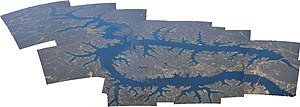
| Aerial photomosaic of the Lake of the Ozarks in Missouri (Photo credit: Wikipedia) |
In most streams south of the Missouri River, black bass season will open
May 26, 2012, until that date all black bass in those streams must be
returned to the water unharmed immediately after being caught. For
details see Chapter 6 of the Wildlife Code.
PLEASE CHECK REGULATIONS CAREFULLY: Special regulations may apply to
designated portions of water bodies; some baits and lures may not be
legal for all portions.
CENTRAL REGION
(573) 882-8388
LAKES
Binder Lake: 68 degrees, high, dingy; largemouth bass good on
spinnerbaits and soft plastics; bluegill good on crickets; crappie fair
on jigs and minnows; all other species slow. (Report made on 5/2/2012)
Blind Pony Lake: 63 degrees, normal, dingy; largemouth bass good on soft
plastics; sunfish and channel catfish fair on nightcrawlers; all other
species slow; the lake is closed to private boats, and bait held or
transported in containers with water is prohibited. (Report made on
5/3/2012)
Lake of the Ozarks (Glaize): 67 degrees, dingy; crappie fair on minnows
and crappie jigs; white bass slow, try light colored soft plastics;
black bass fair using dark colored soft plastics and buzzbaits; catfish
fair on stinkbaits, cut baits and worms.
(Report made on 5/2/2012)
Lake of the Ozarks (Gravois): 64 degrees, dingy; black bass good; crappie fair; white bass slow; catfish fair.
(Report made on 5/1/2012)
Lake of the Ozarks (Niangua): 64 degrees, dingy; crappie slow using jigs
and minnows; black bass fair using soft plastic worms; catfish good
using cut bait and worms; white bass slow, try using a white soft
plastic lure; sunfish good on worms.
(Report made on 5/2/2012)
Lake of the Ozarks (Osage): 64 degrees, dingy; crappie fair on minnows
and jigs; black bass good on swim baits and spinnerbaits; catfish good
on cut bait; sunfish good on worms; white bass slow using light colored
soft plastics.
(Report made on 5/2/2012)
Little Dixie Lake: 69 degrees, high, muddy; crappie good on live minnows
and white jigs; largemouth bass good on spinnerbaits and plastic
worms; channel catfish good on nightcrawlers; bluegill fair on
earthworms; the area is closed to all activity including fishing from 10
p.m. to 4 a.m. (Report made on 5/2/2012)
RIVERS
Lamine River: high, muddy; all species slow. (Report made on 5/3/2012)
Missouri River (middle): high, muddy; channel catfish, blue catfish and
flathead catfish fair on bank lines and trotlines using cut baits; blue
catfish and channel catfish fair on nightcrawlers and stinkbaits using
pole and line methods; all other species slow. (Report made on
5/2/2012)
Osage (Bagnell Tailwater): 57 degrees, normal, dingy; crappie fair on
minnows and crappie jigs; white bass slow, try light colored soft
plastics; black bass season closed; catfish fair on worms, chicken
livers and cut shad.
(Report made on 5/2/2012)
Osage (lower, at Tuscumbia): 57 degrees, normal, dingy; crappie fair on
minnows and crappie jigs; white bass slow, try light colored soft
plastics; black bass season closed; catfish fair on worms, chicken
livers and cut shad.
(Report made on 5/2/2012)
----------------------
KANSAS CITY REGION
(816) 655-6254
LAKES
Atkinson Lake (Schell-Osage CA): 70 degrees, high, crappie slow; catfish
good; all other species slow; fishing pressure moderate. (Report made
on 5/2/2012)
James A. Reed Memorial Wildlife Area: 65 degrees, clear; full pool;
channel catfish and crappie fair; bluegill, redear sunfish and
largemouth bass good; all other species slow. (Report made on 5/2/2012)
Montrose Lake: 73 degrees, high, muddy; catfish fair; black bass slow;
crappie slow; fishing pressure light. (Report made on 5/2/2012)
Schell Lake (Schell-Osage CA): 76 degrees, high, catfish good; all other
species slow; fishing pressure moderate. (Report made on 5/3/2012)
Truman Lake: 67 degrees, rising, muddy; crappie good on jigs and minnows
on banks and flat pockets; black bass good on crankbaits and jigs in
pockets and creeks; catfish good on cut shad and jugs, trotlines also
working well. (Report made on 5/2/2012)
Truman Lake Tailwaters: 67 degrees, rising, muddy; crappie good below
the dam on jigs and minnows; catfish good on shad; white bass and hybrid
bass good on topwater jigs and spoons. (Report made on 5/2/2012)
RIVERS
Missouri River (Kansas City area): 60 degrees, falling, muddy; channel
catfish good on cut bait, particularly bluegill, in the tributaries; all
other species slow. (Report made on 5/2/2012)
----------------------
NORTHEAST REGION
(660) 785-2420
LAKES
Hunnewell Lake: 64 degrees, high, dingy; crappie good using chartreuse
tube jigs; largemouth bass good using plastic worms; channel catfish
good using cheese baits and nightcrawlers; all other species slow.
(Report made on 5/3/2012)
Long Branch Lake: 60 degrees, high, muddy; channel catfish good on
nightcrawlers and green sunfish; all other species slow. (Report made
on 5/3/2012)
Mark Twain: 64 degrees, high, muddy; channel catfish, flathead catfish
and blue catfish good on live baits; all other species slow. (Report
made on 5/3/2012)
Sever: 65 degrees, normal, dingy; crappie fair on tube jigs; black bass
good on shallow to medium depth crankbaits; catfish fair on earthworms;
all other species slow. (Report made on 5/3/2012)
Thomas Hill Reservoir: 64 degrees, high, dingy; channel catfish good
using nightcrawlers; largemouth bass fair on white artificial baits;
hybrid striped bass good in shallow water of Brush Creek arm; crappie
fair on Hwy. T rock using jigs; all other species slow. (Report made on
5/3/2012)
RIVERS
Mississippi River (upper): 65 degrees, normal, muddy; flathead catfish
and channel catfish good on bluegill; all other species slow. (Report
made on 5/3/2012)
Salt (below Mark Twain): 65 degrees, high, muddy; channel catfish fair
on bank poles and trotlines using live baits; drum fair on
nightcrawlers; all other species slow. (Report made on 5/3/2012)
----------------------
NORTHWEST REGION
(816) 271-3100
LAKES
Bilby Ranch Lake: 64 degrees, normal, clear; channel catfish good using
cut bait or liver; black bass fair on crankbaits or topwater lures;
bluegill and crappie good on live bait. (Report made on 5/3/2012)
Lake Paho: 66 degrees, normal, clear; crappie good on jigs; largemouth
bass fair; channel catfish fair on natural baits; all other species
slow. (Report made on 5/3/2012)
Mozingo Lake: 64 degrees, normal, clear; channel catfish, bluegill and
black bass good; crappie and walleye fair. (Report made on 5/2/2012)
Pony Express Lake: 64 degrees, normal, clear; crappie are beginning to
come up in the shallow water biting on jigs; bluegill good on worms; all
other species fair. (Report made on 5/2/2012)
Smithville Lake: 64 degrees, rising, clear; crappie good on live bait
near brush piles; black bass fair on spinners; catfish good on
nightcrawlers; all other species fair. (Report made on 5/3/2012)
RIVERS
Grand River: 65 degrees, rising, dingy; channel catfish and blue catfish good; flathead catfish slow. (Report made on 5/3/2012)
Missouri River (upper): 61 degrees, normal, dingy; channel catfish good
on worms, fair on dip bait; blue catfish fair on cut bait; carp fair on
worms; flathead catfish fair on worms; all other species slow. (Report
made on 5/2/2012)
----------------------
OZARK REGION
(417) 255-9561
LAKES
Bull Shoals Lake (East): 71 degrees, normal, dingy; black bass fair on
artificial baits; all other species slow. (Report made on 5/3/2012)
Norfork Lake: 72 degrees, normal, dingy; black bass fair on artificial baits; all other species slow. (Report made on 5/3/2012)
RIVERS
Big Piney River (lower, Pulaski Co.): 63 degrees, normal, clear;
goggle-eye good on soft plastic baits and jigs; channel catfish fair on
live bait. (Report made on 5/3/2012)
Big Piney River (upper, Texas Co.): 68 degrees, low, clear; goggle-eye
good on soft plastics; black bass good on soft plastics and live bait
(catch and release only). (Report made on 5/3/2012)
Bryant Creek: 68 degrees, normal, clear; smallmouth bass (catch and
release only) and goggle-eye fair on soft plastics; all other species
slow. (Report made on 5/3/2012)
Current River: 67 degrees, low, clear; all species fair on soft plastic crayfish and worms. (Report made on 5/3/2012)
Eleven Point River: 63 degrees, normal, clear; rainbow trout good on
corn and minnows; all other species fair. (Report made on 5/3/2012)
Gasconade River (middle): 64 degrees, normal, dingy; goggle-eye good on
soft plastic baits and jigs; channel catfish fair on live bait. (Report
made on 5/3/2012)
Gasconade River (upper): 65 degrees, high, muddy; all species slow. (Report made on 5/3/2012)
Jacks Fork: 65 degrees, normal, clear; all species good on soft plastic baits. (Report made on 5/3/2012)
North Fork of the White River: 63 degrees, normal, clear; smallmouth
bass (catch and release only) and goggle-eye fair on soft plastics; all
other species slow. (Report made on 5/3/2012)
----------------------
SOUTHEAST REGION
(573) 290-5858
LAKES
Clearwater Lake: 76 degrees, normal, clear; black bass good on
crankbaits and plastic baits; bluegill fair; channel catfish fair; all
other species slow. (Report made on 5/3/2012)
Council Bluff Lake: 68 degrees, normal, clear; largemouth bass good on
dark colored soft plastics and topwater lures during low light periods;
crappie fair on jigs and minnows; redear sunfish fair on worms; all
other species slow. (Report made on 5/3/2012)
Cypress Lake: 71 degrees, normal, dingy; bluegill and redear sunfish
good on jigs, crickets and worms in 1 - 3' depths; largemouth bass good
on minnows and jigs, plastic worms and crankbaits in 1 - 3' depths;
crappie fair on minnows and jigs in 1 - 3' depths; channel catfish fair
on worms, crickets and stinkbait in 2 - 3' depths. (Report made on
5/2/2012)
Duck Creek CA Pool 1: 75 degrees, high, clear; bluegill good on
crickets; largemouth bass fair on spinners; bowfin good on cut bait; all
other species slow. (Report made on 5/3/2012)
Lake Girardeau: normal, clear; bluegill and redear sunfish good on
crickets; largemouth bass fair on soft plastic worms; channel catfish
fair on worms; all other species fair. (Report made on 5/3/2012)
Perry County Lake: 72 degrees, clear; crappie fair on jigs; black bass
fair on spinnerbaits; redear sunfish good on crickets; all other species
slow. (Report made on 5/3/2012)
Robert DeLaney Lake: 74 degrees, normal, bluegill fair on crickets close
to the bank; crappie fair on jigs and minnows; all other species slow.
(Report made on 5/3/2012)
Wappapello Lake: 70 degrees, low, crappie good on minnows and jigs;
channel catfish good on trotlines and jug lines using live bait at
night; black bass fair on crankbaits and plastic worms; bluegill fair on
crickets and worms; all other species slow.
Anglers should note the 9" minimum length limit regulation for crappie
on Wappapello Lake. Call the Wappapello Lake Recreation Hotline for
updates at 573-222-8139. (Report made on 5/3/2012)
RIVERS
Black River (above Clearwater Lake): 71 degrees, low, clear; smallmouth
bass (catch and release only) and goggle-eye good on tube baits and live
minnows; all other species slow. (Report made on 5/3/2012)
Black River (below Clearwater Lake): 71 degrees, normal, dingy; channel
catfish good on live bait and stinkbait; crappie fair on jigs and
minnows; black bass good on jigs and minnows (season closed, catch and
release only until May 26th); white bass fair on jigs; all other species
slow.
(Report made on 5/3/2012)
Castor River (above Zalma): normal, clear; all species slow. (Report made on 5/2/2012)
Mississippi River (middle): rising, muddy; channel catfish and blue
catfish fair on worms; all other species slow. (Report made on 5/2/2012)
Mississippi River (Ohio River to Arkansas): normal, muddy; channel
catfish fair on beef liver and worms; all other species slow. (Report
made on 5/2/2012)
St. Francis River (above Wappapello): normal, dingy; channel catfish
good on live bait; black bass (season closed until May 26th) good on
minnows and jigs; redear sunfish good on crickets; all other species
fair. (Report made on 5/2/2012)
St. Francis River (below Wappapello): 70 degrees, normal, muddy; channel
catfish fair on nightcrawlers; all other species slow. (Report made on
5/2/2012)
----------------------
SOUTHWEST REGION (417) 895-6881
LAKES
Bull Shoals Lake (West): 52-55 degrees, high, clear; Dam Area - black
bass good on spinnerbaits, crankbaits, soft plastics and jigs; crappie
good on white swimming minnows and crappie jigs; white bass fair on
white swimming minnows; walleye fair on jerkbaits and crankbaits; all
other species slow; Beaver Creek Arm - black bass good on spinnerbaits,
crankbaits, soft plastics and jigs; crappie good on white swimming
minnows and crappie jigs; all other species slow. (Report made on
5/3/2012)
Lake Taneycomo: 50 degrees, low, clear; trout good on flies (scuds, San
Juan worms, midges, and bead head nymphs), Rooster Tails and marabou
jigs in the upper portion; trout good on chartreuse, orange, bubblegum,
and white colored Power Baits and Little Cleos and while trolling
crankbaits in lower portion. (Report made on 5/2/2012)
Pomme de Terre Reservoir: 67 degrees, high, dingy; crappie good on
minnows and tube jigs over structure; muskie fair over mudflats; black
bass fair on buzzbaits and spinnerbaits in the back of coves; walleye
fair on bottom bouncers and jig & minnow or jig & worm
combinations off of points; white bass fair on Twister Tails in the
rivers; catfish fair on cut baits with trotlines and jug lines; all
other species slow. (Report made on 5/2/2012)
Stockton Lake: 61 degrees, high, dingy; catfish good on liver or
earthworms from the bank off coves and points; crappie good on minnows
and various colored artificial lures in 2 - 15' of water; black bass
slow, best on flats and off points in 6 - 15' of water; use jerkbaits of
various colors, most common is chartreuse, blue, and white; all other
species slow. (Report made on 5/2/2012)
Table Rock Lake (James River arm): 66 degrees, normal, dingy; black bass
good on soft plastic crayfish, Wiggle Warts and grubs, black, pearl or
shad colored baits working well, some fish are still on beds in coves
and some largemouth are very close to the bank; white bass fair on white
or bright yellow Vibric spinners, small diving crankbaits and pearl
swimming minnows, trolling is working well; all other species slow.
(Report made on 5/2/2012)
Table Rock Lake (main lake): 65 degrees, normal, dingy; black bass good
on tube baits, medium sized crankbaits and unweighted flukes that look
like shad in 5 - 12' of water, watermelon green, pro blue, and all white
are best colors; bluegill good on nightcrawlers in shallow water;
crappie fair on minnows and small tube baits in 8 - 12' of water, moving
closer to shore; all other species slow. (Report made on 5/3/2012)
RIVERS
James River: 64 degrees, normal, muddy; black bass good on shaky jigs,
smaller worms, french fry with split shot, flukes weighted hook in the
wind, and small crankbaits with bluegill colors (catch and release
only); white bass fair on white Road Runners and Power Baits with
plastic minnows and 1/8oz. jig; crappie fair on jigs and minnows over
brush piles; catfish fair on bait fish and frogs. (Report made on
5/2/2012)
Niangua River: 59 degrees, high, dingy; black bass slow, best on soft
plastics and natural baits (catch and release only); goggle-eye slow,
best on natural baits and jigs; trout slow, best on natural baits and
Power Baits below Bennett Spring; all other species slow. (Report made
on 5/2/2012)
----------------------
ST. LOUIS REGION (636) 300-1953
LAKES
Busch Memorial Conservation Area Lake 33: 63 degrees, normal, dingy;
channel catfish good on livers; black bass good on spinners, plastic
worms and crankbaits; crappie fair on minnows and jigs; bluegill fair on
worms and crickets; please remove litter.
(Report made on 5/3/2012)
Busch Memorial Conservation Area Lakes 3, 4, 5, 7, and 23: 63 degrees,
normal, dingy; channel catfish good on doughbait, cut bait and blood
bait; limit 4; black bass good on spinners, plastic worms and
crankbaits; crappie fair on minnows and jigs; bluegill fair on worms and
crickets; please remove litter.
(Report made on 5/3/2012)
RIVERS
Big River: 63 degrees, falling, muddy; channel catfish fair on doughbait
and livers; black bass fair on crankbaits (catch and release only);
crappie fair on minnows and jigs; bluegill good on worms and crickets;
all other species fair. (Report made on 5/3/2012)
Bourbeuse River: 68 degrees, normal, dingy; black bass fair on plastic
worms (catch and release only); channel catfish good on livers; crappie
fair on jigs and minnows; bluegill good on worms; all other species slow
on natural baits.
(Report made on 5/3/2012)
Meramec River (Crawford Co.): 63 degrees, normal, clear; channel catfish
fair on cut bait and minnows; black bass good on plastic worms (catch
and release only); crappie slow on minnows; bluegill fair on natural
baits; all other species slow. (Report made on 5/3/2012)
Meramec River (St. Louis Co.): 63 degrees, normal, clear; channel
catfish fair on cut bait and minnows; black bass good on plastic worms
(catch and release only); crappie slow on minnows; bluegill fair on
natural baits; all other species slow. (Report made on 5/3/2012)
Missouri River (lower): 59 degrees, falling, muddy; channel catfish fair
on cut bait and livers; all other species fair. (Report made on
5/3/2012)
----------------------
TROUT PARKS
Bennett Spring State Park: 57 degrees, the spring level is near normal
and clear; Zone 1 and 2 best lures: white colored roaches; bedspread
colored, and white sparkly blue-green colored mini-jigs; gray or white
colored scuds; black or sulfur colored Cracklebacks; ginger snap, red
and white colored marabou jigs; bumblebee colored and black sparkled
colored Rooster Tails; orange colored and peach colored glo balls; olive
or brown colored wooly buggers with gold spinner; Zone 3 best lures:
red or white colored plastic worms; white with sparkle, salmon peach,
and yellow colored Power Baits; brown colored Trout Nip. Our Kid's
Free Fishing Day is Saturday May 5; fishing is free to kids 15 and
younger, there will be many exhibits that are open from 9 a.m. until 2
p.m. Lunch will be provided for the kids. Fishing hours for May will be
6:30 a.m. until 8:15 p.m. (Report made on 5/3/2012)
Maramec Spring Park: 56 degrees, falling, fishing is good; the water is
clearing up; use very light weight line and tackle; fish are holding in
deep holes, below the waterfalls and around boulders, target these areas
for best success; throughout the spring branch feather jigs in dark
colors are producing good numbers of fish; dough and putty baits are
producing when fished on or near the bottom; use white or brown; Kid's
Free Fishing Day is Saturday May 19th; fishing hours for the month of
May are 6:30 a.m. to 8:15 p.m. (Report made on 5/3/2012)
Montauk State Park: 58 degrees, the river level is slightly below
normal; the water is clear; fishing is good on most baits; brown, white,
and yellow scented dough and putty baits are working well in the bait
zones; flies, Rooster Tails and jigs in black and yellow, white, and
olive colors are working well. May fishing hours are 6:30 a.m. to 8:15
p.m. Our Kid's Fishing Day is Saturday May 5th.
For up-to-date stream conditions check
http://waterdata.usgs.gov/nwis/uv?07064440 (Report made on 5/3/2012)
Roaring River State Park: 58 degrees, the water is dropping fast and
getting very clear; use 2 or 3 pound test; dry flies have been good with
lots of caddis and midge hatches; beetles, ants and hoppers,
Cracklebacks, pheasant tails and copper johns are good; olive, black,
and brown wooly buggers or worms are good; orange, white, chartreuse,
fluorescent yellow plastic eggs are working well; cheese yellow, white,
mint green, yellow/orange, pink, and the orange, and orange/white
plastic worms are good; spinners are good early, black, brown, olive and
black/yellow are good early; marabou jigs in white, tan and pinks
early and later in the day; use black, black/yellow, brown,
brown/yellow, and black/olive marabou jigs in 1/16th - 1/100 in size; in
Zone 3 use nightcrawlers, corn, Power Bait paste and nuggets. Kid's
Free Fishing Day is May 19. (Report made on 5/2/2012)


![[en] camping, tent](http://commons.wikipedia.org/wiki/File:Camping.png)


